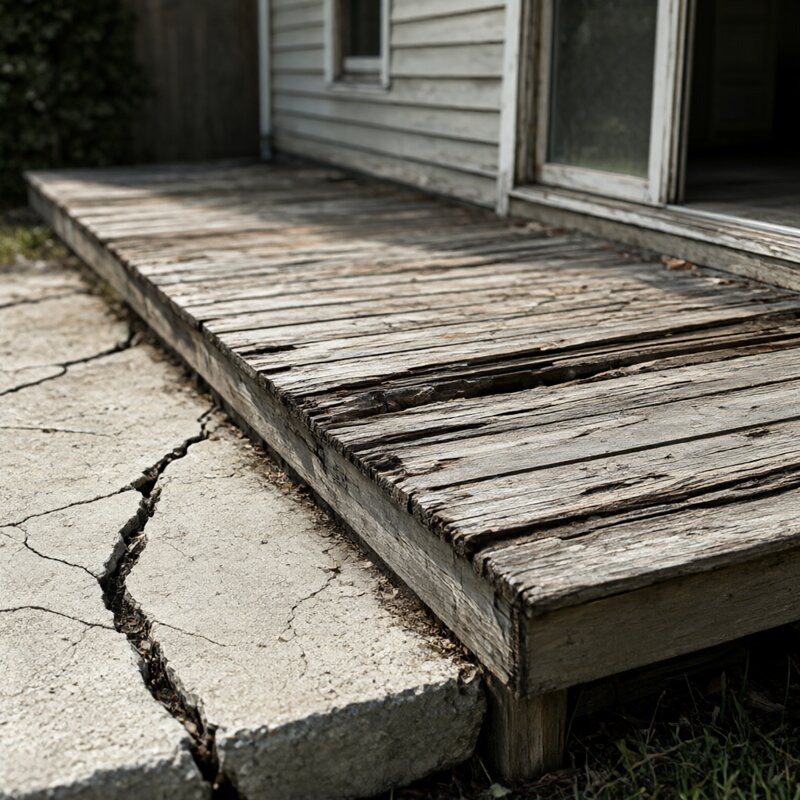
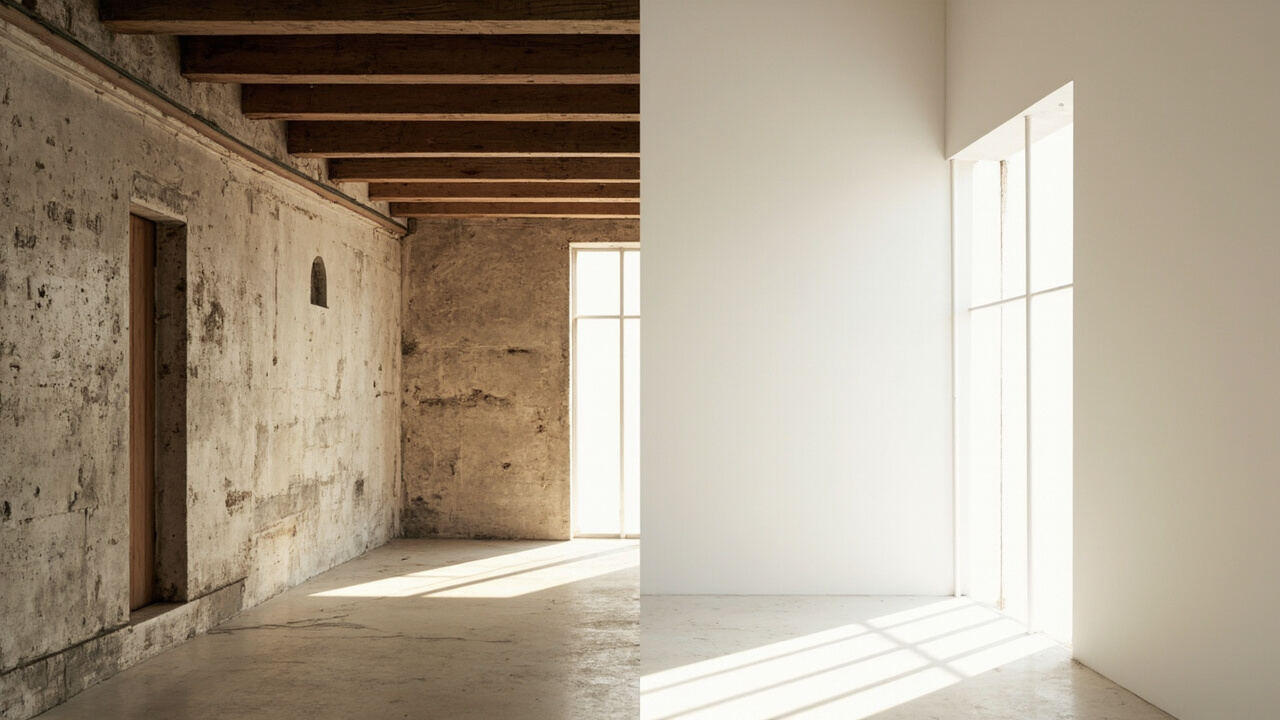

Should you patch what you have or tear it out and start over? Repair wins when structure is sound, damage is local, and remaining life is long. Replacement wins when structure is compromised, damage is systemic, or code now requires an upgrade.
What Repair vs Replace Means and How to Decide Fast
Repair restores an existing assembly to its intended function without changing size, layout, or system type. You keep the same drywall, subfloor, and cabinet box, and fix the failed part. Replace removes the assembly and installs a new one that meets current performance and code expectations.
Home renovation is a change to a building system that improves performance or layout. The repair vs replace decision is the method you choose to deliver that change within budget, lifespan, and code constraints.
Labor and permits follow the method, not the room. A repair often needs one trade, retail materials, and no permit review. A replacement triggers demolition, disposal, new materials, sequencing of trades, and inspection.
Use a quick filter before you price anything. If damage is smaller than about 25 percent of the assembly surface, isolated to finish or trim, and underlying structure tests dry and flat, repair usually wins. If damage covers more than 30 percent, repeats after a prior repair, or sits on a system past 60 percent of its rated life, replacement usually wins.
Repairs cluster at $5 to $45 per sq ft. Targeted replacements run $45 to $120 per sq ft. Full system replacements rise beyond that when structure, mechanicals, or layout change. The budget $100 to $350 per sq ft range for full renovation work shows why timing matters. If a repair approaches two thirds the cost of replacement without adding lifespan, you are buying short comfort at long cost.
How Each Path Works, What It Costs, and Why It Lasts
Repair works by conserving what still performs. You cut out the failed section, stabilize the edge, and patch with matching material. A drywall crack gets taped with paper tape and compound. A soft spot in subfloor gets a sistered patch over solid joist bearing. A leaking flashing at a window gets resealed and counter flashed.
Mechanically, repair succeeds when the load path and moisture barrier remain intact. The patch does not need to be stronger than original. It needs to restore continuity.
Replacement works by resetting lifespan. You remove the assembly to the framing or substrate, correct hidden defects, and install a new system with full warranty. That reset is why replacement costs more upfront and less over time in failing systems.
A well executed repair on a mid life assembly typically adds 3 to 7 years before the surrounding material shows age. A replacement on the same assembly adds 15 to 30 years depending on material choice and exposure. In a dry hallway, that extra life is a nice bonus. In a wet area with daily water contact, it is the whole point.
Repair vs Replace Compared on Cost, Lifespan, Structure and Code
SERPs love a universal winner. Jobsite reality does not have one. The right choice flips when conditions change, so compare on the same four criteria every time and let the home decide.
| Criterion | Repair | Replace |
|---|---|---|
| Cost | $5 to $45 per sq ft, one trade, low disposal, often no permit fee | $45 to $180 per sq ft depending on system, multiple trades, disposal and permit fees included |
| Lifespan | Adds 3 to 7 years, tied to age of surrounding material, warranty limited to patch | Resets to 15 to 30 years, full system warranty, life depends on material tier and exposure |
| Structural integrity | Works when framing is sound, flat within 3/16 in per 10 ft, and dry below 16% moisture | Required when framing is soft, deflects beyond L/360, or shows rot over 30% of section |
| Code compliance | Usually no permit, must still meet IRC repair provisions for same work | Permit and inspection likely when structure, electrical, plumbing, or egress changes, must meet current IRC/IBC |
| Disruption and sequence | 1 to 3 days for localized work, room stays usable | 1 to 4 weeks for room scale replacement, needs ordered project sequence and inspections |
| Risk of rework | Higher if moisture source or structural cause was not fixed, patch repeats | Lower when substrate is corrected, but higher upfront cost if cause was minor |
A drywall ceiling with a single crack from truss uplift in winter is a repair story. Tape, screw, compound, prime, paint, done for $3 to $6 per sq ft. A ceiling with sagging between joists, brown staining, and soft probe readings is a replace story.
Flooring shows the same logic. A scratched plank field with solid flat subfloor wants repair at $8 to $15 per sq ft. A bouncing floor that deflects under a 180 lb load, with squeaks along every joist line, wants subfloor replacement and joist hanger correction at $35 to $75 per sq ft.
For pricing context before you choose, the home renovation cost guide breaks down where each dollar goes by scope tier. For category clarity when layout change is on the table, the home renovation vs repair comparison separates cosmetic refresh from structural renovation with permit and budget cues.
Installation Realities and Mistakes That Force a Second Fix
Both paths fail for the same reason. The visible finish gets attention while the hidden condition gets ignored. Good installation respects tolerances that are not glamorous but decide whether work lasts.
Flatness, moisture, and load control
Flatness controls most finish success. Laminate and vinyl plank need subfloor flatness within 3/16 in over 10 ft. Tile needs 1/8 in over 10 ft. Any floating floor needs a stable vapor barrier and proper expansion gap of 8 to 10 mm at perimeters.
Install over a wavy slab and every plank telegraphs the bump. Every grout line cracks. Grind high spots, fill low spots with leveling compound, and screw down loose sheathing before you spend on finish.
Common mistakes to avoid
Common mistakes follow a pattern. One, patching drywall without finding why it cracked, usually truss movement, framing shrinkage, or point load above. Two, regrouting tile over a failed membrane, water still gets in, it just hides longer.
Three, installing new flooring tight to walls with no expansion gap, it buckles in humid months. Four, skipping contingency of 10 to 15 percent, then raiding material budget when hidden rot appears. Five, treating a permit as optional when a wall moves or a circuit is added.
Limits, Trade Offs and Choosing the Right Path for Your Home
Every repair carries a limit you should name before you commit. Repair cannot extend life beyond the surrounding assembly. Patching a 22 year old asphalt roof buys time, but the field above it still ages at the same rate.
Decision guidance works best as if then statements tied to conditions you can check.
If damage is under 25 percent of the surface, framing is solid and dry, and material is mid life, choose repair. You save $30 to $90 per sq ft, keep disruption low, and retain sufficient lifespan.
If damage repeats, moisture reads high, or structure deflects or shows rot, choose replace. You reset the clock, correct the cause, and avoid paying for the same repair again next season. Build contingency of 10 to 15 percent into the bid for hidden conditions.
If remaining life is under 7 years or the system is past its rated service life, choose replace even if repair is cheaper today. A $600 patch on a system with two years left is $300 per year of borrowed time. A $2,400 replacement with 18 years left is $133 per year of owned time.
If code, insurance, or safety is involved, choose replace or at minimum a repair that meets current code with professional review. Electrical, plumbing load, guard heights, and emergency egress are not aesthetic choices. For any structural, electrical, or waterproofing work, consult a licensed professional for final sizing and code approval in your jurisdiction.
Context changes the math. In high humidity or wet areas, lean toward replacement sooner. In dry, low sun exposure areas, a careful repair can last longer than its textbook range. On tight budgets, a phased plan often wins.
For sequencing help once you have chosen a path, the home renovation order guide maps the trade order that prevents rework, and the home renovation planning guide connects scope decisions to timeline.
You do not need a perfect prediction. You need a clear test. Check percentage of damage, test structure with a probe and level, check moisture, check age, check code trigger. Three checks pointing to sound and dry means repair with confidence.
Two checks pointing to systemic, wet, or end of life means replace and fix the cause once. That is how you avoid the most common regret, paying for repair and later paying again for replacement.
If your next step is scoping the full project, the home renovation planning guide connects scope decisions to timeline and budget.