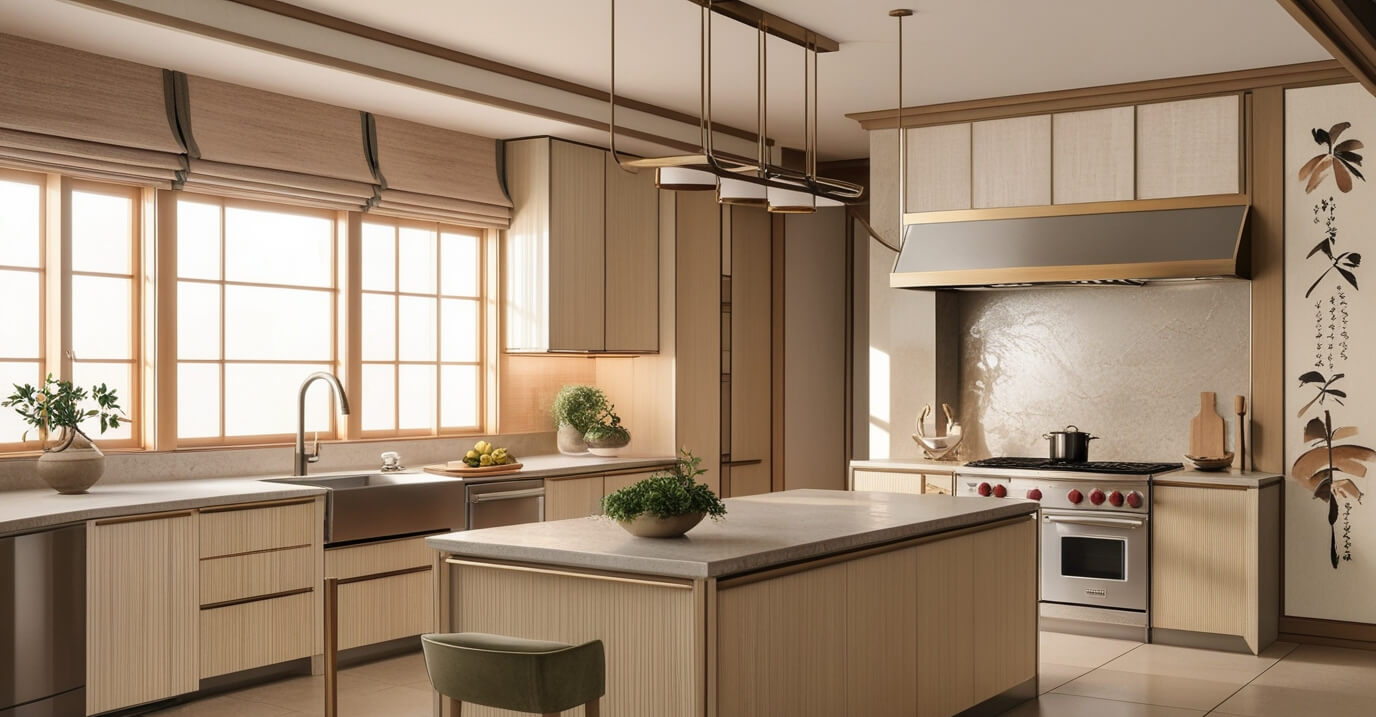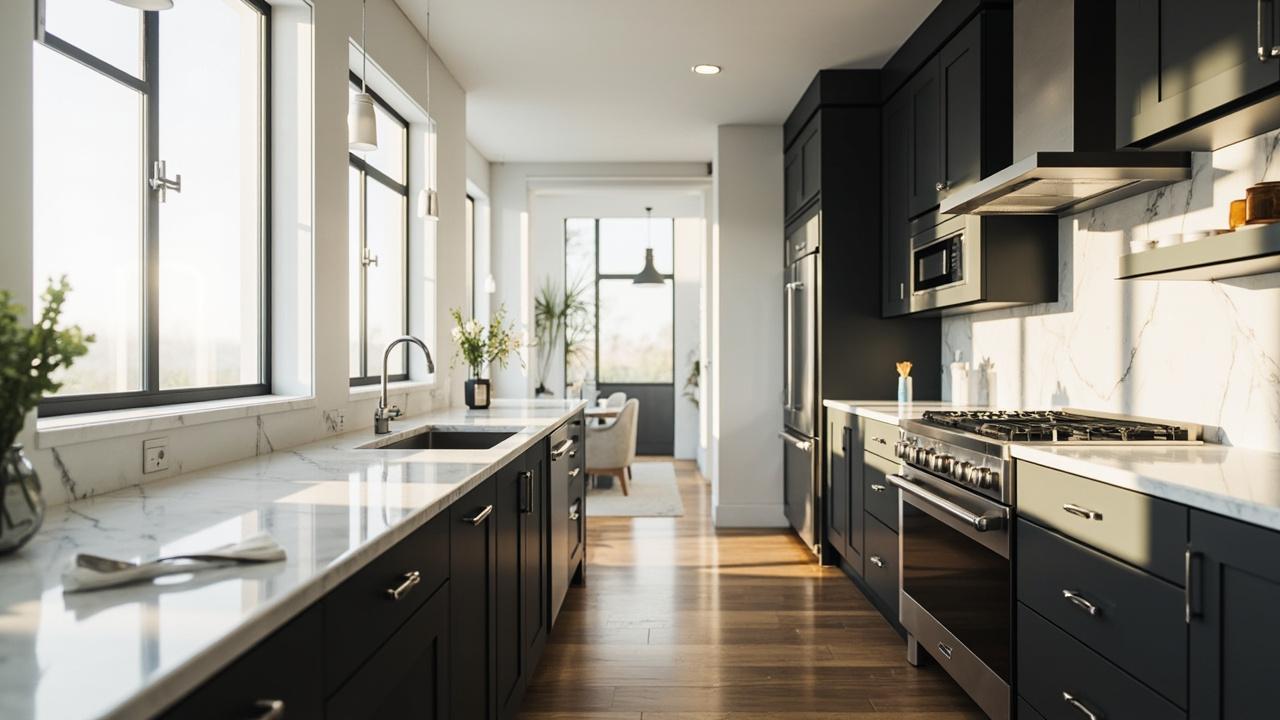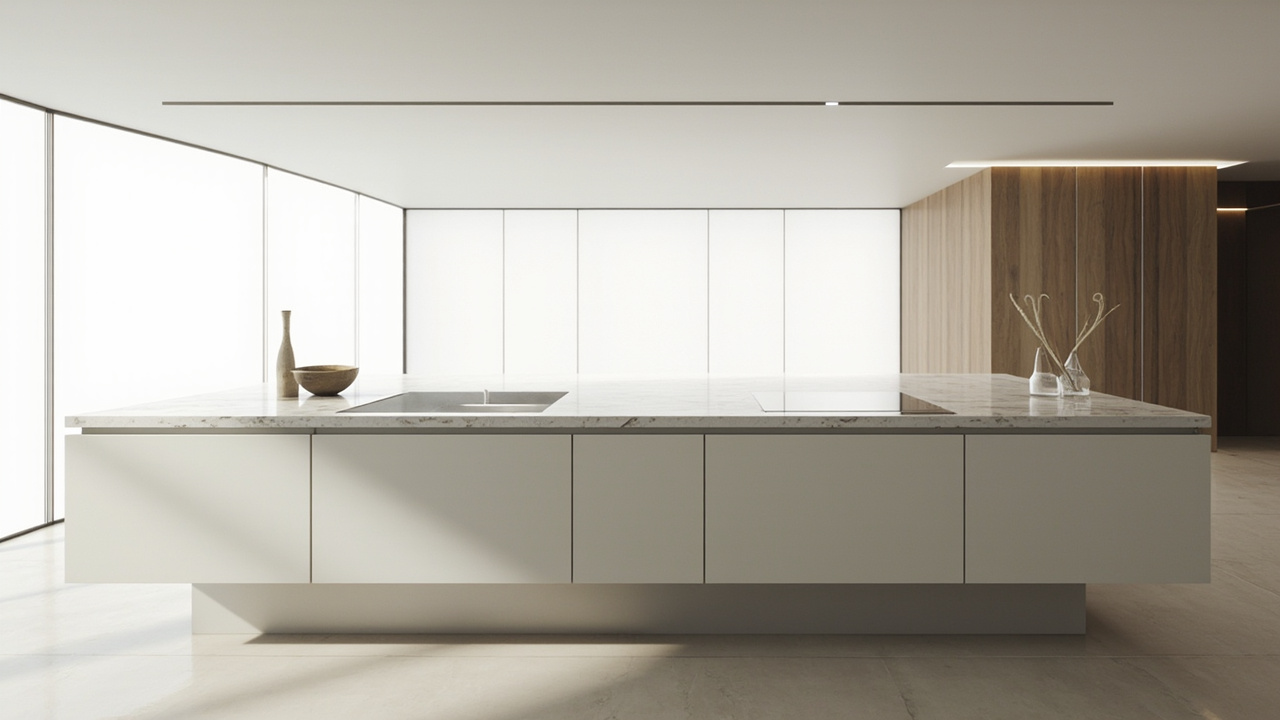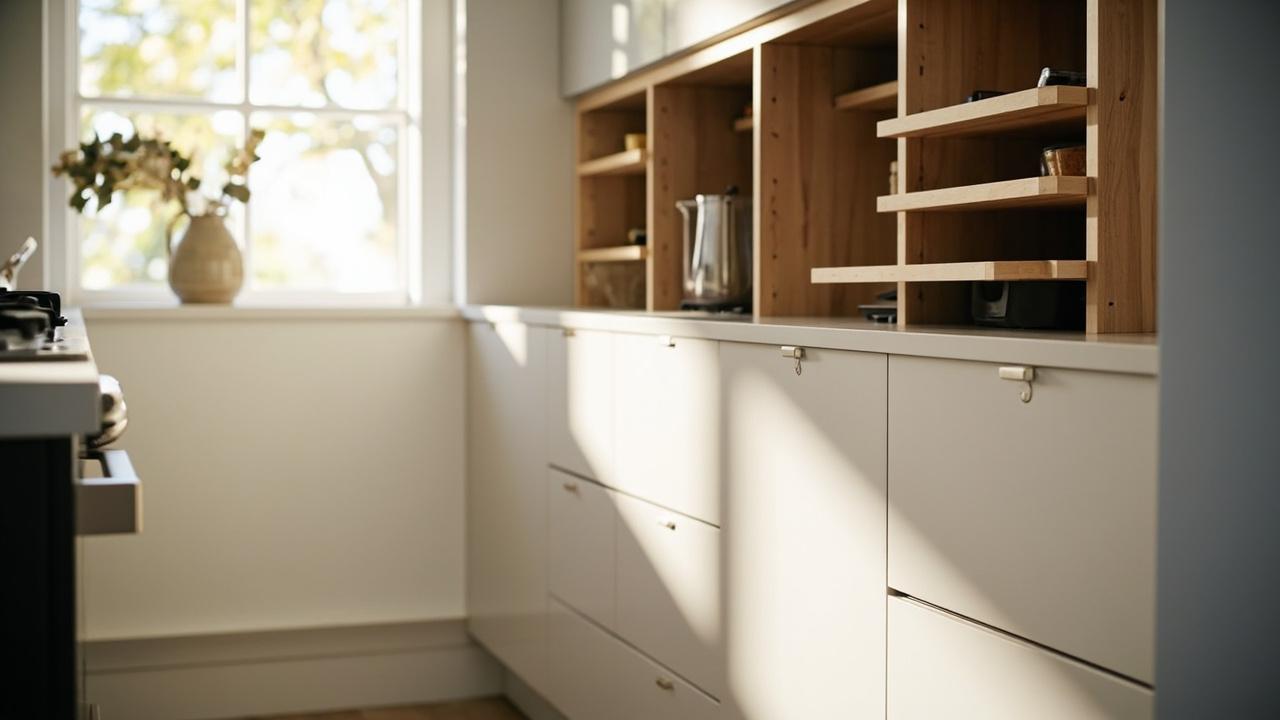

You open the cabinet, three things fall out, and you know the layout has stopped working for how you actually cook. The fix is rarely what the showroom pushes. Kitchen storage is a planned geometry of cabinet boxes, vertical clearances, and load-bearing shelves that earns its place when it matches how you shop, cook, and clean.
Good storage costs between $1,500 and $8,000 for a full pantry and cabinet overhaul in a standard 10 by 12 foot kitchen, or roughly $150 to $400 per linear foot installed. The wide range comes from material, hardware, and whether you keep the existing cabinet boxes. Choosing well means knowing which trade-off matters for your kitchen before the carpenter measures the first wall.
What Kitchen Storage Is and Why the Layered Design Matters
Kitchen storage is the system that converts wall space, dead corners, and the gap above the fridge into usable, everyday access. It is not a single product. It is four stacked layers, and each one solves a different daily problem. The layer you upgrade first is almost always the one that fixes the pain you feel right now, not the one that photographs best.
The four layers, from structure to surface, are cabinet boxes, door fronts, hardware, and interior organizers. Skip a layer and the system fails in the same place every time: a drawer that sags, a hinge that loosens, a corner that nobody can reach into with two hands.
How Each Storage Layer Is Built and What It Costs
A kitchen storage system has four cost layers, and each one swings the budget by a known amount. Knowing the share each layer takes makes it easy to see where a quote is fair and where a line item is padded.
Cabinet boxes are the structural frame. Stock boxes use 15 to 18 mm plywood or particleboard with a melamine or wood-veneer finish. Custom boxes run in maple, birch, or MDF at 18 to 25 mm.
Plywood at 15 to 18 mm holds screws better than particleboard, so hinges and drawer slides stay tight over time. Expect $80 to $250 per linear foot for boxes alone, or about 40 percent of the installed price.
Door fronts and drawer faces are the visible surface. Shaker, slab, and inset styles run from $60 to $400 per door, depending on wood species and paint grade. A 10 by 12 kitchen has 18 to 25 doors and drawer fronts, so this layer alone can swing the budget by $1,500.
Hardware includes hinges, soft-close drawer slides, and pulls. Soft-close slides cost $15 to $60 per drawer and pay for themselves inside five years if the kitchen sees daily use. Cheap side-mount slides warp under load; full-extension ball-bearing slides handle 75 to 100 lb per drawer without sag.
Interior organizers are the highest-impact layer for daily frustration. Pull-out shelves, tiered cutlery dividers, lazy Susans for blind corners, and vertical tray slots cost $40 to $400 each installed. They turn a deep, dark cabinet into something a 5-foot-2 cook can actually reach into without a flashlight.
Decisions That Change Which Storage System You Should Buy
Storage is not one decision. It is a stack of decisions where each choice narrows the next. Three comparisons cover most of the field, and each one has a clear winner for a specific kitchen reality.
| Decision | Option A | Option B | What Changes the Answer |
|---|---|---|---|
| Box material | Plywood 15-18 mm | Particleboard with melamine | Humidity, expected lifespan over 15 years, budget |
| Drawer slides | Full-extension soft-close, 75-100 lb | Side-mount epoxy, 35 lb | Cookware weight, how often drawers are fully loaded |
| Pantry type | Walk-in with fixed shelves | Pull-out tall cabinet, 24 in deep | Floor space available, how often you buy in bulk |
| Corner cabinet | Lazy Susan, 33 in diameter | Blind corner with pull-out | Whether you store pots or small appliances there |
| Upper cabinet height | 30 in (standard) | 42 in with step stool | Ceiling height, who reaches the top shelf |
For a couple who cooks three nights a week and stores cast iron plus small appliances, the box material matters less than the drawer slides and the corner solution. Cast iron at 12 lb per pan will destroy a 35 lb slide inside three years. Spend there first.
For a family of five buying in bulk from a warehouse club, a 24-inch-deep pull-out pantry pays back in time saved, even at $1,200 to $2,000 installed. A walk-in pantry only wins when you have a spare 5 by 5 foot footprint to give it.
Installation Sequence and the Mistakes That Void a Warranty
Storage installation runs in a fixed order. Skipping a step shows up as a stuck drawer or a sagging shelf six months in, not the day of install.
- Measure and mark stud locations on every wall. Upper cabinets carry 100 to 200 lb when loaded. Drywall anchors alone will pull out within a year under that load.
- Level the base cabinets first, shimming until a 4-foot level reads plumb in both directions. An out-of-level base cabinet telegraphs the error into every drawer that follows.
- Install upper cabinets on a ledger board at the planned height. The ledger carries the weight while you screw into studs, instead of your shoulder.
- Mount drawer slides before drawer boxes go in. Slides need 1/16 inch of side clearance or they bind within a season of use.
- Adjust soft-close tension after the first week of real use. The factory setting is a compromise; the right setting depends on what you actually store.
The most common failure is a corner cabinet that nobody can reach into. A blind corner cabinet loses 40 to 60 percent of its volume to inaccessibility. A lazy Susan or a pull-out corner unit solves this; both add $200 to $500 to the corner cabinet cost. Skipping it to save money is the single most regretted shortcut in kitchen storage, based on homeowner surveys after remodel.
Another silent failure is mounting upper cabinets to drywall instead of studs. A 36-inch-wide upper loaded with dishes weighs 120 to 180 lb. Two screws into drywall anchors will not hold that. Use a stud finder, and where studs do not line up with cabinet backs, install a horizontal 2×4 ledger between studs first.
Trade-offs, Edge Cases, and When to Call a Pro
Custom cabinetry is worth the cost when the kitchen has odd angles, non-standard ceiling heights, or appliance widths that stock sizes cannot match. Custom runs $400 to $1,200 per linear foot and is the only path to a clean look in those cases.
Stock and semi-stock cabinets are worth the savings when the kitchen is a standard 8-foot ceiling rectangle with standard appliance widths. The fit will be within 1/8 inch, which is invisible after installation. Spend the savings on interior organizers instead.
Open shelving is a popular look, but it is honest to say it costs more in daily maintenance. Dust, grease, and the visual noise of every item on display are real costs. If you cook with oil three nights a week, open shelving is the wrong trade.
For load-bearing changes, such as removing a soffit to gain 6 inches of upper cabinet height, consult a licensed contractor or structural engineer. A soffit sometimes hides ductwork, wiring, or a load-bearing header.
Finding that out after demolition is a $3,000 to $8,000 surprise. A 30-minute inspection before demo pays for itself the first time the pro finds an obstructed cavity.
The kitchen island planning guide walks through how storage choices in the perimeter cabinets change what an island needs to do. If you are weighing whether to upgrade storage during a larger remodel, the kitchen renovation cost breakdown shows how storage typically fits into a 10 to 20 percent slice of a full project budget.
And when storage layout fights how you cook, the common kitchen renovation problems page names the most frequent issues and how to avoid them.