
Countertop quotes swing wildly because the number on the estimate is never just the slab. It bundles material grade, edge profiles, cutouts, templating, tear-out, delivery, and the installer skill needed to set 400 pounds of stone level on imperfect cabinets. Budget $1,500 to $4,500 installed for a typical 30 to 40 square foot kitchen: laminate and butcher block at the low end, quartz and granite in the middle, marble and quartzite at the top. Kitchen countertop installation cost is the installed price per square foot for a given material plus fabrication details, site conditions, and regional labor, where template-to-install precision and cutout count move the total more than the stone brand name does.
What Countertop Installation Costs by Material
Countertop cost per square foot installed is the only honest way to compare materials, because slab prices alone hide fabrication. Laminate runs $25 to $55 per square foot installed, the cheapest path to a fresh surface, and modern high-definition patterns mimic stone convincingly at arm’s length. Butcher block lands at $35 to $75 installed, warm and repairable, though it demands oiling and forgives neither standing water nor hot pans. Tile sits near $30 to $80 installed, durable and DIY-friendly, with grout lines that collect grease in heavy-cook kitchens.
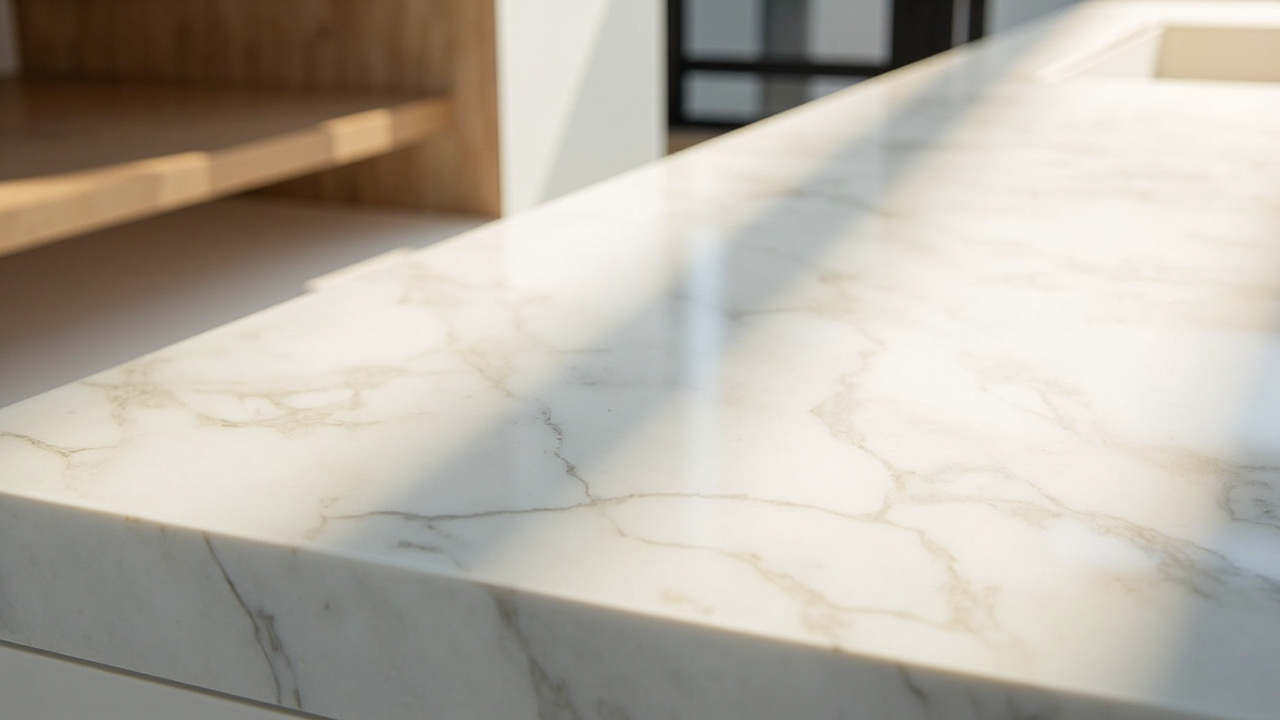
Quartz and granite installed cost defines the mid-range most homeowners actually buy. Quartz runs $55 to $120 per square foot installed: consistent pattern, zero sealing, strong stain resistance, and heat tolerance to about 300 F before resin damage becomes a risk. Granite runs $50 to $110 installed: each slab unique, heat-tolerant, but porous enough to need sealing every 1 to 3 years. Marble and quartzite sit at $90 to $180 installed, unmatched veining with real etching and staining exposure. Solid surface like Corian lands $60 to $110 installed, seamless and repairable, softer against heat and scratches. Stainless steel near $80 to $150 installed suits serious cooks and shows every fingerprint. The material personality behind these numbers is explored in choosing kitchen countertops and quartz countertops for the low-maintenance case.
Read every quote against the same scope sheet: square footage, linear feet of edge, number and type of cutouts, sink style, backsplash height, tear-out and disposal, and haul distance. A $65 per square foot bid that includes tear-out, a farmhouse cutout, and a waterfall miter can beat a $50 bid that excludes all three. Never compare per-square-foot figures without the apples-to-apples scope behind them.
Fabrication Details That Quietly Move the Price
Countertop edge profile pricing separates budget installs from premium ones. A standard eased edge is usually included. Ogee, bullnose, dupont, and mitered edges add $10 to $30 per linear foot, and a mitered waterfall leg can add $500 to $1,500 per side in material plus labor. Small kitchens feel this disproportionately: 15 linear feet of upgraded edge on a compact layout costs more per square foot than the same edge on a sprawling one.
Countertop cutout charges work the same way. Each sink, cooktop, and outlet cutout adds $100 to $300, and undermount sink cutouts with polished rims cost more than drop-in openings. A farmhouse or apron-front sink needs cabinet modification plus a custom cut, often $300 to $600 all in. Range and cooktop cutouts look simple and punish sloppy measurement, which is why installers charge risk margin baked into the line item. Fewer penetrations means lower fabrication cost and fewer future leak points, a second reason to finalize the sink and appliance models before template day.
| Line Item | Typical Range | What Drives It |
|---|---|---|
| Material installed, per sq ft | $25 to $180 | Slab grade, pattern rarity, thickness |
| Upgraded edge, per linear ft | $10 to $30 | Profile complexity, linear footage |
| Cutouts each | $100 to $300 | Sink style, polish, appliance count |
| Tear-out and disposal | $200 to $600 | Old material, plumbing disconnect |
| Template and install labor | $400 to $1,200 | Slab weight, seams, access, region |
Countertop seam placement deserves its own line in the contract. Slabs max out near 120 by 60 inches, so runs over 10 feet need seams. Good fabricators place them at sink rails or cooktop edges where eyes skip over, color-match adhesive, and level within a fingernail catch. Book-matched veining across a seam costs extra and looks intentional; a random mid-run seam looks like a mistake. Approve seam locations on the drawing before cutting starts.
Site Conditions That Raise Labor
Countertop installation labor cost tracks access and substrate truth, not just square footage. Third-floor walk-ups, narrow stair turns, and long carries from the truck add crew hours and sometimes a third installer. Out-of-level cabinets force shimming, grinding, or cabinet re-setting before stone can land, and stone should never be forced onto a twisted base: it cracks months later at the stress point. Old tile tear-out with wire lath doubles demolition time versus a laminate lift-off, and plumbing disconnects plus disposal fees add $200 to $600 before the new top arrives.
Countertop support requirements hide real money in overhang designs. Standard 1.5-inch overhangs need no extra structure. Breakfast-bar spans of 12 inches or more need corbels or steel plate, and full cantilevered seating at 15 inches and beyond needs engineered brackets at $50 to $150 each plus installation. Waterfall ends and full-height backsplashes consume extra slab square footage that buyers forget to count. If your layout dreams include a big overhang, price the brackets and extra material in the same estimate, not as a surprise on install day. These sequencing traps sit alongside the classics in kitchen renovation common problems, and the substrate side is covered in cabinets vs countertops: where your money matters more.
Confirm cabinets are level and fastened to studs before template day, because template day freezes every dimension. Digital laser templates capture walls to 1/32 inch, and anything the cabinets do afterward, settling, shimming shifts, re-leveling, breaks that precision. Cabinets set right make stone installation a calm half-day. Cabinets set wrong make it a grinding, dust-filled negotiation.
How to Get Quotes and Choose an Installer
Countertop installer quotes should arrive as itemized scope sheets, not single numbers. Collect three bids with identical scope: material name and grade, thickness, edge profile, seam map, cutout list, sink model, tear-out included or excluded, and install date tied to cabinet completion. Ask each fabricator how many seams your layout needs and where they would place them. The answer reveals craftsmanship faster than any review score. Verify license and insurance, ask for two recent kitchens with your material, and call both references with one question: did the crew protect the cabinets and floors, and did the final invoice match quote.
Time the purchase inside the larger remodel correctly. Countertops template after cabinets are set and leveled, fabricate over 1 to 3 weeks, and install before the backsplash tile but after any cabinet painting. Rushing template before cabinets are fixed is the classic self-inflicted delay, and the full ordering logic lives in how to renovate a kitchen step by step. Pay a deposit tied to template, a progress payment on delivery, and hold 10 percent until seams, edges, and caulk pass your raking-light inspection.
Decision Guidance
Choose laminate or butcher block if budget rules and you will refresh again within a decade. Choose quartz if you want the lowest-maintenance daily surface for a busy family kitchen. Choose granite or quartzite if natural pattern matters more than sealing chores. Choose marble only if you accept patina as character, because etching arrives with the first lemon. Whichever you pick, spend the savings from a simpler edge on a better fabricator: installation quality outlives brand names, and a perfectly set mid-range top beats a poorly set premium slab every single day.