
Quartz earns its place in most kitchens and loses it in a few specific ones. If you cook daily, hate sealing stone, and want a surface that shrugs off coffee, wine, and tomato sauce, quartz is the easiest yes in countertops. If you set cast-iron skillets straight from the burner onto the counter, have a sun-blasted kitchen wall, or want a truly one-of-a-kind slab, quartz will disappoint you. Quartz countertops are engineered stone surfaces made of roughly 90 to 93 percent ground quartz crystals bound with polymer resin, pressed into slabs that look consistent from one piece to the next and need no sealing ever.
What Quartz Countertops Actually Are
Engineered quartz stone starts as a pile of crushed quartz, one of the hardest minerals in a kitchen, mixed with 7 to 10 percent polymer resin binder plus pigments, then vibro-compressed under vacuum into slabs. That manufacturing step is the whole story. The quartz crystals deliver hardness near Mohs 7, harder than knife steel, which is why the surface resists scratches from daily prep. The resin holds everything together and makes wide color and veining options possible, from clean whites to convincing marble looks. But resin is plastic, and plastic sets the ceiling on what quartz can take.
Quartz slab sizes and thickness shape what your kitchen can get. Standard slabs run about 120 by 55 inches, with jumbo slabs near 132 by 65 inches from major brands. Thickness comes as 2 cm (about 3/4 inch) or 3 cm (about 1-1/4 inches). Thicker slabs allow longer unsupported spans, up to 24 inches for 2 cm and 36 inches for 3 cm, and give beefier edge profiles. Runs longer than 10 feet need seams no matter what, because slabs have fixed maximums. Knowing this before you fall in love with a 12-foot island drawing saves a painful redesign later.
One confusion costs buyers real money: quartz is not quartzite. Quartz vs quartzite is engineered stone versus natural stone quarried from the earth. Quartzite handles heat like granite and each slab is unique. Quartz offers consistency and zero sealing but lower heat tolerance. Salespeople sometimes blur the names. Ask directly which one the sample is, and check the price tier, because they live in different brackets.
Where Quartz Wins: Stains, Maintenance, and Consistency
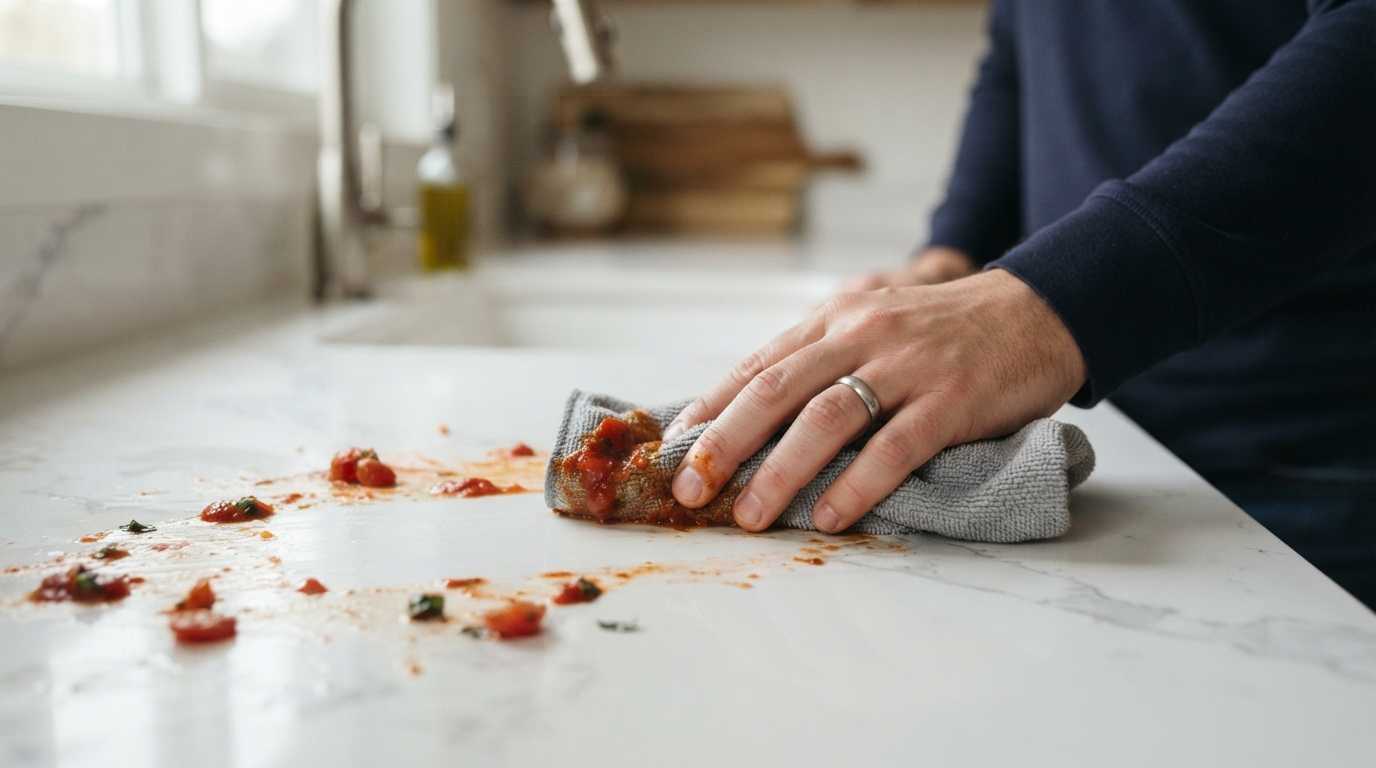
Non-porous quartz surface is the headline advantage and it matters more than most buyers expect. Natural stones absorb. Leave red wine on marble overnight and you own that stain. Quartz absorbs effectively nothing, so coffee rings, turmeric splashes, and olive oil wipe away with soap and water days later. For a busy family kitchen where spills sit while life happens, this single property prevents 90 percent of countertop regret.
Quartz countertop maintenance is about as close to zero as surfaces get. No sealing on day one, no resealing every year or two, no special stone soap. Daily cleaner, soft cloth, done. Compare that with granite needing sealer every 1 to 3 years and marble demanding constant vigilance against acids. Over a decade of ownership, the hours and products you do not buy add up to real savings that narrow the upfront price gap.
Quartz pattern consistency solves a genuine shopping headache. Natural slabs vary, and the piece in the showroom never quite matches the bundle that arrives. Quartz runs consistent enough that the sample reliably predicts the slab, and veining can be book-matched across seams for a deliberate look. If you want a calm white kitchen or a specific Calacatta-style vein and you want it to actually arrive that way, quartz delivers certainty that quarried stone cannot.
| Property | Quartz Reality | Why It Matters |
|---|---|---|
| Stain resistance | Non-porous, no sealing ever | Spills wipe up even after sitting |
| Scratch resistance | Mohs ~7, resists daily prep marks | Cutting boards still recommended |
| Heat tolerance | About 300 F (150 C) short exposure | Trivets required, always |
| UV resistance | Resin can fade or yellow in sun | Poor choice for outdoor kitchens |
| Slab consistency | High, sample matches slab | What you pick is what arrives |
Where Quartz Loses: Heat, Sun, Seams, and Price
Quartz heat resistance limit is the drawback buyers underestimate most. The quartz crystals themselves handle heat fine. The resin does not. Above roughly 300 F (150 C), sustained contact scorches or discolors the binder, and a cast-iron pan straight from a 450 F oven carries far more heat than that. The damage is permanent: yellowed rings, dulled patches, occasionally cracked resin. Granite and quartzite forgive a hot pan far more readily. If anyone in your house cooks with heavy pans and will not reach for a trivet, treat this as disqualifying, not cautionary.
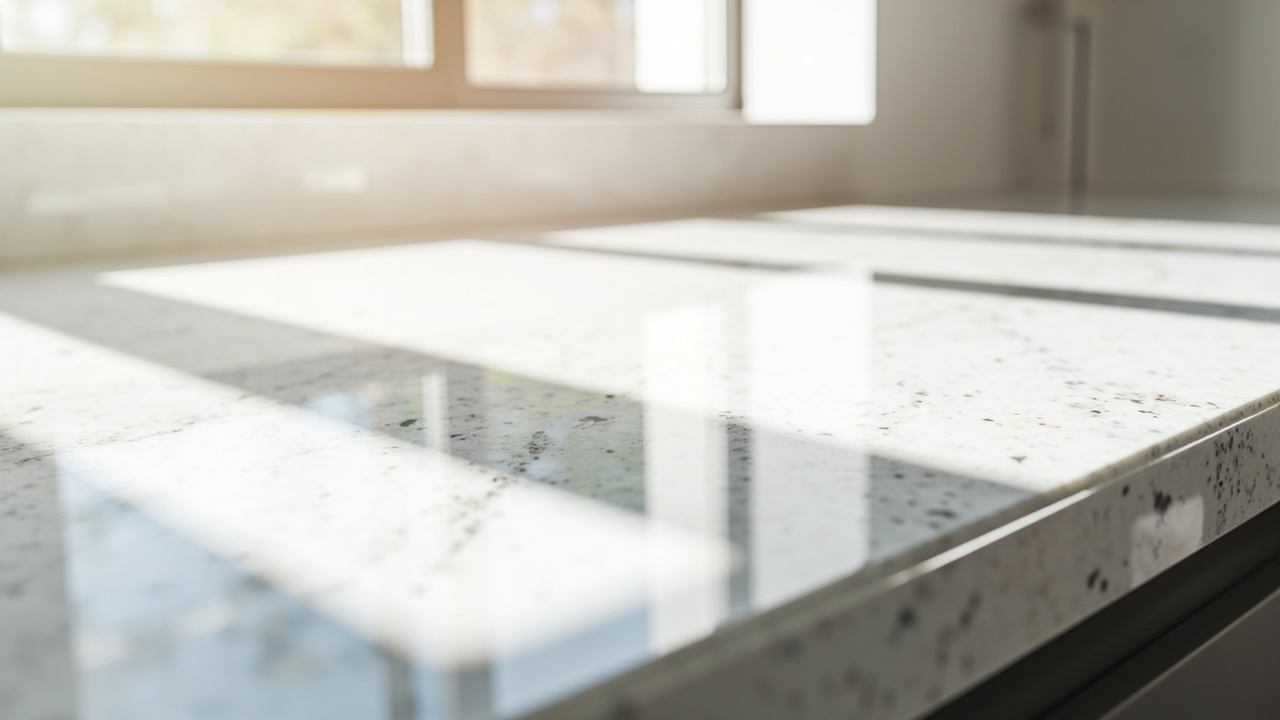
Quartz UV exposure fading rules out two placements. Direct, daily sunlight yellows or fades the resin over years, so a counter run directly under a big south-facing window wall and any outdoor kitchen should use another material. Manufacturers state indoor use for a reason. A sunny kitchen with brief morning light is fine. A wall of glass with all-day sun on the counter is not.
Quartz seam visibility surprises buyers who expected one unbroken surface. Slabs top out near 120 by 60 inches, so L-shaped runs and long islands need seams. Good fabricators hide them at sink rails or cooktop edges with color-matched adhesive, and patterned designs camouflage better than solid whites. Solid white quartz shows every seam and every crumb, which is worth knowing before you commit to a pure-white waterfall island. Large veined patterns need layout planning so the veins flow instead of colliding at the joint.
Quartz vs Granite, Quartzite, Marble, and Budget Options
Quartz vs granite countertops is the comparison most shoppers actually face. Quartz runs $55 to $120 per square foot installed; granite runs $50 to $110. Quartz wins on stain resistance and zero maintenance. Granite wins on heat tolerance and slab uniqueness, and it costs a little less at comparable grades. Choose quartz if low maintenance matters most. Choose granite if you cook hot and fast and will maintain sealer on schedule.
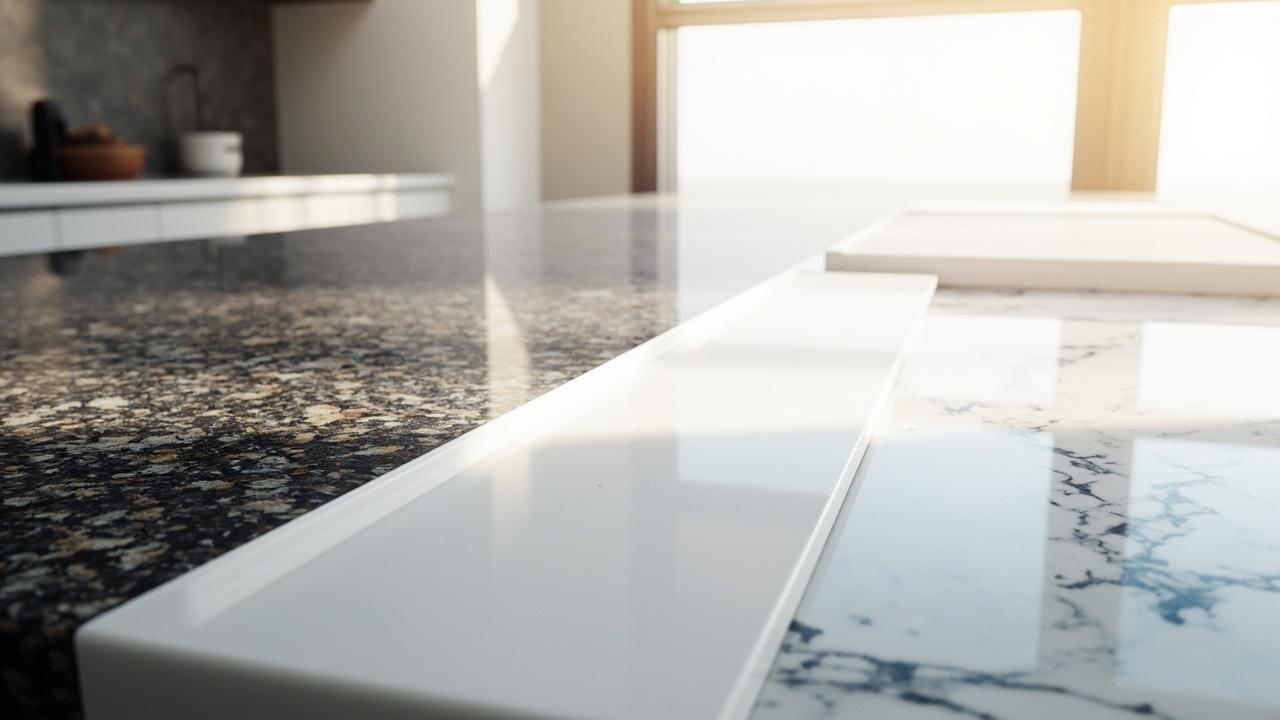
Quartz vs quartzite and marble splits on looks versus labor. Quartzite ($90 to $180 installed) and marble ($90 to $180 installed) offer depth and veining no factory fully reproduces, with real trade-offs: quartzite needs sealing, marble etches under lemon and vinegar within seconds. Buyers who choose marble knowingly accept patina as character. Buyers who choose it unknowingly write angry reviews. If you love marble veining but fear marble behavior, veined quartz is the compromise that keeps the look and skips the anxiety.
Quartz vs solid surface and laminate covers the budget question. Solid surface ($60 to $110 installed) offers seamless sinks and easy repairs but scratches and scorches more easily. Laminate ($25 to $55 installed) refreshes a kitchen for a fraction of quartz money and modern prints look good at arm’s length, though seams, edges, and heat exposure give it away. Butcher block ($35 to $75 installed) brings warmth islands love, with oiling chores and zero forgiveness for standing water. The full budget math across every material lives in kitchen countertop installation cost, worth reading before you lock a material.
Cost, Thickness, Seams, and Installation Realities
Quartz countertop cost per square foot installed lands at $55 to $120 for most kitchens: entry-level patterns $55 to $85, mid-grade $85 to $110, premium and designer veining $110 to $150. A typical 30 square foot kitchen totals $2,500 to $5,000 all in. Material is only about half the bill. Fabrication (cutting, edge polishing, seam work) takes 30 to 40 percent, installation and delivery the rest. Upgraded edges add $10 to $30 per linear foot, each sink or cooktop cutout $100 to $300, tear-out of old tops $200 to $600.
2 cm vs 3 cm quartz is a structural and visual choice. Three-centimeter slabs cost more per square foot but span farther, need no plywood underlayment in most layouts, and take bolder edge profiles. Two-centimeter slabs save money and suit bathrooms or light-use areas, but need full plywood support and look thin on large islands unless the edge is laminated to appear thicker. For a main kitchen with seating overhangs, 3 cm is the calmer buy. Overhangs past 12 inches need corbels or steel brackets regardless of thickness, so price supports in the same estimate.
Approve quartz seam placement on the shop drawing before cutting starts, and finalize sinks and appliances before template day. Digital templates capture dimensions to 1/32 inch, and anything that changes afterward breaks that precision. Ask the fabricator where seams fall and how veining will align there. The answer reveals craftsmanship faster than reviews. Cabinets must be level and screwed to studs first, because stone forced onto a twisted base cracks months later at the stress point, a classic entry in kitchen renovation common problems.
Care, Mistakes, and Your Final Decision
Quartz countertop daily care stays simple: warm water, mild dish soap, soft cloth or sponge. Dried spills lift with a plastic scraper, never a metal blade. Skip bleach-heavy cleaners, oven cleaner, and abrasive pads, which dull the finish over time. Three mistakes ruin more quartz than everything else combined: hot pans placed directly on the surface, cutting straight on the counter instead of a board (quartz resists scratches, it does not grant immunity), and sliding rough ceramics that grind grit across the finish.
The decision compresses to conditions. Choose quartz if your kitchen sees heavy daily use with kids and spills, you want minimal maintenance, and your layout avoids all-day direct sun on the counters. Skip quartz if scorching-hot pans land on counters regularly, the counters sit in strong daily sun or outdoors, or you want a genuinely unique natural slab. If budget forces the call, the split logic in cabinets vs countertops: where your money matters more shows when to spend on stone and when cabinets deserve the dollars first.
Ready to move forward, price your exact layout with the ranges in kitchen countertop installation cost, then sequence the whole project through how to renovate a kitchen step by step so template day lands after cabinets are set and level. Quartz rewards buyers who respect its two limits and punishes buyers who never learned them. Now you know both.