
Your shower runs cold halfway through, or you spot rust at the base of the tank, and suddenly a new water heater jumps to the top of the list. Quotes swing by thousands, which feels confusing until you see what sits behind the number. Water heater installation cost is a complete installed price that covers the unit, labor, venting or electrical work, and code required extras.
How Much Water Heater Installation Costs in 2026
A standard 40 to 50 gallon tank replacement typically costs $1,200 to $2,800 installed when gas, venting, and electrical connections already suit the new unit. A whole house tankless install typically costs $2,500 to $5,500 installed, while a heat pump model typically costs $2,800 to $5,000 installed. Like for like swaps land near the low end, fuel switches and relocations land high.
What moves you within those bands is rarely the brand name. The bigger levers are heater type, fuel, capacity, and how much of the surrounding system needs updating. A storage tank water heater that drops into the same footprint with the same fuel is a half day job. Change fuel, move the unit, or add a condensate route, and labor plus materials climb fast.
Code extras matter too. Many quotes add a permit at $50 to $300, an expansion tank at $150 to $350 installed, venting updates at $300 to $900, and a gas line upgrade at $500 to $1,500 when the existing line is undersized for tankless demand. Ask every bidder to list the unit, labor, permit, and each adder on separate lines. Two bids that differ by $1,000 often describe different scopes, not different skill.
How Each Water Heater Type Works and What the Specs Mean
A storage tank heats 40 to 50 gallons and holds it ready, with a first-hour rating of 60 to 90 gallons that tells you how much hot water it can deliver in a busy morning hour. Gas tanks recover faster than standard electric tanks, which is why a family of four often picks a 50 gallon gas tank over a 40 gallon electric one. It is simple, proven, and forgiving of modest electrical panels.
A tankless unit has no stored reserve. It fires a powerful burner or heating element only when a tap opens, and its output is rated in gallons per minute, often 5 to 11 GPM for whole house gas models at a given temperature rise. That endless shower feeling is real, but only if the unit is sized for simultaneous uses in your climate. Cold inlet water in winter lowers effective GPM, so northern homes need more capacity than the brochure suggests.
A heat pump model pulls warmth from surrounding air and moves it into the tank, using far less electricity than plain resistance heating. Its efficiency shows up as a high energy factor, often labeled as Uniform Energy Factor around 3.0 to 4.0, versus about 0.60 to 0.95 for standard tanks. It needs roughly 700 to 1,000 cubic feet of air space or ducted air, plus a condensate drain, and it cools the room slightly while it runs.
Specs only help when you match them to your house. Check first hour rating for tanks, gallons per minute at your winter temperature rise for tankless, and energy factor plus space and drainage for heat pumps. If your plumbing layout is a mystery, read what a home plumbing system includes before you size anything.
Tank vs Tankless vs Heat Pump: Costs Compared Side by Side
A 50 gallon gas tank at $1,200 to $2,800 installed costs least upfront, a tankless system at $2,500 to $5,500 costs most to retrofit, and a heat pump at $2,800 to $5,000 sits between them with the lowest running cost. The table below compares the three on equal criteria so you can weigh purchase price against space, fuel, and maintenance.
| Criteria | Storage Tank 40 to 50 Gal | Tankless Whole House | Heat Pump 50 to 80 Gal |
|---|---|---|---|
| Installed cost | $1,200 to $2,800 | $2,500 to $5,500 | $2,800 to $5,000 |
| How it heats | Heats and stores a full tank | Heats water on demand as it flows | Moves ambient heat into stored water |
| Key sizing spec | First hour rating, 60 to 90 gal | Flow rate, 5 to 11 GPM | Uniform Energy Factor, 3.0 to 4.0 |
| Typical lifespan | 8 to 12 years | 15 to 20 years with descaling | 10 to 15 years |
| Space and needs | 21 to 24 inch diameter footprint, closet or garage | Wall hung box, needs large gas line or 120 to 200 amp service | Taller tank, needs air volume plus condensate drain |
| Running cost | Moderate, standby loss all day | Lower standby loss, high peak fuel draw | Lowest electric use, slows in cold rooms |
| Maintenance | Anode and flush every 1 to 2 years | Yearly descale in hard water areas | Filter cleaning plus tank flushing |
The pattern is straightforward. The tankless water heater wins on endless supply and wall space but often needs the priciest infrastructure. The heat pump water heater wins on monthly energy use but asks for room volume and a drain. The plain tank wins on install day price and simplicity, then gives some of it back through standby heat loss year after year.
Use the table for total ownership, not just day one. A tankless unit that lasts 18 years with annual descaling can close the gap with two tank replacements over the same period. A heat pump in a warm garage can pay back its premium in 3 to 6 years for a busy household. If your pipes are aging too, price that separately with PEX versus copper piping compared so repiping never gets blamed on the heater.
Installation Steps, Common Cost Adders, and Mistakes to Avoid
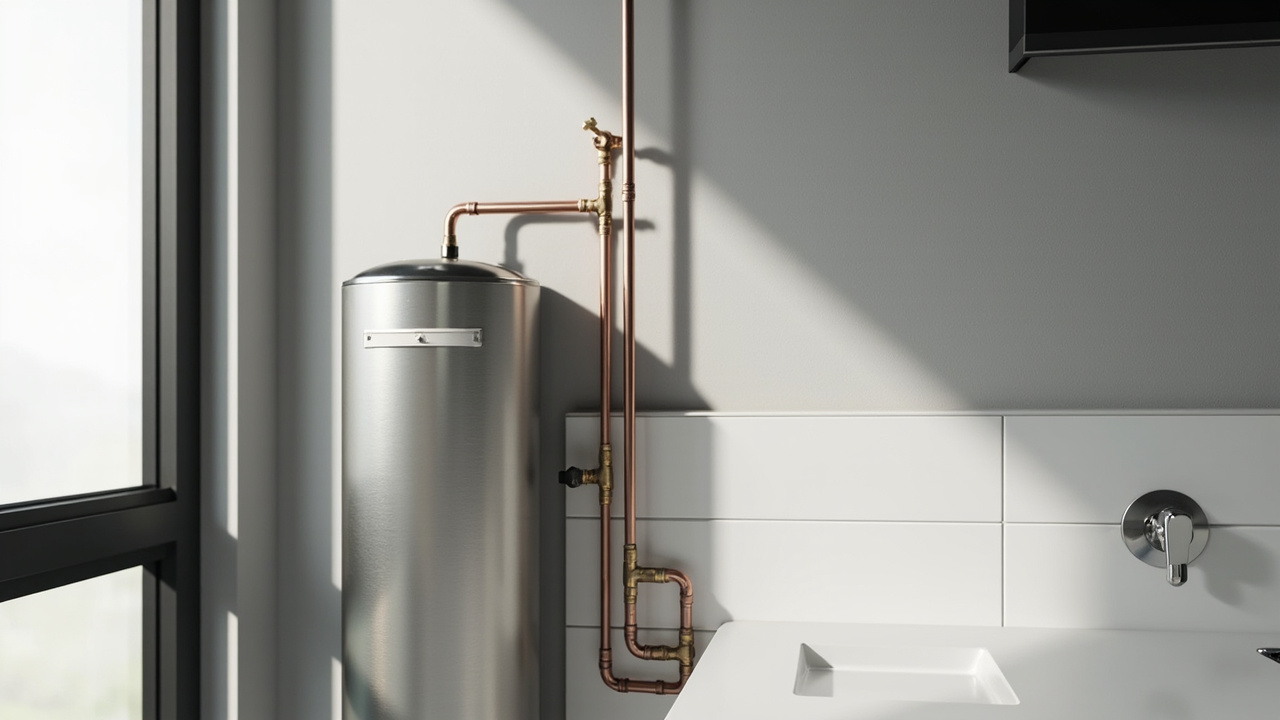
A like for like tank swap takes 2 to 4 hours and usually costs $1,200 to $2,800, while a tankless conversion takes 1 to 2 days and usually costs $2,500 to $5,500 because gas, venting, and condensate change. A clean install follows the same sequence: permit and sizing, safe disconnect and drain down, set and level the new unit, connect water, fuel, and vent, then fill, purge, test, and set temperature to 120 degrees F (49 degrees C).
Adders show up where the old setup no longer meets code. A new gas line run or upsized branch runs $500 to $1,500, stainless or PVC venting runs $300 to $900, and the expansion tank adds $150 to $350 where closed systems require it. A drain pan with a plumbed drain adds $100 to $250 and is cheap insurance on finished floors. Electrical upgrades for electric tankless or heat pump circuits can add $400 to $1,200.
Three mistakes quietly inflate the bill. First, skipping the permit to save $50 to $300 risks a failed inspection and no record for insurance or resale. Gas and venting work needs a licensed professional following the International Residential Code (IRC) and the International Fuel Gas Code (IFGC). Second, reusing a corroded shutoff or flue cap to save $40 often causes the first service call. Third, ignoring hard water shortens every type.
Small parts protect big spending. An anode rod check every 2 to 3 years can add years to a tank for about $50 to $100 plus labor. Annual flushing and a 120 degree F setpoint keep the system safe and efficient. Get model, capacity, vent material, and permit number in writing on the invoice.
When the Standard Price Does Not Apply and What to Do Next
Standard ranges assume 40 to 50 gallons, same fuel, same location, adequate gas or electrical capacity, and an accessible install path under current code. Prices rise when any of those assumptions break, when the unit moves rooms, when fuel switches from electric to gas or the reverse, when the panel is full, or when the heater sits in a finished attic or tight closet that slows labor.
Tight spaces and cold rooms deserve special care. Heat pumps lose efficiency below about 40 degrees F (4 degrees C) and should not sit in a freezing garage without ducting options. Tankless units in hard water areas above 7 grains per gallon need isolation valves and yearly descaling. Exterior vent terminations need proper clearance from windows and intakes per IRC.
Use simple if then logic. If you need the lowest upfront cost and have space for a tank, choose a 50 gallon high efficiency tank because it installs fast and parts are everywhere. If showers stack up back to back and wall space is tight, choose tankless because continuous flow solves the scheduling fight, provided your gas service or panel supports it. If electricity rates are high and you have a warm utility room with a drain, choose a heat pump because daily energy savings repay the premium.
Your next step is a short, comparable bid round. Measure the closet or alcove, note fuel type and panel space, photograph the vent path and drain route, and send the same packet to three licensed installers. Ask each to confirm sizing and list code adders separately, using HVAC replacement cost factors as a reference when venting overlaps with heating work. The cheapest heater is the one sized right, vented right, and installed once.