
Most lists of home energy efficiency upgrades are ordered by how visible the project is, not by what it returns. New windows top the list because you can see them from the street. Air sealing rarely appears at all, even though it is usually the cheapest work with the fastest payoff. Get the ordering wrong and you spend your budget on the wrong project.
The DOE treats upgrades as a hierarchy, and it separates the high-priority work from the work that belongs in a larger renovation. That hierarchy is the useful part, because it explains why the obvious project is usually the wrong first project.
Here is how the measures rank, what each one actually fixes, and what it costs to do.
High Priority vs Lower Priority: The Order That Decides Your Return
The federal weatherization guidance sorts home energy work into two tiers, and the split is worth understanding before you spend anything.
The high priority tier is work that is relatively easy and delivers results quickly in most homes: sealing known cracks and gaps, air sealing the attic, basement, and wall partitions, increasing attic insulation, insulating and air sealing the basement rim joist, and adding storm windows or solar-control film to existing windows.
Replacing windows and doors that are already damaged also sits in this tier. The work that belongs in a larger renovation is installing brand new windows and doors, and increasing wall insulation. Neither belongs in your first project.
- Air seal known cracks and gaps with caulk, gaskets, or weatherstripping.
- Air seal the attic, basement, and wall partitions.
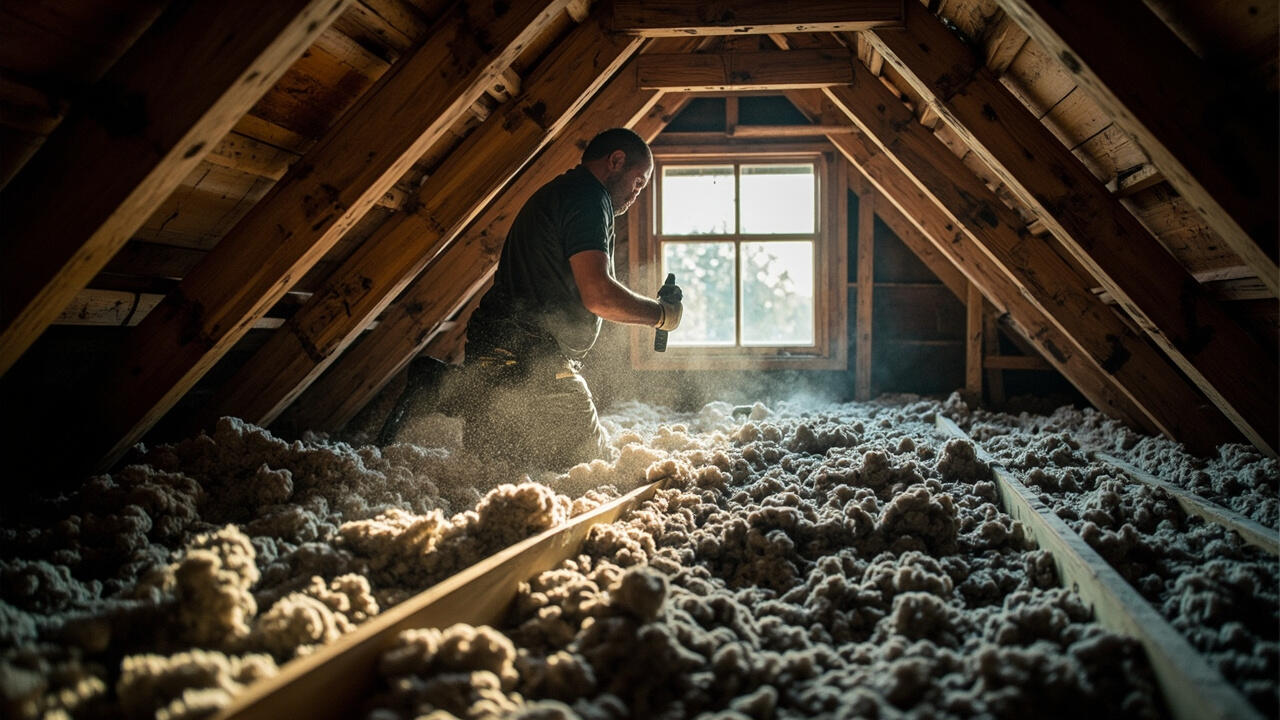
- Increase attic insulation, and seal the rim joist while you are up there.
- Add storm windows or solar-control film to existing windows.
- Replace windows and doors that are already damaged.
That ordering inverts most consumer lists, and it is not arbitrary. The high priority measures attack the losses that every house has, and they multiply each other. Seal the attic plane and add insulation there, and both the conduction and the infiltration through that plane drop together.
One term causes endless confusion here, so it is worth separating clearly. An air barrier blocks moving air and works in both directions, in every season.
A vapor barrier blocks moisture moving through vapor, and it only belongs on the warm side of a floor in a heating climate. Crawl space encapsulation is a warm-side floor assembly and a vapor management job. Attic air sealing at the ceiling plane is an air barrier job.
Confusing the two leads to trapping moisture inside a wall or floor, which is a repair that costs more than the upgrade.
Air Sealing Works Best When You Target Specific Leaks
There is a detail in the DOE’s own retrofit case studies that changes how you should approach air sealing, and it is the most useful thing on this page.
In a documented whole-home retrofit, the modeled expectation for air sealing was a 30 percent reduction in infiltration. After the work, measured results came in around 10 percent.
The case study attributes the gap to the fact that specific, accessible air sealing measures had not been identified and targeted beforehand. Its stated lesson is to schedule the high-return air sealing work EARLY, so there is still budget left to adjust when surprises appear.
Read that again and the shift is clear. Air sealing is not a blanket treatment applied to the whole house. It is targeted work at the specific points where air actually moves, and you find those points by testing.
A blower door test is what turns the second approach into a workable one.
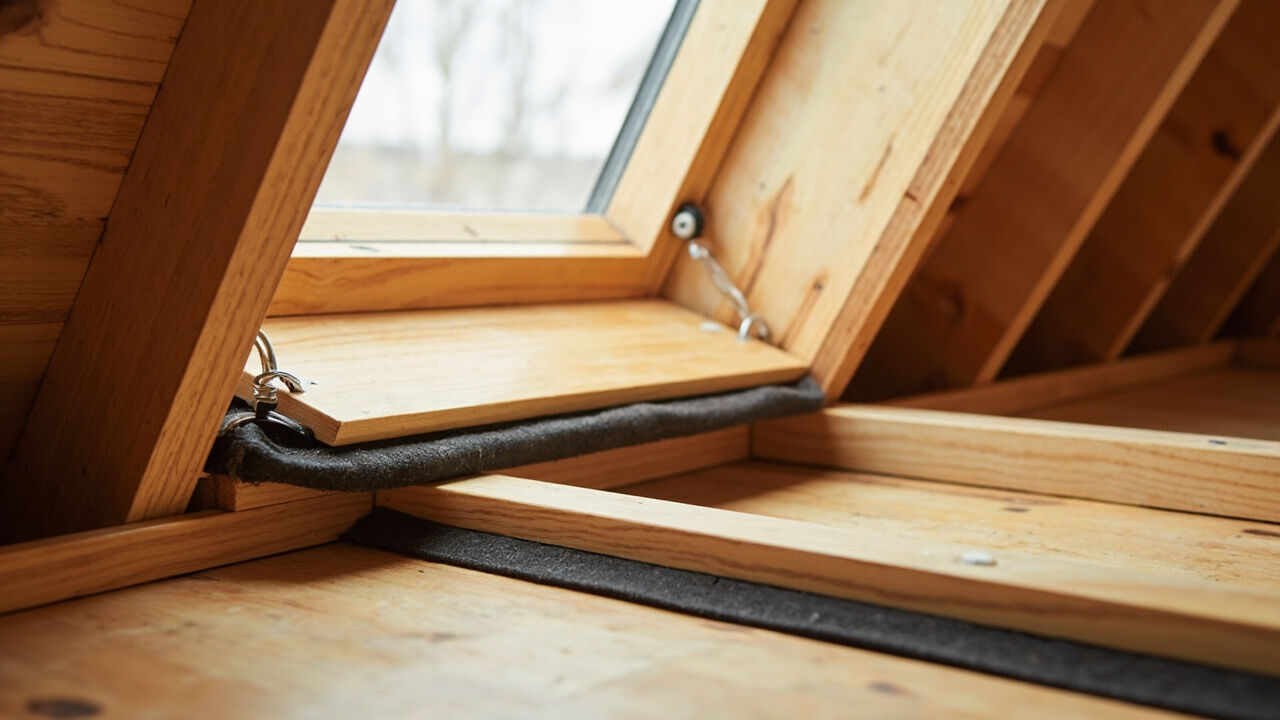
Once you know where the leaks are, the product is usually not complicated. A register boot that pulls air from a duct into a room gets a gasket. Gaps that flex and move, such as window sashes and doors, get weatherstripping.
Gaps wider than a bead of caulk can fill want backer rod behind the bead. Duct seams get mastic or foil-backed tape, and our guide to exterior caulking and sealing covers matching the right sealant to the gap.
Insulation, Ducts, and Equipment: What Each Measure Actually Fixes
Three more families of measure, each attacking a different part of the system.
Attic insulation is usually the cheapest large gain available, because the attic floor is the largest unconditioned surface in most houses and it is reachable. Where it is thin, topping it up costs far less than opening up walls and returns quickly. Wall insulation is the expensive cousin, and it is the reason wall work sits in the lower priority tier.
Duct sealing and duct insulation address conditioned air that never arrives. ENERGY STAR reports that sealing and insulating ducts can improve heating and cooling system efficiency by as much as 20 percent.
The advice is to start with the ducts that run through the attic, crawl space, unheated basement, or garage. Those are the runs sitting in unconditioned space all year. Ducts buried inside the conditioned envelope barely matter.
Equipment is the last family, and the reason is causal rather than financial. A heat pump or a high-efficiency furnace converts fuel to heat more efficiently, but it cannot heat air that leaves through a gap in the attic.
Seal and insulate first, then the equipment upgrade works on a smaller load, which is exactly the condition you want.
Water heating and appliances sit in the same category of good sense but lesser returns. An efficient water heater or a set of efficient appliances trims the bill without touching the building, and those savings are real without being transformative.
What Each Upgrade Costs and How Fast It Pays Back
Return figures, so you can compare projects on one scale rather than on how exciting they look.
The EPA estimate is the anchor: homeowners save an average of 15 percent on heating and cooling costs, or about 11 percent on total energy costs, by air sealing and adding insulation in attics, floors over crawl spaces, and basements. DOE weatherization guidance puts the combined figure at up to 11 percent of total energy costs.
Replacing single-pane windows with an ENERGY STAR option can cut energy bills by up to 13 percent. That is a real number and a large job.
It is also the measure with the longest return period of anything on this page, commonly 20 to 30 years, which is why it stays in the lower tier for most houses.
Air sealing plus attic insulation is the opposite profile: a payback period typically in the 3 to 8 year range, and a documented case of about $1,500 to $3,000 for attic insulation on a typical home, recouped in three to five years.
Two levers can shift these numbers in your favor. Utility rebate programs frequently cover a meaningful share of sealing and insulation work, and your local utility is the only place to check what is running now.
Separately, the federal 25C credit returns 30 percent of qualified spending, generally capped at $1,200 a year, with sub-caps for audits, windows, doors, and heat pumps.
Choosing Which Upgrades to Do First in Your House
The ranking generalizes, but three conditions decide which measure actually comes first for your house.
Start with climate zone. In hot and humid regions, radiant barriers, attic insulation, and duct sealing carry the day because cooling dominates. In cold regions, air sealing and attic insulation lead because infiltration dominates. In marine climates, expect to do both well.
Second, check what your ducts run through. If they run through an attic or garage, duct sealing is likely your second project. If they run inside the envelope, it is a lower priority than the attic work you may have been ignoring.
Third, and this is the one that matters most, know what your home has inside it. If there is a natural-draft furnace, boiler, water heater, or fireplace, a combustion safety test has to happen before any sealing work, and again after. Ask for it explicitly in the scope of the assessment so it does not get skipped.
Whatever you choose, this is not a weekend project. Anything involving combustion appliances, structural changes, or duct work needs a licensed professional who can test the result and tell you whether it worked.
If you want the measurement side first, our guide to home energy efficiency types compared explains how to pick the right assessment, and the home energy efficiency guide explains what the numbers mean once you have them. For the attic specifically, roof insulation and energy efficiency covers the details, and HVAC ductwork sizing covers the distribution side.
Start with what the test tells you, then work down the priority list. That order is free, and it is the reason the first dollar does the most work.