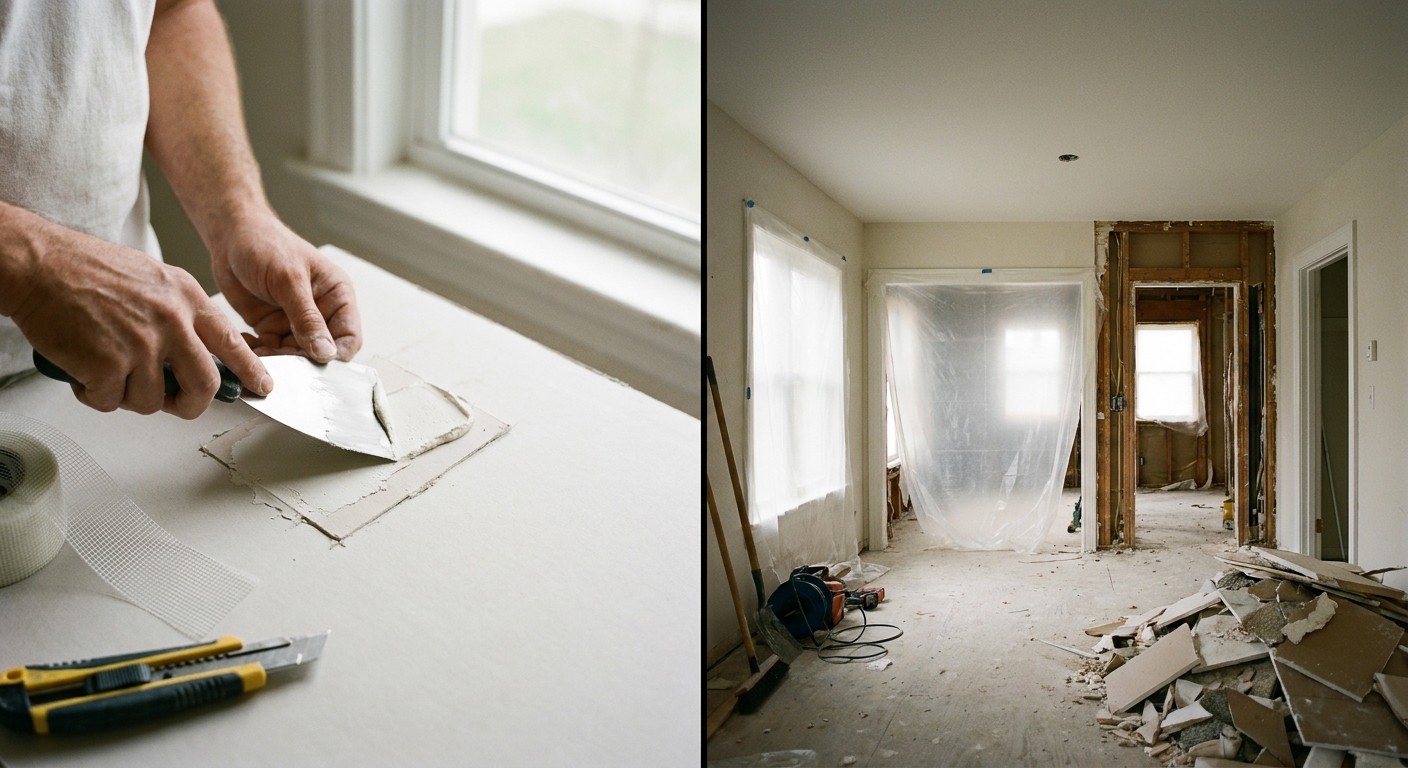

You are standing in a room that needs work. The drywall has a crack running from the corner. The floor slopes where it should not. You know something must be done, but the first question is not what to spend or who to call. It is whether this is a repair or a renovation, because the wrong label will cost you time, money, and the wrong contractor.
Home renovation is a structural or spatial change that alters how a space functions. Repair is restoration that returns an existing system to its intended condition without changing its purpose. The difference matters more than most homeowners realize, because renovation involves permits, design decisions, and budget ranges of $100 to $350 per square foot, while repair usually sits well under $50 per square foot and rarely requires a permit. Choose the wrong category and you will either overbuild a simple fix or undershoot a problem that needs reconstruction.
The deciding factor is not your budget. It is whether the existing structure can still perform its job. A repaired wall still fails if the framing behind it has settled. A renovated room still leaks if the moisture barrier was never considered. This page gives you the criteria to decide before you sign a contract or buy materials.
What Home Renovation Is vs What Repair Does
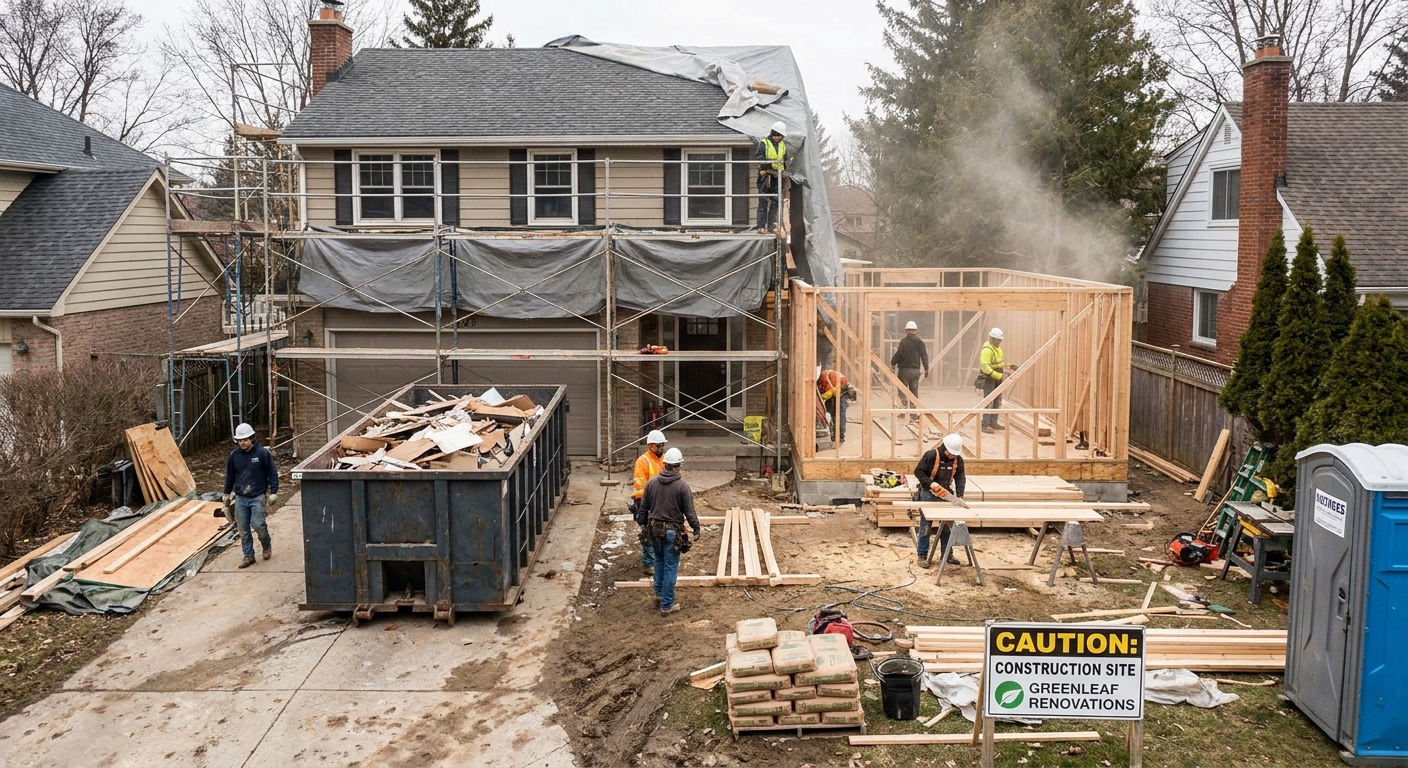
Renovation changes the form, function, or capacity of a space. It moves walls, raises ceilings, replaces subfloors, or reroutes mechanical systems. The outcome is a different building state than what existed before the work began. Repair keeps the same form and function. It replaces damaged components, re-seals joints, or reinforces weakened points so the original design continues to perform as intended.
Think of renovation as rewriting a paragraph. Think of repair as fixing the grammar. Both make the text better readable, but only one changes what the text says. In construction terms, renovation replaces a 2×4 stud with a larger dimension or relocates it entirely. Repair fills a nail hole, replaces a section of rotted sill plate with matching lumber, or resets a loose joist hanger. The building envelope stays in the same place.
Permit requirements usually separate the two categories. Structural changes, electrical rerouting, plumbing moves, and any alteration to load-bearing elements require permits in most jurisdictions under the International Residential Code. Cosmetic updates like paint, trim, and flooring replacements rarely do. If a project needs a permit, it is closer to renovation than repair, though some municipalities blur that line for minor structural reinforcement.
The cost gap between categories is real. Renovation carries design fees, permit fees, contingency budgets of 10 to 15 percent, and higher labor rates because skilled trades are called in sequence. Repair typically uses a single trade, materials bought at retail, and a shorter timeline. A homeowner who mislabels a renovation as a repair will be surprised when the quote jumps from a few thousand dollars to tens of thousands.
How to Diagnose: Criteria That Separate Repair from Renovation
Four criteria decide the category. Each one is independent. When more than one points toward structural change, the project is renovation.
Criterion one is load path integrity. If the structure that transfers weight from roof to foundation is compromised, repair alone cannot restore safety. Settling cracks wider than three-eighths of an inch, sagging joists that deflect more than L/360, or rot that reduces a lumber cross section by more than 30 percent all demand reconstruction. Patching a compromised load path is cosmetic theater. The house still shakes when the wind blows.
Criterion two is moisture history. Active water intrusion that has reached framing, subfloor, or insulation requires more than surface repair. Once moisture enters wood framing, fungal decay follows within months in humid climates. The fix is removal, replacement with treated or durable species, and correction of the water entry path. Patch paint over wet framing and the mold returns next season. Renovation here means opening walls, not just patching them.
Criterion three is functional change. If the goal is to use the space differently, renovation is required. Turning a three-bedroom layout into two larger rooms means moving load-bearing walls. Converting an attic into livable space requires adding structural support, insulation, ventilation, and egress windows. Repair cannot create a function that did not exist. Only renovation can.
Criterion four is material lifespan. If the existing materials have reached or exceeded their designed service life, repairing individual failures becomes a lottery. Asphalt shingles last 20 to 30 years. Vinyl siding lasts 20 to 40 years. Drywall installed in the 1980s may contain problematic gypsum. Replacing one shingle on a 25-year-old roof is repair. Replacing the entire roof system is renovation. The distinction lies in whether the remaining system can outlast the patched component.
Comparison: Side-by-Side Criteria for Decision-Making
The table below summarizes how each criterion points toward repair or renovation. Use it as a checklist, not a flowchart. Real projects often mix categories.
| Criterion | Points Toward Repair | Points Toward Renovation |
|---|---|---|
| Load path | Intact framing, minor cosmetic damage | Sagging, rot in structural members, cracks wider than 3/8 in |
| Moisture | Surface dampness, failed sealant, minor stain | Active intrusion into framing, mold in cavity, repeated failure |
| Function | Same use, same layout | New room purpose, moved walls, added square footage |
| Material age | Materials below 50 percent of rated life | Materials near or past end of service life |
| Permits | No structural, no electrical, no plumbing changes | Structural alteration, new circuits, moved fixtures |
| Budget range | Under $5,000 for typical room | $10,000 to $50,000+ depending on scope |
A single “renovation” column does not mean automatic rejection. Mixed signals are common. A 1970s kitchen may have sound cabinets that only need refinishing, but the floor joists underneath may be undersized for modern appliance loads. In that case, the cabinetry work is repair. The structural work is renovation. Treating both as repair saves money now and costs more later when the floor fails.
Field example: a homeowner reported a “leaky bathroom.” The tile grout had failed and the vanity showed water damage. Surface repair seemed obvious. Opening the wall revealed rot in the stub studs around the toilet flange and a cracked shower pan. The repair scope expanded from $800 to $4,200 once the cavity was visible. The initial diagnosis was wrong because moisture damage hides until it is too late.
This is why the moisture criterion deserves extra attention. Water does not announce itself on the surface. By the time paint bubbles or flooring warps, the hidden damage is already advanced. If the damage is confined to non-structural trim and finish, repair is appropriate. If it reaches framing or waterproofing membranes, renovation is the honest answer.

When to Stop and Call a Professional
Some diagnostics require trained eyes. Homeowners can assess cosmetic conditions confidently. Structural, electrical, and plumbing conditions are different. The line between confident DIY and dangerous guesswork runs through load calculations, moisture mapping, and code compliance.
If any of these conditions appear, pause before proceeding with a repair-only plan:
Cracks wider than three-eighths inch in foundation walls, beam hangers, or where walls meet ceilings suggest settlement or framing movement. Patching the crack addresses appearance, not cause. A structural engineer or licensed contractor should evaluate the load path.
Spongy floors that bounce under normal weight indicate subfloor or joist deterioration. Walking on compromised flooring can cause injury. The fix is replacement, not surface treatment.
Musty odors behind walls or under cabinets suggest hidden mold or rot. Smell is an early warning. Waiting for visible growth means waiting for structural damage.
Electrical panel issues such as burning smells, discolored outlets, or breakers that trip repeatedly are not repair candidates. These require a licensed electrician immediately.
The contingency budget rule applies here. Any renovation project should reserve 10 to 15 percent of total cost for hidden conditions. A $20,000 renovation should carry a $2,000 to $3,000 contingency. Without it, surprises become choices between unfinished work and credit card debt.
Next Steps: Mapping Your Decision to the Right Path
Once you have applied the four criteria, the path forward becomes clear. If three or more criteria point toward repair, obtain quotes from handymen or general contractors for the repair scope. If two or more point toward renovation, engage a designer or architect before selecting contractors. Renovation requires drawings. Repair rarely does.
The home renovation cost guide breaks down budget ranges by scope so you can match your diagnosis to realistic numbers before calling anyone. The home renovation sequence guide explains the step order that prevents costly rework when you do proceed. Understanding sequence turns a confusing project into a manageable timeline.
The final question every homeowner should ask is not “How much will this cost?” but “What happens if I choose the wrong category?” Pick repair for a renovation and you will pay twice. Pick renovation for a repair and you will pay extra for work you did not need. The criteria above exist to prevent both mistakes.
Take the checklist. Apply it honestly. The answer will tell you which path to walk next.