
Flooring is one of the most visible parts of a renovation, and the install cost is where the biggest price surprises appear. Material choices are clear. Labor choices are less clear. An average homeowner can install vinyl plank and click-lock laminate in a weekend. Ceramic tile, hardwood nail-down, and solid sheet vinyl usually require a professional. That choice alone can shift a 400 sq ft project from $2,000 to $8,000. This page owns the installation cost breakdown so the flooring buying guide and material comparison pages can stay at the system level. For the broader flooring context, the flooring buying guide and the tile vs vinyl wet area comparison explain which material fits which room. For laminate-specific scope, the laminate installation page covers that option in detail.
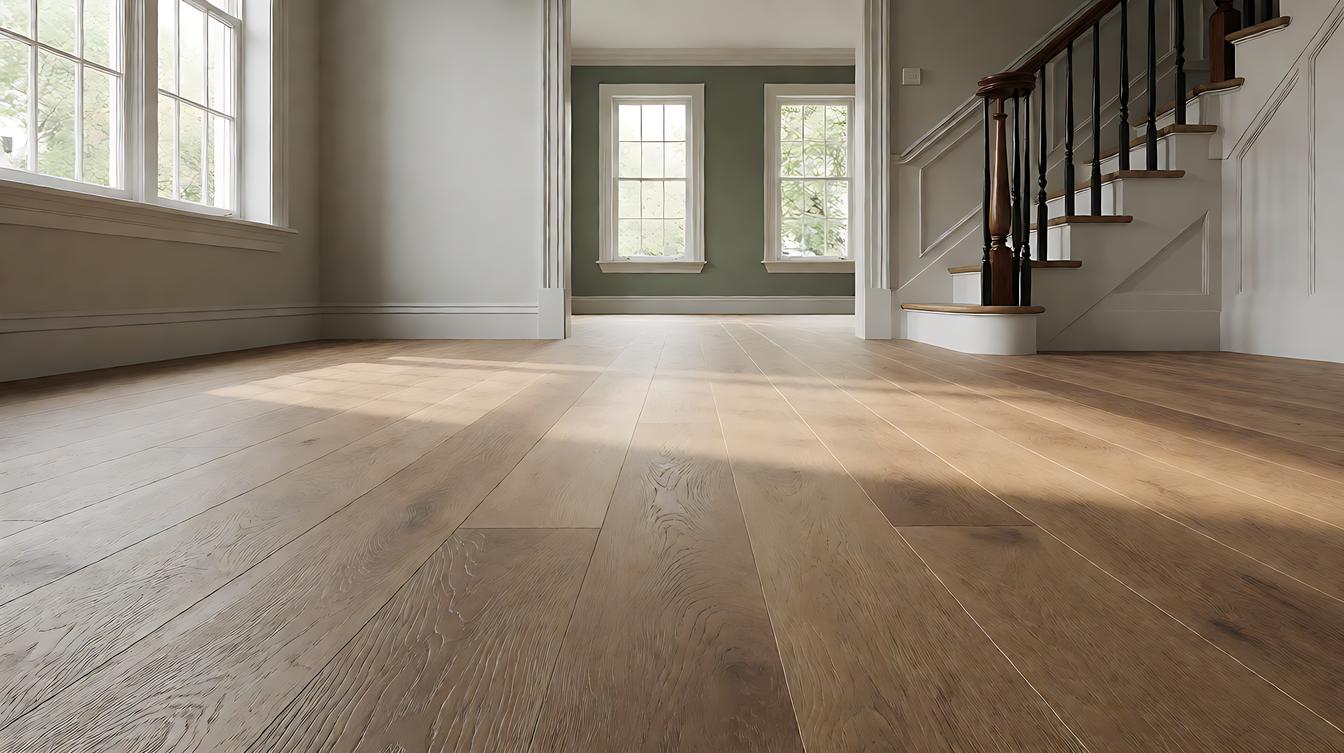
What Flooring Installation Cost Per Square Foot Means and What It Includes
Installed cost combines material and labor, minus trim and transition pieces unless specified. One square foot is one square foot of floor area, not one square foot of box purchased. Most flooring is sold by the square foot in the box, but the box coverage includes about 10 percent waste for cuts and pattern matching. Always buy 10 to 15 percent extra. The installed cost also assumes a sound subfloor. If the subfloor needs repair, leveling, or moisture mitigation, those line items add cost before the new floor goes down.
Five line items make up the installed cost range. Material cost runs from the wholesale box price to the retail box price. Underlayment runs $0.50 to $2.00 per square foot for most resilient floors and $0 for tile on cement board. Trim and transition pieces run $2 to $8 per linear foot. Labor runs $2 to $15 per square foot depending on material and skill. Disposal of old flooring runs $1 to $3 per square foot. Each line item is where budgets diverge. A cheap floor with expensive install can beat an expensive floor with cheap install, and vice versa.
Installed Cost Breakdown by Material Type
| Material | Low USD per sq ft | Mid USD per sq ft | High USD per sq ft | DIY-friendly |
|---|---|---|---|---|
| Laminate | $3 | $5 | $8 | Yes |
| Engineered wood | $5 | $9 | $15 | Difficult |
| Ceramic tile | $6 | $12 | $25 | No |
| Porcelain tile | $7 | $14 | $28 | No |
| Waterproof vinyl plank | $4 | $7 | $12 | Yes |
| Hardwood (solid) | $6 | $10 | $18 | No |
| Natural stone | $8 | $18 | $40 | No |
These numbers assume a standard rectangular room with no cuts around pipes or stairs. Stairs, closets, and irregular layouts add 10 to 25 percent labor. Old flooring removal adds $1 to $3 per square foot. Subfloor leveling adds $2 to $6 per square foot. Moisture testing and mitigation for below-grade slabs adds $1 to $3 per square foot. The mid-range column is the most useful comparison because it reflects average material quality, average skill, and average room complexity. The low column assumes DIY or contractor side-work. The high column assumes premium material, intricate layout, or specialty install. For material choice and value, the hardwood vs engineered comparison and the roofing cost comparison (contextual analog) help, but the flooring buying guide is the direct partner.
When to Hire a Pro vs DIY Within Flooring Installation Cost
Three rules decide the right installer. Material complexity is the first. Click-lock vinyl and laminate are the easiest DIY materials. Nail-down hardwood, glue-down vinyl, and tile are the hardest. Subfloor condition is the second. Uneven, soft, or moisture-damaged subfloors require prep that most DIYers cannot do correctly. Warranty terms is the third. Many manufacturers void the warranty if the floor is not installed by a certified installer. Always check the warranty before choosing DIY.
Two practical examples make this concrete. A 400 sq ft bathroom with vinyl plank on a sound subfloor runs $2,000 to $3,200 installed by a pro or $1,600 to $2,400 by a capable DIYer. A 400 sq ft bathroom with porcelain tile on a cement backer board runs $3,200 to $8,000 installed by a pro and is rarely DIY viable. The cost gap is material and skill. The lifetime gap is also real. A correctly installed tile floor lasts 30 to 50 years. A correctly installed vinyl floor lasts 10 to 20 years. The right choice depends on the room use and the budget.
Hidden Costs and Where the Budget Usually Breaks
Most flooring budgets break on three hidden lines. Subfloor repair is the first. A soft spot under a bathroom floor is often a rotted joist or degraded plywood that shows only after the old floor comes up. Repair runs $150 to $400 per joist bay. Moisture mitigation is the second. Below-grade slabs in basements can wick water. A vapor barrier or cementitious waterproofing underlayment runs $1 to $3 per square foot. Mold remediation runs $500 to $2,000 depending on extent. Trim and transitions are the third. Baseboards, shoe molding, and door transitions add $200 to $600 on a typical room. Installers sometimes quote without these pieces to look cheaper. Always ask for trim in the bid.
The cheapest quote is rarely the cheapest outcome. A low bid that excludes subfloor prep, moisture mitigation, and trim will be the most expensive outcome. Ask for line items. Compare line items, not totals. For homeowners still planning the full scope, the home renovation budget page and the flooring maintenance and repair page close the lifecycle cost picture. For the material overview, the flooring buying guide remains the anchor.
Frequently Asked Questions About Flooring Installation Cost
Is laminate cheaper than vinyl? Yes. Laminate runs $3 to $8 per square foot installed. Vinyl runs $4 to $12. Both are DIY-friendly.
Does subfloor repair cost a lot? It depends. A small rot patch runs $200 to $400. A full subfloor replacement runs $1,000 to $3,000 on a typical room.
Can I install tile myself? Technically yes. Practically no, unless you have prior tiling experience. Tile requires precise layout, thin-set timing, and grout control. Mistakes show and cost more to fix.
How much extra material should I buy? 10 to 15 percent above the measured area for cuts, patterns, and future repairs.
Do I need to remove the old floor? Usually yes. Old vinyl over old vinyl is risky. Old hardwood over concrete is risky. Consult the manufacturer warranty and a licensed installer if unsure.