
Three roofing surfaces sit on most shortlists because they each solve a different problem well, and the wrong one is rarely a defect of the material. Asphalt is the value default. Metal is the lifetime bet. Tile is the lifetime plus architecture bet, only when the structure can carry it. The honest answer is conditional, which is exactly why a one-line “metal is best” answer online gets so many buyers in trouble. The right roofing and shingles choice depends on slope, climate, structure, budget per year of service, and neighborhood or HOA rules, and this page owns the side-by-side comparison so other pages can own the depth on each variant. For readers still scoping whether a new roof fits in a broader scope, the home renovation budget framework anchors the cost side, and repair vs replace decision logic tells you whether reroofing at all is the right move.
Asphalt vs Metal vs Tile Roofing: What Each Material Is and Where It Wins
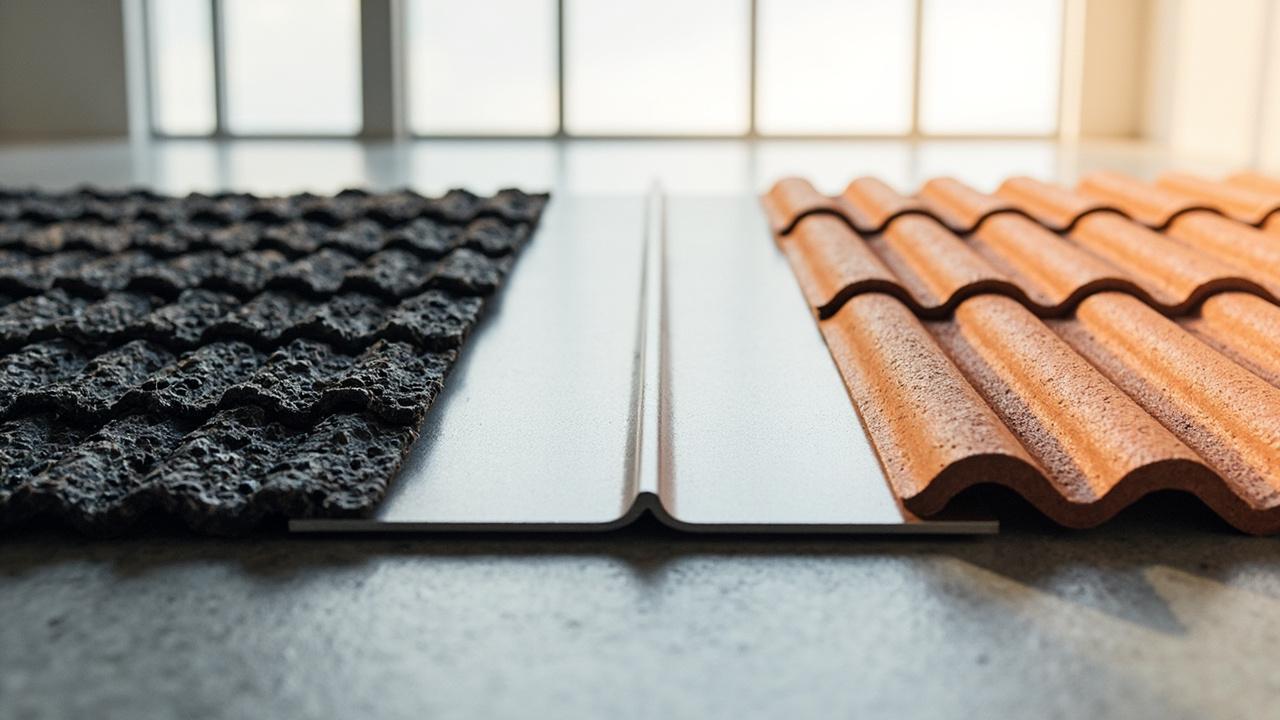
Asphalt is a fiberglass mat saturated with asphalt and surfaced with granules that block UV. Architectural laminate is two mats laminated with offset exposure lines and lasts 22 to 30 years. 3-tab is a single mat with cutouts and lasts 18 to 22. Metal standing seam is a series of vertical panels locked together with concealed clips that let the metal expand and contract about 1/4 inch per 20 feet of run. Tile is concrete or clay, formed and fired, and held by nails, screws, or clips through the top of each piece. Each is a real product line with published ratings, but the comparison only makes sense on the same criteria, so the rest of this page uses cost, lifespan, weight, slope tolerance, climate fit, and curb appeal for all three side by side.
The single thing that catches homeowners off guard is weight. Asphalt is about 200 to 350 pounds per square, metal is 80 to 150, and concrete or clay tile is 600 to 1,100. A tile roof can weigh four to five times what asphalt weighs on the same rafter plan, and that weight has to be carried by the structure or the house moves. If you are in a stucco home from the 1990s with no tile reinforcement, tile may be off the table no matter how much you like the look. For walls and ceilings that meet that new roof, drywall fundamentals explains what lives behind those interior finishes.
Cost, Lifespan, and What the Numbers Actually Buy Across Roofing and Shingles
Asphalt architectural at $5.50 to $8.50 per sq ft installed gives 22 to 30 years of life at roughly $0.28 per sq ft per year. Standing seam metal at $9 to $14 gives 40 to 70 years at roughly $0.22 per sq ft per year. Concrete or clay tile at $10 to $20 gives 50 to 100 years at roughly $0.20 per sq ft per year. Those numbers get close enough that the rest of the decision comes from conditions, but the cost per year figures in this paragraph are how you choose between similar lifetime when the budget is tight. Do not divide a $7 asphalt bid by 50 years. That is wrong on purpose, asphalt does not run 50 years. Divide by the realistic 25-year midpoint and compare like to like.
| Criterion | Asphalt architectural | Standing seam metal | Concrete or clay tile |
|---|---|---|---|
| Installed cost USD per sq ft | $5.50 to $8.50 | $9 to $14 | $10 to $20 |
| Service life years | 22 to 30 | 40 to 70 | 50 to 100 |
| Weight pounds per square | 200 to 350 | 80 to 150 | 600 to 1,100 |
| Minimum slope | 4/12 | 2/12 with seam design | 5/12 typically |
| Best climate fit | Mild to mixed | Snow, coastal, hot sun | Hot, dry, and temperate |
| Curb appeal | Most common look | Modern and standing seam | Mediterranean and Spanish revival |
There is a fourth option that sometimes wins on cost. A 3-tab asphalt install at $4.50 to $6.50 per sq ft and 18 to 22 years of life is the right answer when the home is being re-sold within five years or when the reroof is part of an insurance or storm claim scope. It is not a 25-year solution, and treating it like one is the most common way to over-pay twice. For owners who want the same lifetime curve without tile weight, architectural asphalt with a planned renovation timeline is the safer compromise.
Conditions That Flip the Right Answer for Roofing and Shingles
Three site conditions change the answer. Climate decides wind and water exposure. Snow country wants a surface that sheds snow without damming, and standing seam metal does this best. Coastal and hurricane zones want high-wind rated products with the right fastener pattern and clipped panels, and metal locks at the clip better than shingles in 130+ mph zones. Hot dry sun country wants a reflective surface and an attic that breathes, and a lighter color tile or a cool-roof rated metal both earn that. Slope rules out options below 4/12 for asphalt and below 2/12 for some metal, and below 2/12 you are in membrane territory regardless of preference. Structure is the silent veto on tile, since 600 to 1,100 pounds per square is not a free upgrade.
Two real examples help. A 1990s 2,400 sq ft suburban gable in a snow state at 6/12 is a textbook architectural asphalt project at roughly $11,000 to $18,000 installed. A 2,000 sq ft coastal home with mixed slopes wants hybrid standing seam on the main and a fully adhered membrane on flat porch sections rather than trying to force shingles past 2/12, and that scope runs $20,000 to $30,000. When the roof does fail at the underside, repair-side guidance for the deck and ceiling finishes the picture.
Decision Guidance: Pick by Year-Per-Dollar Within Site Constraints
Pick the variant by what survives once climate, slope, and structure have ruled out the others. Within the survivors, compare cost per year of expected life on the realistic midpoint and pick the one you can actually afford without financing the year longer. If two are within $0.05 per sq ft per year, prefer the one that matches the neighborhood and HOA rules and the one your insurer discounts as a Class 4 impact rated product. Walk away from any bid that does not itemize tear-off, underlayment, flashing, ventilation, and disposal, because the line items show whether the system underneath is right. The system, not the surface, decides whether you get the years on the warranty tag or the years in real life.
For owners still deciding whether the roof is the right next step, the repair vs replace framework answers when reroofing beats patching, and the renovation order guide puts the roof at step one before the exterior walls, windows, and finish work.
Frequently Asked Questions About Roofing Material Choice
Is metal roofing louder than asphalt in rain? With a solid sheathing, underlayment, and attic insulation, the difference is 5 to 15 decibels above the asphalt baseline and well within building comfort.
Can a tile roof go over asphalt? Generally no, the weight differential requires a structural check first and usually a re-deck rather than an overlay.
Do metal roofs need painting? Factory finishes carry 30 to 40 year warranties and rarely need repainting within the roof life.
What is the cheapest long-term roof? Architectural asphalt is the best buy for most homes at $0.28 per sq ft per year of realistic life.
Is a metal roof a Class A fire rating? Most standing seam systems are, and the fire rating often drives insurance discounts that recover part of the higher install cost.