
A shingle is not a tile, and a metal panel is not a membrane, even though they all sit on the same roof plane and fight the same weather. The reason most homeowners pick wrong is that they shop the name and skip the system behind it. Real roofing and shingles are layers built for slope, water, wind, sun, and the way a house breathes through the attic, and the surface you see is just the last of those layers. Get the layers right and a 20-year roof runs its full life. Get them wrong and you pay twice. If you are still choosing the broader renovation moment that justifies new roofing, the home renovation fundamentals are worth a read before this one, and the standard renovation order locks the roof step above finish trades, not below them.
What Roofing Shingles Actually Are and Why the Material Choice Is Smaller Than You Think
Roofing and shingles is shorthand for the entire weather envelope above the sheathing, with a surface layer you can choose. That surface is asphalt 3-tab or laminate, standing seam metal, concrete or clay tile, slate, wood shake, or a synthetic, and underneath it sit underlayment, ice and water shield, flashing, ventilation, and sheathing. Pick the surface you like and the four layers behind it do most of the work. A 30-year architectural shingle over bad flashing still leaks at the chimney. A standing seam roof over a hot attic still cooks from the underside. The visible material changes how the roof looks and how long it lasts on paper, but the installer changes how long it actually lasts on your house.
For most US and Canadian owners the realistic shortlist is asphalt 3-tab, asphalt architectural, metal standing seam, and concrete or clay tile. 3-tab is the budget face, about $4.50 to $6.50 per sq ft installed, and lasts 18 to 22 years. Architectural laminate, sometimes called dimensional, runs about $5.50 to $8.50 per sq ft and lasts 22 to 30. Standing seam metal sits at $9 to $14 and pushes 40 to 70 years. Concrete or clay tile spans $10 to $20 per sq ft and 50 to 100 years, and it adds real weight that the structure has to carry. Everything outside those four is regional or premium and worth pricing only after the structural question is settled.
How a Roof System Works: Slope, Layers, and the Failures That Cost Real Money
Each variant works the same way at the system level: shed water fast, hold it from below, vent heat and moisture, and let nothing back in around penetrations. The mechanism is identical for shingle, metal, and tile, so the differences are about weight, speed, and tolerance, not magic. A steeper pitch runs water off faster but takes more material per square foot of floor below. A low-slope section from 2/12 to 4/12 needs a self-adhered membrane under the surface because water lingers. A flat section below 2/12 is not a shingle roof at all, it is a membrane roof, and forcing shingles there is a leak waiting to happen.
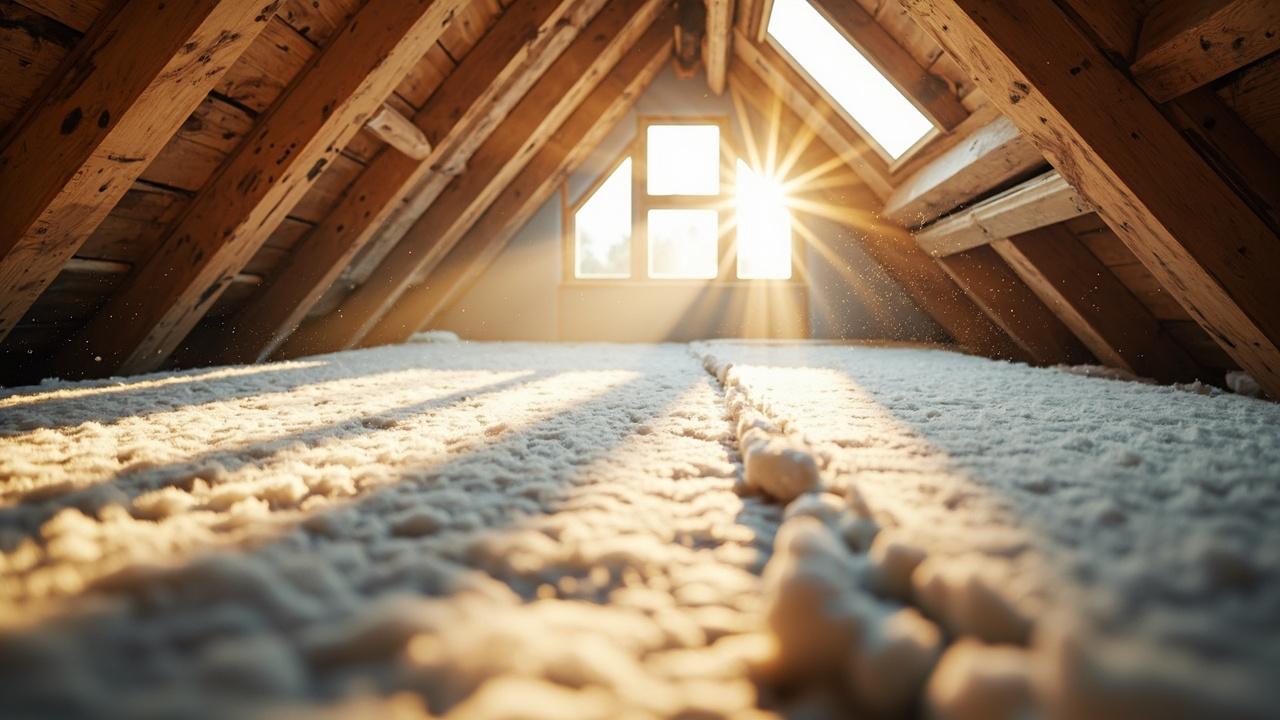
The four underlayers do the ungrateful work. Ice and water shield is a self-sealing membrane that goes in valleys, eaves, and around penetrations, and on IRC code regions it climbs at least 24 inches past the heated wall. Synthetic underlayment covers the rest of the deck at about 10 to 15 pounds per square. Flashing seals the transitions, at chimneys, sidewalls, and skylights, and it is the single most common failure point on a 5-year-old roof because the wrong metal or no step flashing lets water track behind the siding. Ventilation is the unhappiest one to ignore. A balanced intake and exhaust at the soffit and ridge keeps the deck dry and the attic within 10 to 15 degrees of the outside temperature. Skip it and the shingle bakes from below, the sheathing delaminates, and the warranty goes with it.
| Surface | Installed cost USD per sq ft | Service life years | Slope range | Key trade-off |
|---|---|---|---|---|
| Asphalt 3-tab | $4.50 to $6.50 | 18 to 22 | 4/12 and steeper | Budget friendly, short life, plain look |
| Asphalt architectural | $5.50 to $8.50 | 22 to 30 | 4/12 and steeper | Best value per year for most homes |
| Standing seam metal | $9 to $14 | 40 to 70 | 2/12 and steeper | Long life, higher cost, expansion noise |
| Concrete or clay tile | $10 to $20 | 50 to 100 | 5/12 and steeper | Lifelong surface, heavy, needs structure |
Conditions That Change the Right Choice for Roofing and Shingles
The best variant shifts with three site conditions. Climate sets the water and wind load. Snow country wants ice and water shield, proper ventilation, and a surface that sheds snow without damming. Coastal and hurricane zones want high-wind rated shingles, ring-shank nails, and metal that locks at the clip. Hot dry sun country wants a reflective surface, lighter color, and attic ventilation tuned for 110 degree rooftops. Second, slope rules out options below a minimum, and below 4/12 a shingle roof is generally off the table. Third, structure carries the load. Tile is roughly 600 to 1,100 pounds per square, about three to five times what asphalt weighs. Without a structural check from a licensed professional the tile does not go on, no matter how nice it looks in a brochure.
Two practical examples make this concrete. A 1990s 2,400 sq ft suburban home with a 6/12 gable roof in a snow state usually runs architectural asphalt at $11,000 to $18,000 installed including tear-off, ice and water shield, and ridge vent. A 2,000 sq ft coastal home on piers with low-slope porches will want a hybrid, standing seam on the 5/12 main, and a fully adhered membrane on the 1/12 porch, and that combination runs $20,000 to $30,000. If the home renovation budget is the anchor for the project, the home renovation budget framework and the repair vs replace decision logic carry the cost story, and this page owns the material choice. For wet-area detailing at the same envelope, waterproofing failure diagnosis is the basement-side partner to the roof-side work.
Decision Guidance and What to Ask Before You Sign Anything
Three checks decide the right answer for most owners. Is the slope 4/12 or steeper, with no flat porch tied into the same roof plane. Can the structure carry the chosen weight without reinforcement. Does the installer do flashings in metal that matches the surface and run ice and water shield to at least 24 inches inside the heated wall per IRC R905. If yes to all three, the choice comes down to cost per year of expected service life. Architectural asphalt at $7 per sq ft over 25 years runs $0.28 per sq ft per year of life. Metal at $11 over 50 runs $0.22. Tile at $15 over 75 runs $0.20. The numbers are close enough that neighborhood rules, HOA rules, and curb appeal decide it more than the math, and that is fine as long as the system underneath is right.
When in doubt, get a second quote that itemizes tear-off, underlayment, flashing, ventilation, and disposal as separate lines. The bid that says “full roof replacement” with no line items is hiding the choices that determine whether you get 20 years or 30. For homeowners still scoping whether roofing fits in a broader scope, this home renovation checklist puts the roof in its right slot above windows and exterior work.
Frequently Asked Questions About Roofing Shingles
How long do architectural shingles actually last? 22 to 30 years on a well-vented roof, shorter on a hot attic without intake and exhaust balanced.
Can you put new shingles over old shingles? Local code allows one overlay in many jurisdictions, but it shortens life because the deck cannot be inspected and the new shingles bake on the old ones. Tear-off is the better long-term answer.
What is the minimum slope for a shingle roof? 4/12 for most asphalt shingles, and IRC requires special underlayment below that. Below 2/12, use a membrane roof, not shingles.
Do metal roofs attract lightning? No more than any other surface. Metal conducts, but the strike probability is set by height and isolation, not material.
Is a tile roof worth the cost? Only if the structure was designed or reinforced for it, and only if the homeowner expects to stay past the 30-year break-even with asphalt.