
Recoating the stain never fixes the leak. Waterproofing systems are layered assemblies that stop water migration into building elements, and repairing failure means rebuilding slope, detail, and membrane as one barrier verified before finish. For most homes the fix is to correct fall to 1 to 2 percent, rebuild the failed corner or upstand at specified thickness, and pass a flood test before tile.
What Repairing Waterproofing Failure Means and the Fast Fix That Holds
Waterproofing systems is the assembly, failure is any break that lets water track into structure and finishes. The stain on the ceiling is rarely the entry, water often enters at a parapet, threshold, or pipe penetration and travels 6 to 10 ft before it drips.
Use a simple scope rule. If less than 25 percent of the area is affected and the field membrane is still bonded, a localized patch at $6 to $12 per sq ft is enough. If pinholes are scattered but laps are bonded and slope is correct, an overlay recoat at $8 to $14 per sq ft works. If laps have lifted, ponding lasts over 48 hours, or the basement was coated from the negative side, plan a full strip and replace at $10 to $18 per sq ft on roofs and terraces. Each range includes prep, primer, detailing, and testing.
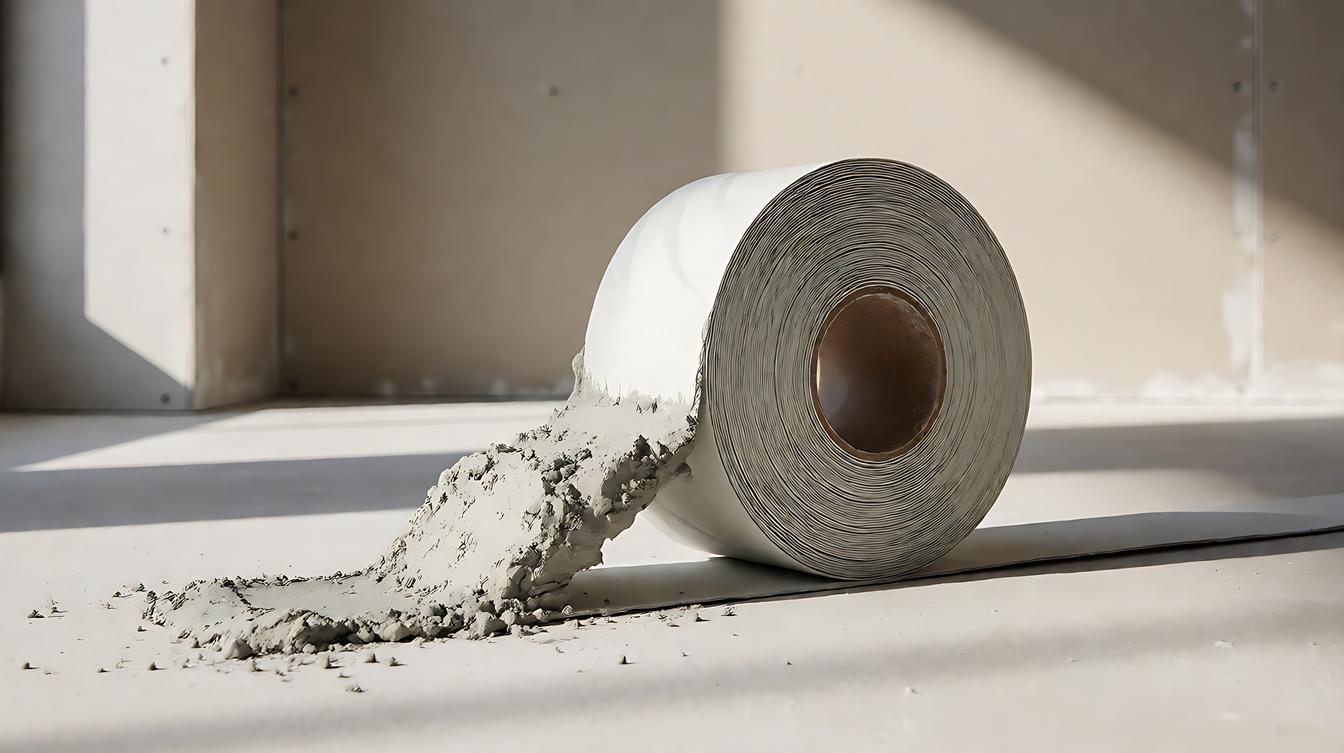
The two primary materials set the repair path. membrane torch 3-4mm is a torch-fused SBS or APP sheet at 3.0 to 4.0 mm (0.12 to 0.16 in) that creates a welded skin for roofs, balconies, and below grade. coating acrylic is a brush or roller liquid that builds to 1.5 to 2.0 mm in two coats with fleece at details for interior wet areas. Rigid cementitious slurry at 1.2 to 2.0 mm fits only where movement stays under 0.5 mm.
Before you open finishes, confirm entry versus exit. The waterproofing failure leaks and mold guide maps signs to first inspection points and shows how a 24-hour pond and moisture readings isolate the source, so you open once and fix once.
How the Repair Seals Again: Overlap, Thickness and Cure
Most repeats come from a short lap, thin film at a corner, or a recoat on a damp substrate. Staying inside the tolerance band makes a patch survive cycling.
Torch membrane seals by welding. With overlap 100mm on side laps and 150 mm on end laps, the seam is hot-rolled while bitumen flows. Peel strength drops sharply below 80 mm, which is why cold seams lift under ponding. The sheet needs a dry substrate under 6 percent moisture, primer at 0.15 to 0.25 kg per sq m, and protection board where sun or traffic will abrade. Installed, torch membrane runs $2.50 to $4.50 material and $8 to $12 per sq ft complete with upstands 6 to 8 in.
Liquids and cementitious seal by film build. Cementitious mixes 3 to 4 parts powder to 1 part polymer, applied at 1.2 to 1.5 kg per sq m per coat to reach 1.2 to 2.0 mm total, 4 to 6 hours between coats at 70 °F and a 7-day cure before ponding. Acrylic and polyurethane need substrate under 6 percent, brush the first coat into pores, roll the second cross direction, and embed fleece 4 to 6 in each side at every corner and penetration. A cove fillet at 20 to 25 mm radius at wall-floor junctions prevents thinning to 0.4 mm at the bend. Keep wet film at corners 0.8 to 1.0 mm per coat checked with a comb.
Geometry decides more than chemistry. Keep drainage slope 1-2% on roofs and terraces and preslope 1/4 in per ft under shower pans so water never sits against a seam. Set drains with clamping rings that lap under the patch and keep head and sill flashing lapped shingle style. For primer choice and gauge checks, the how to apply waterproofing guide gives the same thickness specs you will enforce on the repair.
Verification closes the work. Hold a ponding test 24h at 1 to 2 in depth, chalk the line, and read below with a pin meter. Concrete at 3 to 5 percent at 3/4 in or wood over 16 percent means active wet. Photo every lap and gauge every 100 sq ft.
Patch, Overlay or Replace: Costs and Which Wins by Condition
No single repair fits every leak. Judge patch, overlay, and full replace on the same criteria and let conditions pick.
| Criterion | Localized Patch | Overlay Recoat | Full Strip and Replace |
|---|---|---|---|
| Best when | One detail, under 25% area, field still bonded | Scattered pinholes, laps bonded, slope correct | Lifts, ponding, wrong slope, hydrostatic bypass |
| Build | Fleece 6 in beyond defect, 100 mm side lap | Two coats 1.5 to 2.0 mm liquid or 3 to 4 mm sheet | New assembly 1.5 to 4.0 mm, upstands 6 to 8 in |
| Installed cost | $6 to $12 per sq ft | $8 to $14 per sq ft | $10 to $18 per sq ft |
| Time closed | 4 to 8 hours plus 24h test | 1 to 2 days plus 24 to 48h cure | 3 to 5 days plus reslope if needed |
| Life if done right | 5 to 10 years | 8 to 15 years | 15 to 30 years |
| Risk if misapplied | Leak returns at same detail | Blisters on damp substrate | Higher upfront cost, avoids repeat demo |
A 40 sq ft shower patch at $9 per sq ft is about $360, an 80 sq ft bathroom overlay at $11 is about $880, and a 300 sq ft terrace strip with reslope at $15 is about $4,500 before tile. The cheapest invoice that fails the ponding test is the most expensive repair.
Apply conditional choice. Choose patch if a contained flood isolates one corner and a peel test shows laps bonded. Choose overlay if dye finds multiple thin spots but the concrete substrate is sound and fall is 1 to 2 percent. Choose full replace if the terrace ponds over 48 hours, deck deflection exceeds L/360, or hydrostatic water enters at the footing. Where movement, UV, or planter loads of 25 to 40 lb per sq ft exist, steel or timber decks push toward flexible sheet, as compared in the cementitious vs membrane waterproofing comparison on crack bridging and lifespan.

Step-by-Step Repair Sequence That Avoids the Next Failure
Work in this order and do not cover before testing.
1. Isolate and expose. Plug the drain, flood 1 to 2 in, hold 24 hours, and mark the line. If the leak shows during the pond, the membrane is confirmed. Open a 6 by 6 in hole at the stain edge to see the track on drywall or a subfloor joist. Replace framing if an awl sinks over 30 percent of section.
2. Correct fall and drains. Restore preslope 1/4 in per ft under pans and 1 to 2 percent on roofs, reset clamping rings so patches lap under the ring, and add wet area detailing now, cove 20 to 25 mm, upstands 6 to 8 in, and bond-breaker tape 2 to 3 in over control joints. Below grade, verify exterior sheet, protection board, and drainage layer tied to a footing drain, because interior coating alone cannot hold hydrostatic pressure at 9 to 12 kPa per ft of head.
3. Prepare to spec. Cut out hollow render, vacuum dust, check moisture. Cementitious needs saturated surface dry, liquids and sheets need under 6 percent. Grind high spots to 1/8 in per 10 ft, fill cracks over 0.5 mm, and prime.
4. Rebuild details first, then field. Set fleece 10 in at wall-floor, pipe collars 2 in onto pipe and 4 in onto substrate, and drain patches under the clamp. Keep corners 0.8 to 1.0 mm per wet coat and lap shingled so water flows over the seam. For torch, heat to flow and hot-roll with a cover strip over end laps in ponding zones.
5. Coat at verified thickness. Cementitious to 1.2 to 2.0 mm total, two coats, 4 to 6 hours between at 70 °F. Liquids to 1.5 to 2.0 mm, 0.75 to 1.0 mm per coat. Sheet at 3 to 4 mm with 100 mm side and 150 mm end laps. Check thickness every 100 sq ft and protect 24 hours light foot, 7 days before ponding cementitious, 24 to 48 hours for liquids.
Common repeats are consistent. Recoating over dust cuts bond, leaving a sharp corner without cove thins film to 0.4 mm, and patching a moving joint with rigid slurry tears by next season. Relying on sealant at a penetration guarantees a split in 5 to 7 years under UV. Skipping the flood test because tile is scheduled tomorrow turns a $300 patch into a $3,000 re-tile.
Limits, Edge Cases and When to Call a Licensed Professional
Every repair has a boundary. Rigid coatings cannot bridge movement, if crack width exceeds 0.5 mm, deck deflection exceeds L/360, or sun cycles the surface, cementitious at 2.0 mm still telegraphs. Choose flexible sheet and pay the $3 to $5 premium. High humidity coastal sites with sustained RH over 60 percent also need ventilation at 1 sq ft per 150 sq ft and a vapor barrier plan.
Below 1 percent fall, overlays pond and fatigue seams, so reslope before recoat. Podiums with pavers at 30 to 50 lb per sq ft need a sump pump check, protection board 0.5 to 1.0 in, and puncture resistant cap sheet. Groundwater sulfate over 1,000 ppm attacks ordinary cementitious, switch to HDPE or TPO. On 3/4-in plywood, confirm screw pattern 6 in on edges, 8 in field, and use flexible membrane with bond-breaker over joints. For the comparison that sorts these thresholds, the cementitious vs membrane guide lays out when rigidity fails.
If mold exceeds 10 sq ft, water tracks near electrical, framing is soft, or hydrostatic water enters at the footing-wall joint, consult a licensed professional and reference IRC and IBC as adopted locally, and compare that threshold against cementitious vs sheet for below-grade loads. Do not backfill or close walls before the 24-hour flood passes and thickness records are accepted. If testing points to one detail, schedule the patch and test before finish, if it shows system-wide thin spots or slope error, budget the overlay or replacement from the table and match material to movement and sun.