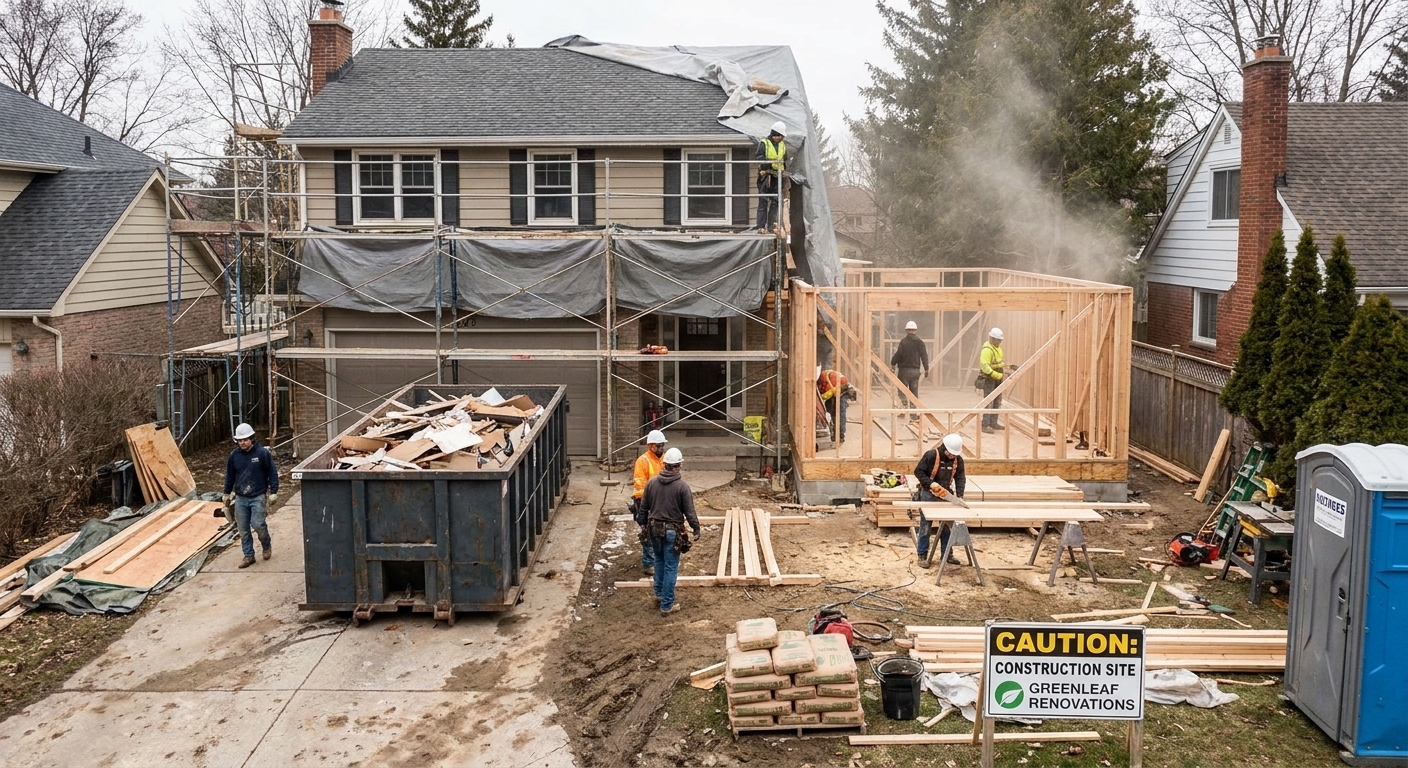

Skipping permits is the most expensive mistake in home renovation — not the material waste or timeline overrun, but the work stoppage, forced demolition, and permit re-filing fees that follow. A typical unpermitted renovation discovered during a home sale can cost $5,000-$20,000 in remediation, legal fees, and delayed closing.
Every renovation follows a sequence that protects your budget and timeline: planning → permits → demolition → rough-in → inspection → finish → final inspection. Skip the inspection step and you risk covering up code violations that surface later as safety hazards or sale contingencies.
7 Costly Mistakes and What They Actually Look Like
1. Setting the budget without a contingency. Renovations almost always uncover hidden conditions — water damage behind walls, outdated wiring, uneven subfloor. Without a 10-15% contingency reserve, every surprise becomes a borrowing decision or a cut corner.
2. Hiring the lowest bid without scope comparison. Three contractor quotes can vary by 30-40% because each includes different materials, timelines, and warranty terms. Ask each bidder for a line-item breakdown so you’re comparing the same scope.
3. Structural changes without engineering. Removing a wall that looks non-load-bearing can compromise the structure. A structural engineer’s stamp costs $300-$800 but prevents catastrophic misjudgment.
4. Moving plumbing without understanding venting. Relocating a kitchen sink more than 3 feet requires new venting per code. The rough-in cost jumps from $500 to $2,500+ when you need to tie into a new vent stack through the roof.
5. Choosing materials before understanding load requirements. Heavy stone countertops on standard cabinets, large-format tile on an under-supported floor — material selection must follow structural capacity, not just aesthetics.
6. Ignoring the project sequence. Flooring installed before kitchen cabinetry, tile before waterproofing membrane, paint before drywall dust settles — each out-of-order step adds rework cost.
7. DIY electrical and gas work. Most jurisdictions require licensed trades for anything beyond like-for-swap replacement. Unpermitted electrical work can void homeowner’s insurance coverage.
Permit Requirements by Project Type
Not every project requires a permit, but the line is narrower than most homeowners assume. Check with your local building department before starting — many offer pre-application consultations free of charge.
| Project | Permit Required? | Typical Cost | Inspection Included? |
|---|---|---|---|
| Bathroom remodel (no structural change) | Yes if plumbing/electrical moved | $200-$800 | Yes |
| Kitchen renovation with new appliances | Yes — electrical/gas/plumbing | $300-$1,200 | Yes |
| Deck addition over 30 inches | Yes — structural required | $500-$1,500 | Footing + final |
| Window replacement (same size) | No in most jurisdictions | N/A | N/A |
| New circuit or panel upgrade | Yes — electrical permit | $100-$400 | Rough + final |
| Roof replacement | Yes — structural/waterproofing | $250-$750 | Yes |
The Budget Mistake That Trips Up First-Time Renovators
Most first-time renovators budget based on material costs alone, forgetting soft costs: design fees, engineering stamps, permit fees, dumpster rental, temporary housing if the kitchen or only bathroom is out of commission, and the 10-15% contingency that separates a stressful project from a failed one.
A realistic mid-range kitchen remodel in 2026 runs $25,000-$60,000 depending on square footage, cabinet line, countertop material, and appliance tier. Budget the contingency first — it’s not optional, it’s structural to your project’s financial health.

When to Call a Licensed Professional vs DIY
Some tasks reward DIY ambition: painting, basic landscaping, simple tile work, shelving installation, and fixture replacement. Others carry structural, electrical, or water-damage risk that justifies a licensed professional from the start.
Call a licensed pro when: the project involves load-bearing structure, new electrical circuits, gas line modification, plumbing rough-in, waterproofing membranes, or anything your local code requires a permit for. The cost of professional work is almost always less than the cost of fixing amateur mistakes discovered during inspection or resale.
DIY-friendly tasks: demolition of non-structural elements, painting, installing pre-assembled cabinets, laying click-lock flooring, and installing like-for-like fixtures. Always confirm with your local building department before starting.

For more on planning your project timeline and budget, see our guide to managing a renovation without a contractor and the renovation financing options guide for funding the unexpected without high-interest debt.