
A “30-year shingle” rarely runs 30 years, and that is not a defect of the shingle. It is a contract about the test conditions inside a weatherometer, not the weather on your roof. Real roofing and shingles lifespan depends on three sliders: climate load, attic ventilation, and installer quality, in roughly that order. The number on the warranty tag is the upper bound under ideal conditions. Real life is closer to 70 to 90 percent of the tag, which means a 30-year shingle runs 21 to 27 years on a well-built house. If you are pricing the choice and want the warranty to mean what it says, focus on the system around the shingle, not the marketing. For the broader decision frame, repair vs replace guide tells you when patching is smarter than reroofing, and the budget framework anchors the cost side.
What Shingle and Roofing Lifespan Actually Means Across Materials
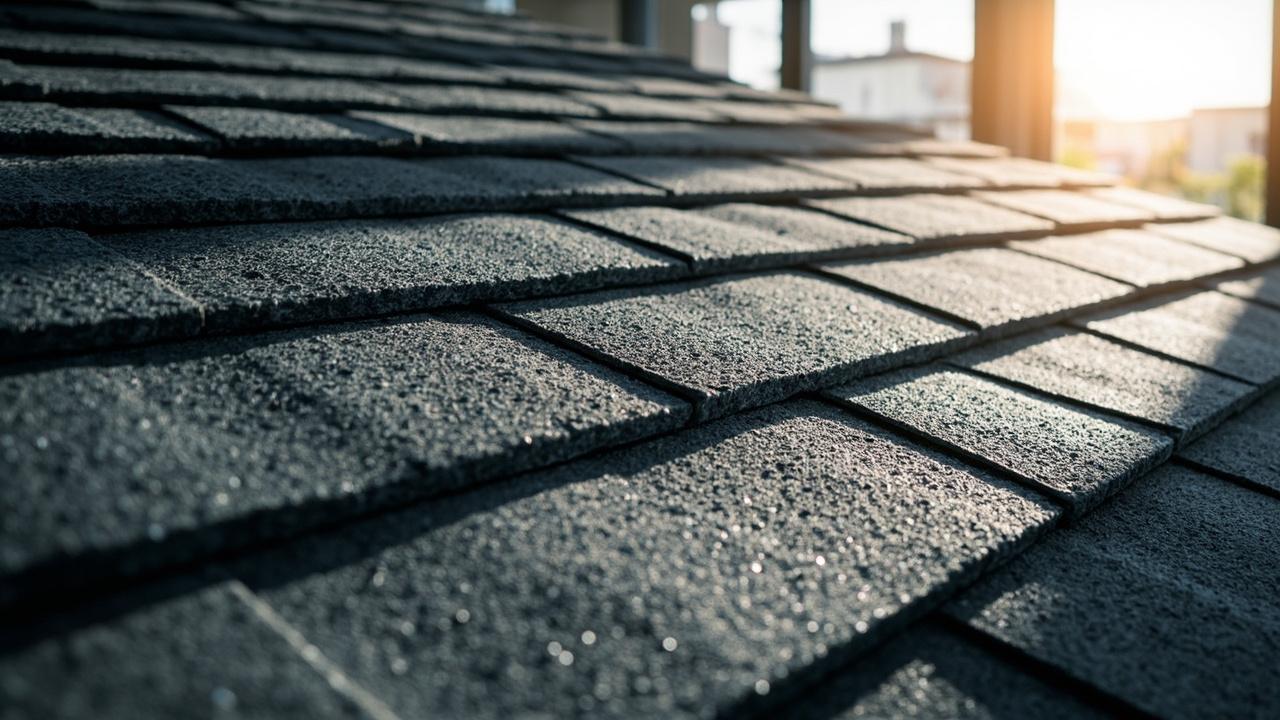
Asphalt 3-tab carries a 20 to 25 year warranty and runs 18 to 22 years. Asphalt architectural carries a 30 year limited warranty with a 5 to 10 year non-prorated period on materials, and runs 22 to 30 years. Standing seam metal carries 30 to 50 year paint and weathertightness warranties and runs 40 to 70. Concrete or clay tile carries 50 year manufacturer warranties and runs 50 to 100. Those numbers are realistic, not marketing, and they assume proper ventilation, correct flashing, and a tear-off rather than an overlay. The math doesn’t favor one material over another until you can put a current repair or replacement cost next to realistic years. For a typical 2,400 sq ft home, that choice is around $11,000 to $18,000 for architectural asphalt, $22,000 to $34,000 for standing seam metal, and $24,000 to $48,000 for concrete tile. For interior walls and ceilings that meet a new roof, the drywall thickness and fire rating guide stays important.
Lifespan numbers also depend on slope, exposure, and color. A dark architectural shingle on a south-facing 6/12 in Phoenix cooks harder than the same shingle on a north-facing 6/12 in Minneapolis, and the warranty does not differentiate. Climate is a real slider, and it is one of three site conditions that changes the answer even before cost. Color matters less than slope direction, but lighter colors run 8 to 15 percent cooler at the surface and add roughly 2 to 4 years of life in hot regions.
Warranty Structure, What It Covers, and Where It Quietly Does Not
Warranties have two layers. The first N years are non-prorated, meaning if the shingle defects, you get full material and often full labor coverage. After that, the warranty prorates, meaning the manufacturer pays a percentage of the original cost that drops year by year. A 30-year warranty with a 5-year non-prorated period covers full replacement on year 6 defects at roughly 17 percent of material cost. That gap is why the installer quotes include tear-off and disposal. The labor is the larger cost and that is rarely covered after year 5.
| Material | Manufacturer warranty | Non-prorated period | Realistic life on a ventilated roof |
|---|---|---|---|
| Asphalt 3-tab | 20 to 25 years | 3 to 5 years | 18 to 22 years |
| Asphalt architectural | 30 years limited | 5 to 10 years | 22 to 30 years |
| Standing seam metal | 30 to 50 years | Often full term | 40 to 70 years |
| Concrete or clay tile | 50 years | Varies by profile | 50 to 100 years |
Most manufacturer warranties also require proof of balanced ventilation at intake and exhaust, the right underlayment, and in many cases registration within 90 days of install. Skip the registration and a 50-year warranty becomes a 5-year courtesy. Most manufacturers also exclude damage from foot traffic, satellite dishes, and hurricane wind above the published rating. Read the warranty and write down the three conditions most likely to bite you on your roof, because that is where the lifetime number moves in real life.
The Three Sliders That Cut Lifespan in Real Roofing Conditions
Three site conditions determine whether the warranty tag is reality or marketing. Attic ventilation is the biggest lever. A balanced intake at the soffit and exhaust at the ridge keeps the deck within 10 to 15 degrees of the outside temperature and prevents the underside bake that kills shingles. Without it, an architectural shingle in Phoenix lasts 12 to 18 years instead of 25 to 30. Climate load is the second lever. Snow dams, coastal wind, and UV intensity shorten life. Installer quality is the third and the lever most owners underestimate. A bad nailing pattern, cheap flashing, or a missing starter strip voids the warranty in most cases before the shingle ever fails. That is why a bid that lists line items usually wins on lifespan even when it costs more.
Two practical examples make this concrete. A well-installed architectural shingle in Atlanta with proper ventilation runs 23 to 28 years. The same shingle in Phoenix with the same ventilation runs 18 to 22. Standing seam metal in Atlanta runs 50 to 70 years. The same metal in Phoenix runs 40 to 55 because the paint weathers faster under UV. If your home is part of a wider renovation, the renovation timeline should run the roof in step one so the new exterior walls and windows are not damaged by reroofing after. For interior pairings, repair guidance for the deck and ceiling finishes the inside story when water does get past the exterior.
How to Read a Roofing Quote So the Warranty Counts
A buyable quote has six line items: tear-off and disposal, deck inspection and repair allowance, ice and water shield coverage, synthetic underlayment, flashing and ventilation components, and surface material with manufacturer and pattern. Add permit and cleanup. If a bid shows only “full roof replacement” without the line items, ask for them. Hidden line items are where shortcuts live, and shortcuts are where the warranty ends. The right bid reads like a system, not a surface, because the system is what determines whether the years on the tag are the years on the house. Walk away from any installer who cannot explain the system and still has the lowest number on the table, because the lowest number is the one that ends in a reroof at year 12.
For owners still choosing the variant, asphalt vs metal vs tile comparison and the roofing shingles overview carry the rest of the decision, and a licensed roofer with three references in your climate zone does the math that no article can.
Frequently Asked Questions About Roof Lifespan and Warranty
Does a 30 year shingle really last 30 years? On a well-vented roof in mild climate, 25 to 30 is realistic. In hot climate, 18 to 22 is realistic.
What voids a shingle warranty? Poor ventilation, overlay install, wrong fastener pattern, missing flashing, and unregistered products in some manufacturer systems.
Is the warranty prorated after year 5? Often yes for material coverage, and labor coverage is usually limited to the non-prorated period only.
How do I extend roof life? Balanced attic ventilation, annual visual check, prompt repair of lifted shingles, and keeping tree limbs off the surface.
Does insurance cover a failing roof? Only if the failure is from a covered peril, not wear out. Wear out is excluded under most homeowners policies.