
Cement or membrane — which actually keeps water out and for how long? Homeowners usually hear one clear winner from a dealer, then a slab leaks anyway. The honest answer is conditional. Cementitious waterproofing is a rigid, cement-bonded coating brushed or troweled at 1.2 to 2.0 mm, good for interior wet areas and positive-side protection. Membrane waterproofing is a flexible sheet or liquid-applied membrane at 1.5 to 4.0 mm that bridges cracks and movement, good for roofs, balconies, basements and below-grade. Waterproofing systems are assemblies that prevent water migration into building elements, and the cementitious vs membrane choice determines crack-bridging, chemical resistance, and long-term cost.
What Cementitious and Membrane Waterproofing Mean in Practice
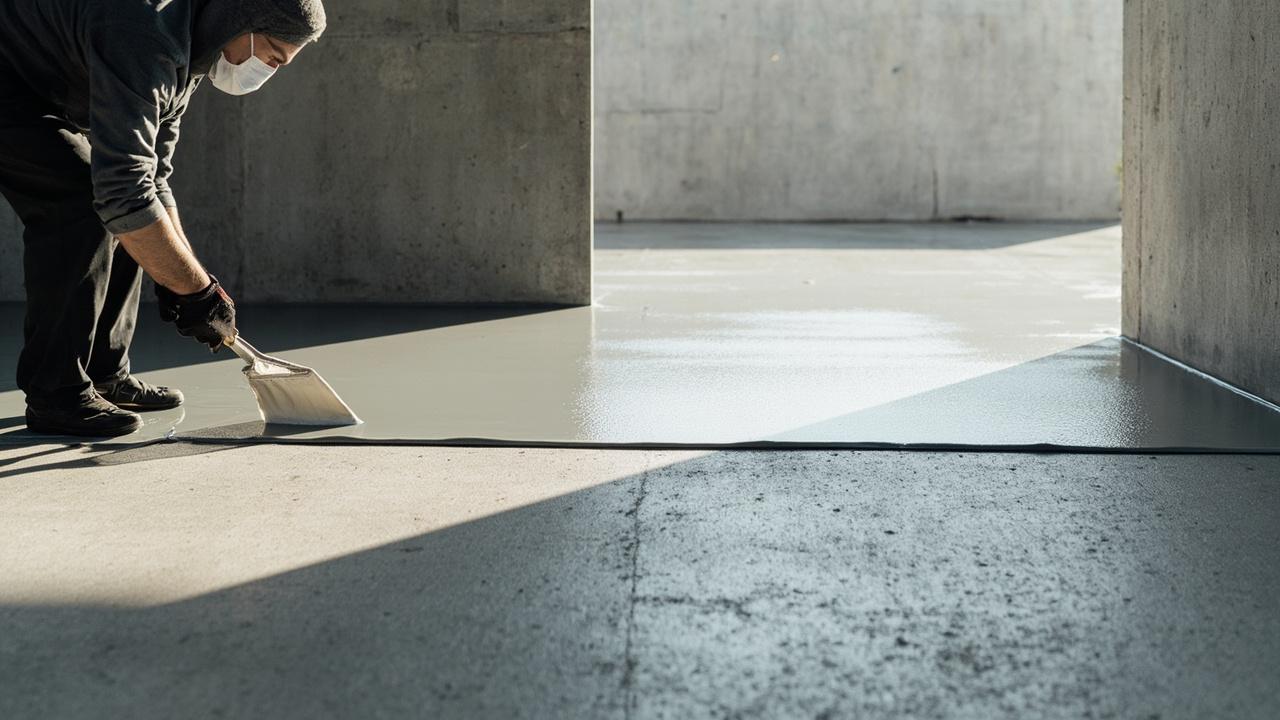
Cementitious waterproofing behaves like an extension of the substrate. It bonds chemically to clean concrete or masonry, fills pores, and forms a hard, breathable barrier that resists positive water pressure. Typical products are polymer-modified cement slurries applied in two coats at 1.2 to 1.5 kg per sq m per coat, total dry film 1.2 to 2.0 mm (about 0.05 to 0.08 in). Application needs a sound, damp substrate, 28-day cured concrete, and a 24-hour cure before ponding.
Membrane waterproofing behaves like a flexible skin. Sheet membranes are torch-applied SBS or APP modified bitumen at 3.0 to 4.0 mm (about 0.12 to 0.16 in) with 100 mm (4 in) side laps and 150 mm end laps, or peel-and-stick butyl or HDPE sheets at 1.0 to 1.5 mm. Liquid membranes are acrylic, polyurethane, or hybrid coatings applied at 1.5 to 2.0 mm in two coats with reinforcement fleece at corners, drains, and upstands. Membranes bridge hairline cracks up to about 2 mm, accommodate thermal movement, and tolerate minor substrate deflection.
The core difference is movement. Cementitious coatings are rigid with elongation under 10 percent, so a crack that opens 1 mm can telegraph through. Membranes offer elongation of 200 to 600 percent, so the same crack stays sealed. That is why balconies with sun exposure, roof terraces with thermal cycling of 40 to 70 °F daily, and basements with hydrostatic pressure lean toward membranes. Interior bathrooms with stable concrete, limited movement, and controlled budgets often succeed with cementitious.
Both need correct detailing to pass. Corners receive a cove fillet at 20 to 25 mm radius, drains get a clamping ring and reinforcement patch, and upstands run 6 to 8 in (150 to 200 mm) above finished floor on walls. Skip the detail and either system leaks at the same place, the transition.
How Each System Works and Where It Excels
Cementitious systems work through crystalline growth and polymer film. On a porous concrete substrate, fine cement and acrylic polymers penetrate capillaries, hydrate, and block water under positive pressure up to about 70 kPa. They tolerate damp substrates and can be applied over green concrete after 7 days in some formulations. Breathability lets vapor escape, reducing blister risk in interior wet rooms. Chemical resistance is moderate, strong against water and mild alkalis, weaker against ponding chemicals, oils, and aggressive groundwater sulfates.
Membrane systems work through continuous elastomeric film. An SBS torch membrane fused to primed concrete creates a welded, fully bonded sheet that resists hydrostatic pressure and covers shrinkage cracks, with a drainage layer of dimple mat and protection board at 0.5 to 1.0 in above. Liquid polyurethane at 1.8 mm forms a seamless coating that wraps complex shapes, pipe penetrations, and parapets without seams. UV stability varies, acrylic needs topcoat for sun, polyurethane and SBS with mineral cap sheet are sun stable. For chemistry, HDPE and TPO membranes resist soil chemicals better than cementitious, making them preferred below grade with aggressive groundwater.
Installation realities decide field performance more than datasheets. Cementitious needs two coats cross-brushed, 4 to 6 hours between coats at 70 °F, and a 7-day cure before backfill or tiling. Coverage is predictable at 1.2 to 1.5 kg per sq m per mm, cost driver is labor for surface prep, not material. Membrane sheets need a smooth, dry, primed substrate, rolled seams with a 100 mm overlap hot-pressed, and a ponding test for 24 to 48 hours before protection. Liquid membranes need substrate moisture below 6 percent, otherwise blisters form. Both fail when substrate is dusty, cracked, or wet beyond spec.
In practice, bathrooms with masonry walls and stable slabs tolerate cementitious at $1.20 to $2.50 per sq ft material and $3.50 to $6.50 installed. Roofs and balconies with movement and UV demand sheet or liquid membranes at $2.00 to $4.50 material and $6 to $12 installed. Basements below water table favor fully bonded HDPE sheet systems with drainage and protection, $5 to $9 per sq ft installed, because crystalline coatings alone cannot bridge settlement cracks under hydrostatic load.
Cementitious vs Membrane Compared on the Same Criteria
No universal winner exists, so judge both on identical criteria and let conditions pick. The table below keeps performance, cost, and risk symmetric so you can see trade-offs without dealer spin.
| Criterion | Cementitious | Membrane (Sheet / Liquid) |
|---|---|---|
| Film thickness | 1.2 to 2.0 mm, two coats | 1.5 to 4.0 mm (sheet 3 to 4 mm, liquid 1.5 to 2.0 mm) |
| Crack bridging | Under 0.5 mm, rigid, cracks telegraph | 1 to 2 mm, elongation 200 to 600%, stays sealed |
| Movement & UV | Low tolerance, needs stable interior, topcoat for sun | High tolerance, SBS/mineral cap and TPO are UV stable |
| Water pressure | Good for positive pressure, weak for negative/hydrostatic | Good for both, fully bonded sheets resist hydrostatic |
| Substrate need | Damp tolerant, bonds to concrete, 28-day cure ideal | Dry required, primer, smooth, moisture under 6% |
| Installed cost | $3.50 to $6.50 per sq ft | $6 to $12 per sq ft (sheet higher, liquid mid) |
| Lifespan & repair | 8 to 15 years interior, patch with same slurry | 15 to 30 years, patch with compatible membrane and fleece |
| Best for | Interior bathrooms, water tanks, lift pits, positive side | Roofs, balconies, basements, below-grade, joints |
The table hides one jobsite truth. Both leak at details if details are rushed. A cementitious cove at a wall-floor joint without reinforcement mesh cracks under drying shrinkage. A torch membrane with a cold seam that was not rolled at 100 mm overlap lifts under ponding. In both cases, the fix is not a third coat, it is rework at the lap, drain, and upstand with proper primer and curing.
Cost context helps you budget honestly. For a 50 sq ft shower enclosure, cementitious at $5 per sq ft installed is $250, membrane liquid at $9 per sq ft is $450. For a 400 sq ft terrace, sheet membrane at $10 per sq ft is $4,000 with flashing and drainage. The $200 gap in the shower is worth the upgrade if cracking history exists, the $1,600 gap on the terrace is not optional, rigidity there fails.
If you are mapping this to a bathroom scope with layout and fixture choices, the bathroom layout and fixtures guide pairs waterproofing choice with pan and drain assembly. For sequence so you do not tile before the ponding test, the home renovation order guide shows trade order that prevents rework.
When to Choose Which and What Changes the Answer
Choose cementitious when substrate is stable, interior, and budget is tight on positive-side water contact. That is typical for interior bathrooms on concrete slab, water tanks, and lift pits where masonry is sound, cracks are under 0.5 mm, and sunlight is zero. Keep overlap with adjoining membrane details at transitions, and apply two coats with 4 to 6 hour intervals and a 7-day cure before tiling.
Choose membrane when movement, UV, or hydrostatic pressure exists. That is typical for roof terraces, balconies, podium decks, and basements below grade. On timber or steel decks that deflect beyond L/360, only a flexible membrane tolerates the cycling. Below grade with water table, specify fully bonded HDPE sheet with bentonite or bituminous sheet, not coating alone, and add protection board and drainage composite.
Edge cases change both answers. High sulfate groundwater above 1,000 ppm attacks cementitious, so switch to chemical-resistant sheet. Occupied roof with pavers needs a root-resistant and puncture-resistant cap sheet, not thin acrylic. Historic masonry with salt damp needs breathable cementitious with care, not vapor-tight polyurethane that traps moisture and blows plaster. In each case, the condition, not brand preference, dictates the switch.
Disclosure cuts both ways. Cementitious cannot bridge moving cracks and many warranties exclude negative-side application, so do not rely on it to fix a leaking basement from the inside alone. Membranes cost more and demand dry, primed substrates and skilled torch or spray labor, so a dusty, wet jobsite voids warranty faster than the material fails. For below-grade in particular, consult a licensed professional for hydrostatic design, drainage at 1 to 2 percent fall, and code per IRC/IBC as adopted locally, and do not backfill before the 24-hour ponding test passes.
Costs, Lifespan and How to Decide Without Overspending
Budget in layers, not single product cost. Surface prep, priming, detailing, testing, and protection often equal material cost. Cementitious at $1.20 to $2.50 per sq ft material becomes $3.50 to $6.50 installed when you include grinding, cove, two coats, and cure. SBS sheet at $2.50 to $4.50 material becomes $8 to $12 installed with primer, torch labor, laps, upstands, and a 48-hour flood test. Liquid polyurethane sits between at $6 to $9 installed. Add protection board at $0.60 to $1.20 per sq ft and drainage mat at $1.00 to $2.00 per sq ft where required.
Lifespan follows detailing and exposure, not label claims. Interior cementitious protected by tile typically lasts 8 to 15 years before recoat at joints, sheet membranes on roofs with proper flashing last 15 to 25 years, buried basement sheets last 25 to 30 years when protected from puncture. A thin spot under 1.2 mm, a missed pinhole, or an unrolled seam can cut either life in half. Thickness gauge readings and spark testing on liquids pay for themselves.
Use a simple if-then framework you can check on site.
If interior, stable concrete, interior wet area, choose cementitious. You save $3 to $5 per sq ft, keep vapor breathability, and can recoat locally at low cost. Add fleece band at joints and cure properly.
If exterior, roof, balcony, or below grade with movement or hydrostatic, choose membrane. You pay more upfront but buy crack bridging and long warranty. Specify 100 mm laps, 150 mm end laps, upstands 8 in, and a documented ponding test.
If substrate is damp and schedule is tight, choose cementitious or a moisture-tolerant hybrid membrane. You avoid blister failure. If substrate is dry and detailed shapes exist, choose liquid membrane for seamless wrapping.
If chemical exposure or root loads exist, choose HDPE/TPO sheet designed for that exposure. You avoid chemical attack that erodes cementitious and acrylic.
Do not pick by brochure alone. Check crack width, measure moisture with a meter, look at sun and movement history, then price both options with the same detailing scope. The right choice is rarely the cheapest material, it is the cheapest assembly that passes the ponding test and still passes it five years later. For next-step costing and to connect scope to budget before you commit, the bathroom renovation cost guide helps you map waterproofing share to total budget, and the repair vs replace guide helps you decide when recoating is enough and when full membrane replacement is warranted.