
Replacing a shingle is one of the few reroofing tasks a homeowner can do safely on a single-story home with a walkable roof pitch. Do it wrong and the new shingle leaks. Do it right and the patch holds 15 to 25 years without a callback. This page owns the side-by-side procedure so the roofing overview and lifespan pages can stay at the system level. For the broader roofing context, the roofing shingles fundamentals page and the roof shingle lifespan and warranty page explain what is on the roof, and the asphalt vs metal vs tile comparison picks the material. For the leak diagnosis that brings the homeowner to the repair, the roof leak diagnosis page is the start.
What Replacing Roof Shingles Actually Means and When It Beats a Full Reroof
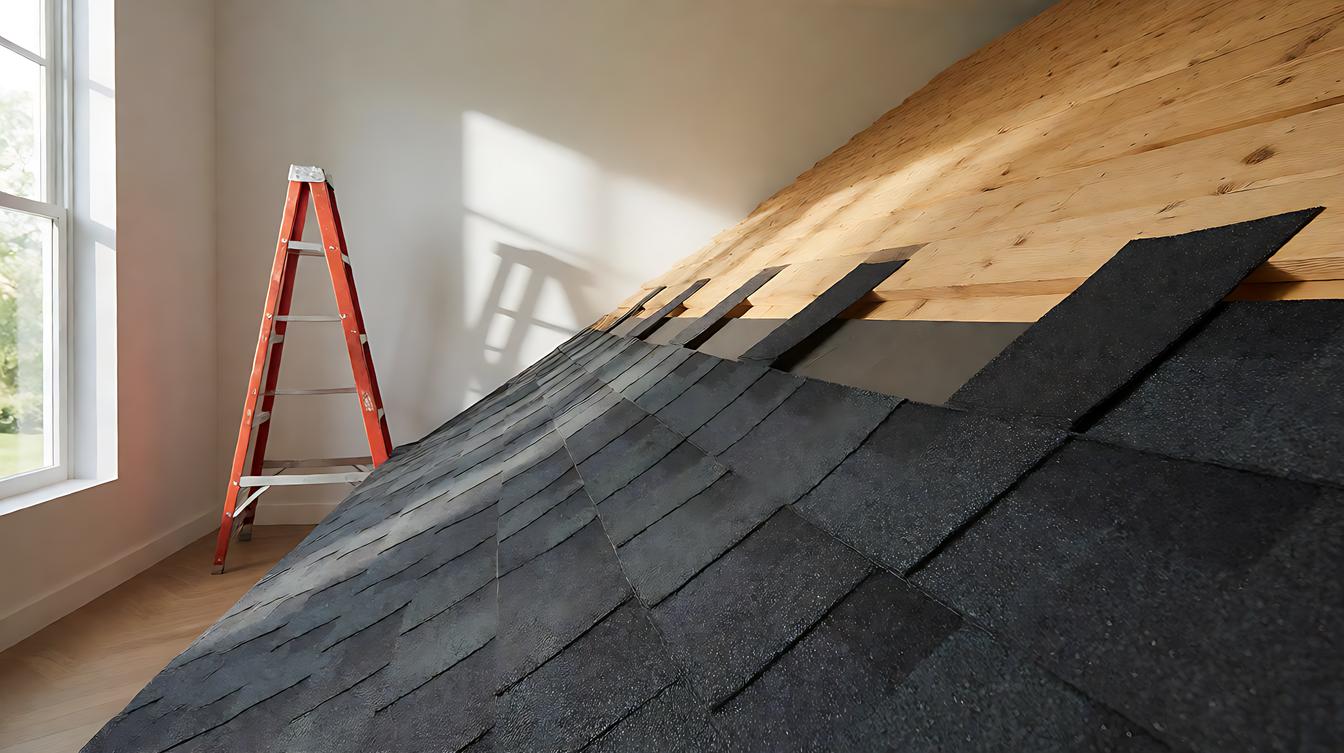
Replacing a shingle means removing the damaged shingle, lifting the nails of the shingle above it, sliding a matching shingle into place, sealing, and renailing so the patch matches the surrounding field in weather exposure and color. It is a repair, not a reroof, and it is the right answer for isolated damage from a wind event, a fallen branch, or a single nail pop that has lifted a shingle over years. It is the wrong answer for a roof that is 20 plus years in, with widespread curling, granule loss, or leaks in multiple places. Use the right tool. Replace a section, or reroof, not both badly.
Two safety rules come before the procedure. A roof is a fall surface, and every step goes on a roofer’s walk pattern, not the soft spot in the middle of a shingle. A ladder extends 3 feet above the gutter line so the worker can step onto the ladder, not pull themselves up onto the gutter. A second person at the bottom of the ladder stabilizes it. Working above 6 feet triggers OSHA fall protection rules in many jurisdictions and a harness is the right answer for any second-story install. Working alone on a wet or steep roof is the wrong idea.
Cost, Materials, and Time Across Roof Shingle Replacement
A single shingle replacement runs $5 to $20 in materials, including a bundle of matching shingles at $35 to $45 per bundle covering 33 sq ft, a tube of roof cement at $5 to $10, and a few galvanized roofing nails. A 5 to 10 shingle patch runs $50 to $200 in materials and 2 to 4 hours. A 100 sq ft section replacement runs $300 to $1,500 in materials and 4 to 8 hours. Professional labor for a small patch runs $200 to $500. A full reroof runs $9,000 to $18,000 in installed cost on a typical 2,400 sq ft home, and that is a different scale from the patch.
| Scope | Materials USD | Time hours | Realistic life of patch |
|---|---|---|---|
| Single shingle | $5 to $20 | 30 to 60 minutes | 15 to 25 years |
| 5 to 10 shingles | $50 to $200 | 2 to 4 | 15 to 25 years |
| 100 sq ft section | $300 to $1,500 | 4 to 8 | 15 to 25 years |
| Full reroof | $9,000 to $18,000 | 2 to 4 days | 22 to 30 years |
| Flashing reseat | $20 to $100 | 1 to 2 | 10 to 20 years |
Matching the shingle is the most common reason patches fail cosmetically. Roofs from the same era and builder carry the same shingle, but manufacturers update product lines and building owners have remodels that switch the brand. A patch with a slightly different shingle will flash against the sun for years. Many manufacturers sell factory-recovered shingles, sometimes called reissued or leftover bundles, for this repair market. If a factory match is not available, lifting the patch above a plane change such as a chimney or sidewall keeps the visual mismatch under cover.
Conditions That Change the Right Approach Within Roof Shingle Replacement
Three conditions decide the right approach. Roof age is the first. A 5 to 15 year old roof with isolated damage is a single-shingle or 5 to 10 shingle repair. A 15 to 25 year old roof with widespread wear is the threshold for reroofing. A 25 plus roof with any leak is a reroof. Slope is the second lever. Steep slopes above 8/12 require careful footing and often a roofer harness system. Low slopes at 4/12 or below are walkable but the shingle installation typically requires sealant because the wind uplift rating is higher. Stain alignment with damage is the third. A stain from a single shingle leak is a small patch. A stain that runs 6 to 8 feet along a chimney chase is flashing, not shingle, and the right repair is flashing work, not shingle work.
Two practical examples make this concrete. A 1990s ranch with a 6/12 roof and a single lifted shingle from a wind event is a single shingle replacement, an afternoon with the right materials, and 15 to 25 year life on the patch. A 1990s gable with a 6/12 roof and 10 to 20 lifted shingles across the south face is a 100 sq ft section replacement or a reroof, depending on the rest of the roof. The decision comes from looking at the rest of the field. For owners still weighing repair vs replacement, the repair vs replace guide and the lifespan and warranty page close the question.
Step-by-Step Procedure for Replacing Roof Shingles
Seven steps carry the patch from damage to weather-tight. Inspect the area below for rot or damage to the sheathing, soffit, or interior. If sheathing is spongy or dark, the patch is bigger than the visible shingle. Lift the shingle above the damaged one with a flat pry bar, exposing the nails. Pull the nails of the damaged shingle using a cat’s paw or a roofer’s ripper. Slide the damaged shingle out. Slide the new shingle into place, lined up with the exposure notches on either side. Renail with 4 galvanized roofing nails per shingle, 1 inch above the exposure notch. Seal the nail heads and the leading edge of the new shingle with a quarter-sized dab of roof cement. Lift the upper shingle and check that the new shingle lays flat without waves.
The five keys to a 1 trip shingle replacement are to match the existing shingle exactly, to lift the upper shingle not the lower, to use galvanized roofing nails not screws, to seal with roof cement under the leading edge not on top, and to wear fall protection when the slope demands. Skipping any one leads to a leak that returns within 6 to 18 months. The same procedure works for swapping a full row of 5 to 10 shingles, and a 100 sq ft section replacement uses this procedure plus a row of starter strip along the eave. For broader roofing scope or for reroofing decisions, the roofing overview and the material comparison are the partner pages.
Frequently Asked Questions About Replacing Roof Shingles
Can I replace one shingle? Yes. Lift the upper shingle, pull the nails, slide the new one in, renail, and seal. About 30 to 60 minutes.
Do I need to remove the old flashing? Only if it is damaged or the wrong metal. Otherwise reseat and reseal at the edge.
What is the best temperature for shingle work? 45 to 85 degrees Fahrenheit. Below 40 the shingles crack on bend. Above 95 the sealant gets gummy.
Is it safe to walk on shingles? Yes on 4/12 to 8/12. Use a roofer’s walk pattern and walk on the tabs, not the laps.
How do I match shingle color? Check the bundle label, take a shingle sample to a roofing supply, or use leftover builder’s bundles if available.