

A roof leak rarely shows up at the point of failure. It shows up at the lowest spot a stain can form, which is usually a ceiling several feet away from the actual hole. Most homeowners patch the ceiling, then the leak returns next rain because the patch never touched the roof. Real roof leak diagnosis is a procedure that traces the water from inside to outside, identifies the source above, and fixes it where water enters. This page owns the diagnosis so the failure and repair pages can stay at the system level. For the broader roofing context, the roofing shingles fundamentals page and the roof shingle lifespan and warranty page explain what is above the ceiling. For walls that show the leak, the drywall thickness and fire rating page rounds out the structural story.
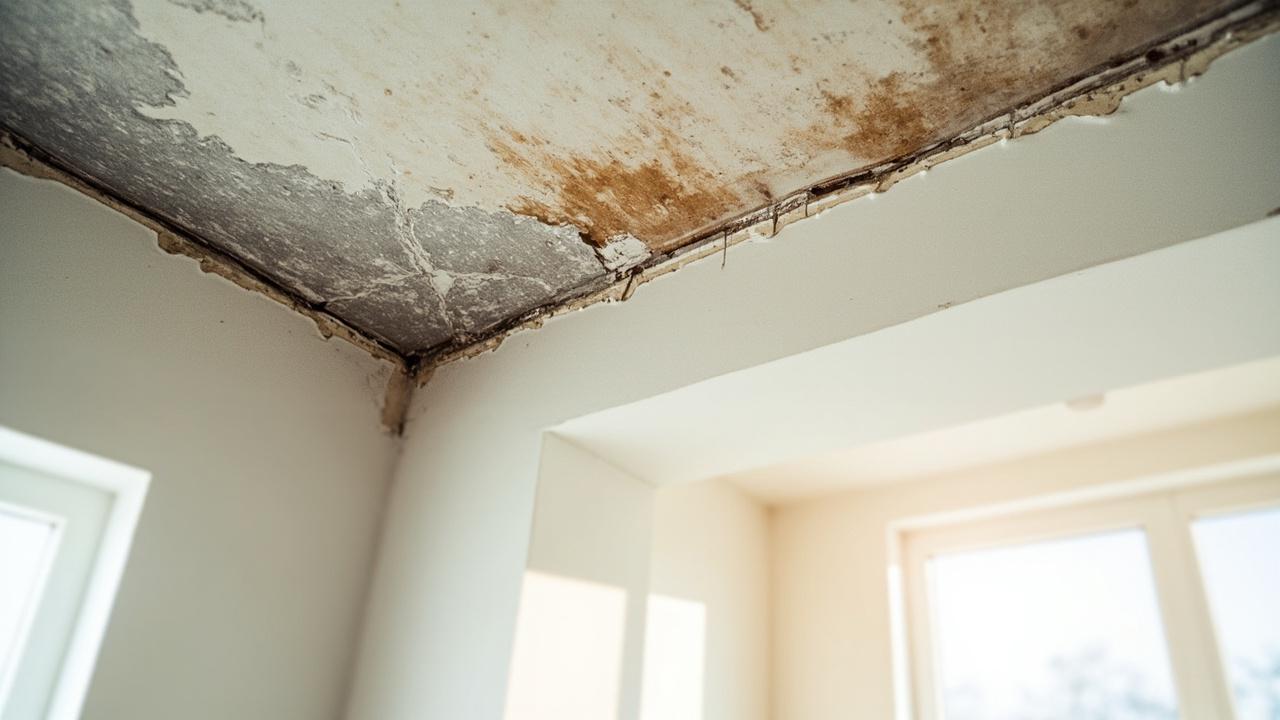
What Roof Leak Diagnosis Actually Means and Why Most First Repairs Fail
A roof leak is water that has crossed the weather envelope of the roof and entered the structure. The water entry point is rarely where the stain appears. Water travels along rafters, sheathing seams, insulation, and the underside of the ceiling before it falls as a stain, and the path can be 3 to 20 feet long. The diagnosis procedure is to find the entry point above the stain, fix it, and then fix the cosmetic damage below. Most first repairs fail because the homeowner treats the stain as the entry point. Patch the visible stain without fixing the roof and the next rain brings the leak back.
Three mechanisms drive most roof leaks. Flashing failures at chimneys, sidewalls, and skylights account for roughly 70 percent of leaks in a 5 to 15 year old roof. Surface failures in the shingle or tile itself, like lifted shingles, cracked tiles, or failed sealant, account for roughly 20 percent. Detail failures at valleys, eaves, or penetrations like vent pipes and HVAC lines account for the remaining 10 percent. Each has a different visible signal at the roof, and each has a different interior signal at the ceiling.
Cost, Common Failure Points, and Detection Across Roof Leak Diagnosis
Most professional leak diagnoses run $150 to $500 for a 1 to 2 hour site visit with a moisture meter and a roof walk. Full repair costs depend on the cause. A flashing replacement at a chimney runs $400 to $1,200. A pipe boot replacement at a vent runs $200 to $500. A valley flashing redo runs $500 to $1,500. A full shingle replacement section runs $1,000 to $4,000 depending on the size of the affected area. Diagnostic cost is a small fraction of repair cost, and skipping it usually means the repair is at the wrong spot.
| Failure point | Frequency percent | Visible signal | Repair cost USD |
|---|---|---|---|
| Chimney or sidewall flashing | 35 | Stain along chimney chase, water at wall-ceiling line | $400 to $1,200 |
| Plumbing vent boot | 20 | Stain in bathroom, water at vent pipe | $200 to $500 |
| Skylight flashing | 10 | Stain at skylight frame, water in shaft | $400 to $1,200 |
| Valley flashing | 10 | Stain in line with a roof valley | $500 to $1,500 |
| Lifted or missing shingles | 15 | Visible from ground in storm aftermath | $150 to $600 per square |
| Ice dam | 5 | Stain along eaves, often winter | $200 to $800 for prevention |
| HVAC or other penetration | 5 | Stain near the line | $300 to $900 |
The single best diagnostic step is to look in the attic with a flashlight when it is raining, or have someone run a hose on the roof section by section while another watches below. The interior signal narrows the entry point to within 1 to 3 feet, and that 1 to 3 feet saves hours of climbing on the roof. Second is to step back and look at the chimney chase or the sidewall where the stain is centered. A staining pattern 4 to 6 inches wide that runs vertically usually points to a flashing failure. A stain at a corner of a room usually points to a vent or a penetration.
Conditions That Change the Right Diagnosis Path
Three conditions set the right diagnostic path. Roof age is the first. A 5 to 15 year old roof with a single leak is almost always flashing or a penetration, not the shingle field. A 15 to 25 year old roof with multiple leaks may be the field, not the details. A 25 plus year roof with any leak is usually a replacement discussion. Storm exposure is the second. A leak after a wind event is a lifted shingle, an exposed nail head, or a missing flashing. A leak that appears gradually without a storm is a flashing or a detail failure. Climate is the third. Snow country sees ice dams and attic frost that warm climate doesn’t. Hot sun country sees sealant failures at penetrations that cold climate doesn’t.
Two practical examples make this concrete. A single leak stain on the ceiling below a two-story chimney chase in a 12 year old asphalt roof is almost certainly the chimney flashing at the cricket or step flashing. The repair is $400 to $1,200 and best done by a roofer who knows chimney flashing. A stain that runs along the eaves in a 20 year old roof during snow and ice is an ice dam and the fix is air sealing the attic, increasing insulation, and adding ice and water shield to the eaves. For the structural follow-up after the leak, the drywall repair page and the waterproofing failure page round out the inside of the envelope.
Procedure for Diagnosing a Roof Leak Without Wasting a Repair
Six steps carry the diagnostic from stain to fix. Look at the stain. Measure the position from a known corner of the room. Measure up from the ceiling to find the corresponding point on the roof above. Have a helper run water on the roof in 5 foot wide sections for 10 minutes each while the other watches. When water appears below, the entry is in the section just hosed. On dry weather, inspect that section of roof for flashing gaps, lifted shingles, cracked pipe boots, or sealant failures. Patch the failure at the source, not the stain. Document with photos so the next storm confirms the fix.
The five keys to a 1 trip roof leak diagnosis are to find the stain first not last, to use the water test when possible, to check flashing before shingles, to look in the attic with a flashlight at the underside of the sheathing for water staining on the wood, and to document the patch with photos and a date. The same procedure is what insurance adjusters follow, so doing the diagnostic first lets a homeowner file a clean claim when the cause is a covered peril. For owners still weighing repair against replacement, the repair vs replace guide and the lifespan and warranty page close the decision.
Frequently Asked Questions About Roof Leak Diagnosis
Why does the leak appear far from the roof damage? Water travels along rafters and sheathing seams for 3 to 20 feet before staining the ceiling.
How do I find the leak in the rain? Look in the attic with a flashlight when it is raining. The water entry will be visible at the underside of the sheathing.
Can a roof leak cause mold? Yes. Mold begins at 24 to 48 hours of wet material. Dry the affected area within that window if possible.
Should I patch the ceiling before or after the roof is fixed? Always fix the roof first, then patch the ceiling. Otherwise the patch will stain again.
Does homeowner’s insurance cover roof leaks? Usually yes for sudden or accidental damage like storm and fallen tree. No for wear out over time.