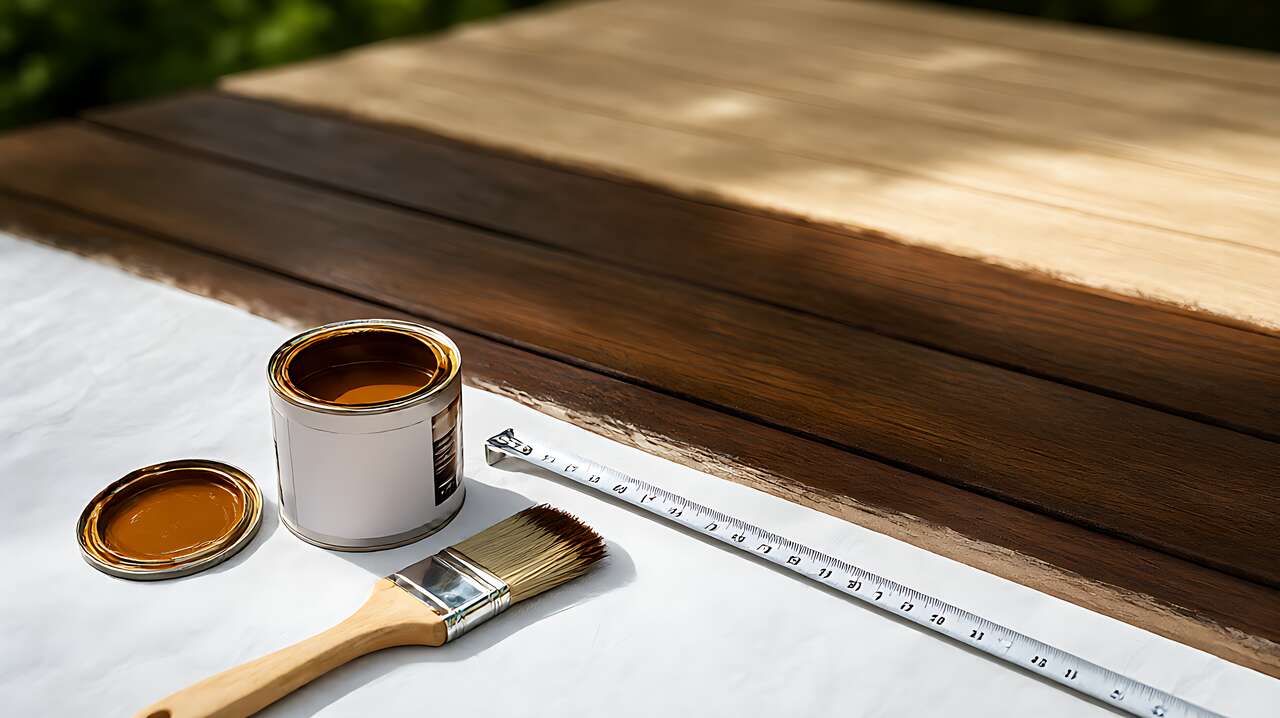

Deck staining costs are one of the most common questions homeowners ask before a weekend project, and the answer is wider than most people expect. A DIY job on a small deck can run under $100 in materials. A pro job on a large deck with full prep can run over $1,500. The range exists because the cost is almost entirely determined by the size of the deck, the condition of the wood, and whether you do the labor yourself or hire it out.
This guide breaks down the actual costs of deck staining in 2026, by deck size, by method, and by the hidden costs that most estimates leave out.
What Deck Staining Actually Costs
The total cost of a deck staining project is the sum of four things: the stain itself, the prep materials, the tools if you do not already have them, and the labor if you hire someone. For a typical 200 square foot deck, the materials run $80 to $200, the prep materials run $30 to $80, and the tools run $0 to $150 if you need to buy them. The labor, if you hire a pro, runs $300 to $800 for the same deck.
The biggest variable is the prep time. A deck that just needs a wash and a re-stain is a one-day job. A deck that needs stripping, brightening, and sanding is a two-to-three day job, and the prep labor is where most of the cost sits. A pro who charges by the hour will spend more time on the prep than on the staining, and that is reflected in the quote.
Material Costs: Stain, Cleaner, Tools
The stain itself is the largest single material cost. For a 200 square foot deck, a semi-transparent oil stain at $40 to $60 per gallon will need roughly 3 to 4 gallons for two coats, which puts the stain cost at $120 to $240. A water-based stain at $35 to $50 per gallon is slightly cheaper. A solid coverage stain at $50 to $70 per gallon is the most expensive per gallon but covers more per coat, so the total may be similar.
The prep materials add another $30 to $80. A deck cleaner runs $15 to $30 for a bottle that covers 200 to 300 square feet. A deck brightener runs $15 to $25. Sandpaper in the 60 to 120 grit range is $10 to $20 for a pack that will cover a full deck. If the deck needs stripping, a chemical stripper runs $25 to $50 for a gallon that covers 100 to 200 square feet.
The tools are a one-time cost if you do not already own them. A quality 4 inch brush runs $15 to $30. A roller kit with a 9 inch roller and extension pole runs $25 to $40. A pressure washer rental runs $35 to $60 per day if you do not own one. A moisture meter runs $15 to $30, and it is the cheapest insurance you can buy for a staining project.
Labor Costs: DIY vs Professional

The labor cost is where the biggest swing happens. A DIY job costs you a weekend and a few trips to the hardware store. A professional job costs $300 to $800 for a 200 square foot deck, and the range depends on the prep required and the region you live in.
Pro rates are typically quoted per square foot, and the range is $1.50 to $4.00 per square foot for a full prep-and-stain job. The low end is a simple re-stain on a clean deck. The high end is a full strip, brighten, sand, and two-coat application on a deck that has been neglected for a few years. A 400 square foot deck at the high end of the range is a $1,200 to $1,600 job.
The pro price includes the labor, the prep, and usually the materials. Some pros quote materials separately, so ask before you sign. A pro who quotes a flat rate that includes everything is usually easier to budget against than one who quotes labor only and adds materials at the end.
If you are deciding between DIY and pro, the time cost is the main variable. A 200 square foot deck takes a pro one day and a DIYer two to three days, because the pro has the tools and the experience to move faster. A 400 square foot deck takes a pro two days and a DIYer a full weekend plus a second weekend for the second coat.
Cost by Deck Size
The cost scales with the size of the deck, but not in a straight line. A larger deck takes more product, more prep time, and more labor, but the per-square-foot cost usually drops slightly because the setup and cleanup time is the same regardless of size.
A 100 square foot deck costs $60 to $120 in materials for a DIY job, or $200 to $350 with a pro. A 200 square foot deck costs $120 to $240 DIY, or $300 to $800 with a pro. A 400 square foot deck costs $240 to $480 DIY, or $600 to $1,600 with a pro. A 600 square foot deck costs $360 to $720 DIY, or $900 to $2,400 with a pro.
The jump from 400 to 600 square feet is where most homeowners start to consider a pro, because the two-coat application on a large deck is a real time commitment for a DIYer, and the pro price is not dramatically higher per square foot at that size.
Hidden Costs That Add Up
The estimate that most people start with leaves out several costs that show up during the project.
Prep time is the biggest hidden cost. A deck that looks like it just needs a re-stain often needs stripping, brightening, and sanding, and that adds a full day to the project. If you are paying a pro by the hour, the extra prep time is billed at the same rate as the staining. If you are doing it yourself, the extra prep time is a full day of your weekend.
Disposal is a small but real cost. A deck that is being stripped produces a lot of wet, chemically contaminated waste, and most municipalities do not allow it in the regular trash. A $15 to $30 disposal fee at the local dump is common, and some areas require a special pickup that costs more.
Protection for the surrounding area is another cost that is easy to skip. A drop cloth and plastic sheeting to protect planters, furniture, and the side of the house run $20 to $40, and they are worth every penny, because a stain spill on a concrete patio or a stone wall is much more expensive to fix than the cloths.
Weather delays are the cost that nobody budgets for. If it rains during the project, the deck needs to dry again, and the schedule slips by a day or two. If you are paying a pro, the second visit may cost more than the first, because the pro has to come back and re-prep the surface. If you are doing it yourself, the delay is just your time, but it is a real cost if you have a narrow window of good weather.
How to Reduce the Cost
The most effective way to reduce the cost of deck staining is to maintain the deck regularly so that it never needs a full strip. A deck that is cleaned and re-stained every one to two years needs only a wash before the new coat. A deck that is left for five years needs a full strip, brighten, and sand, and that prep is where the cost is. The deck maintenance and repair guide covers the maintenance schedule that keeps the deck in a re-stainable state.
The second most effective way is to buy the right amount of product the first time. The how much deck stain do you need calculator covers the coverage math, and buying one extra can is cheaper than buying a second batch that does not match the first.
The third is to do the prep yourself and hire the staining. The prep is the most time-consuming part, but it is also the least skill-dependent. A homeowner who can clean, brighten, and sand a deck can save $100 to $300 on a pro quote by doing the prep and having the pro just apply the stain. Not all pros will split the job, but many will, and it is worth asking.
The climate also affects the cost, because a deck in a wet climate needs more frequent re-staining, which means the lifetime cost is higher even if the per-application cost is the same. A deck in the Pacific Northwest may need re-staining every one to two years, while a deck in the desert Southwest may go three to four years between coats. The cost per year is roughly the same, but the upfront cost is higher in the wetter climate, because the prep is more involved each time.
The climate also affects the cost, because a deck in a wet climate needs more frequent re-staining, which means the lifetime cost is higher even if the per-application cost is the same. A deck in the Pacific Northwest may need re-staining every one to two years, while a deck in the desert Southwest may go three to four years between coats. The cost per year is roughly the same, but the upfront cost is higher in the wetter climate, because the prep is more involved each time.
If you are planning a larger project, the deck building cost per square foot article covers the full picture of material and labor for the whole deck, not just the stain.