
The outdoor unit is running. The vents are blowing air. And the thermostat says the house is 78 degrees while the second floor feels closer to 84. Nothing is broken, exactly. Something is simply not getting where it should, and the reason is not something you will find on a supply receipt.
That gap between the set point and the rooms is where a refrigerant leak shows itself. The compressor is still running, so most homeowners assume the system is working.
What is actually happening is that the charge is gone, and the refrigerant that remains is boiling early. The unit delivers less cooling than its rating promises, which is why the air still moves and the rooms still refuse to cool.
Signs That Point to a Leak Rather Than a Dirty System
A leak is not dramatic. It does not announce itself with a noise, and there is no puddle to wipe up. It shows up as performance that is close to acceptable and never quite there.
The clearest clue is a split system running constantly without reaching the thermostat set point. Air continues to move, which is why the vents feel fine, but the temperature stops responding. That pattern is the one worth taking seriously, because a filter or coil problem usually degrades gradually while a leak arrives as a change you notice on a particular day.
Other clues come in the same family.
- Reduced airflow cooling, or noticeably weak cooling on one side of the house.
- Ice or frost forming on the refrigerant lines at the outdoor unit, or on the indoor coil line.
- A hissing or bubbling sound at the outdoor unit where refrigerant should be silent.
- Utility bills climbing without a corresponding change in how you use the house.
Frost deserves a note of its own. Ice on the line is not a refrigerant type, it is outside air condensing on a line that is colder than it should be. It is a symptom pointing at a broader charge problem rather than a cause you can clear away.

What the Signs Look Like by Season
Context changes what counts as a clue. A house that never cools in July is telling you something clearly. A house in a mild week of September might not, which is exactly why the signs get missed.
In cooling season
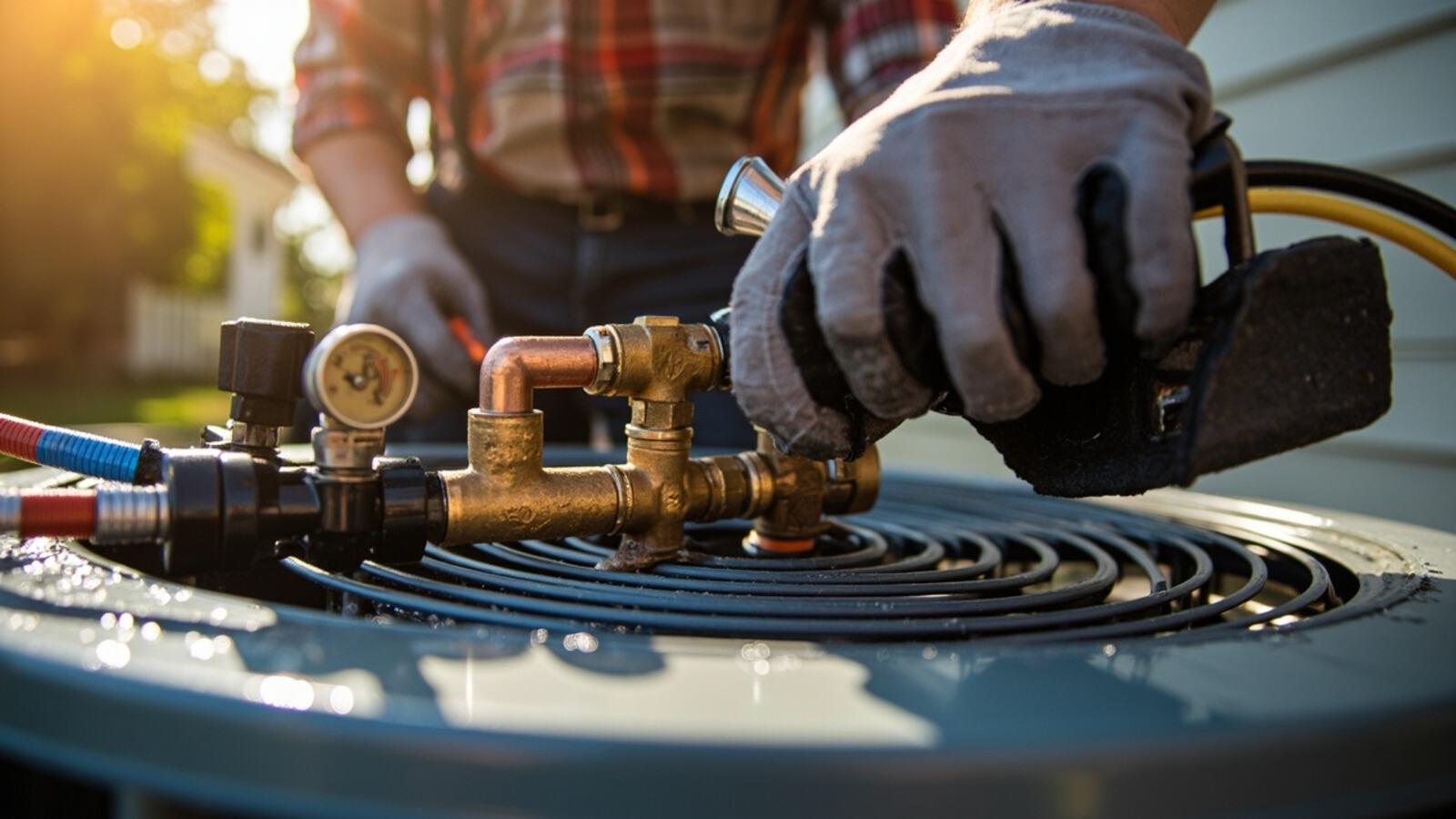
The condenser is the primary diagnostic point. It should produce a steady warm exhaust and blow air continuously. An outdoor unit that cycles on and off in short bursts, or that sounds strained, is a system working without the mass it needs to complete a cycle.
Warm air at the vents plus no temperature drop in the rooms is the classic pairing. Warm air everywhere with a good drop usually means airflow rather than charge.
In heating season
A heat pump losing charge gives you a furnace that runs longer and costs more to produce the same heat, or a backup heat source that starts on a cold morning. A gas furnace does not use refrigerant at all, so a pure gas system ruling out a refrigerant leak is worth confirming before spending time on it.
That distinction matters when you are calling someone. Saying the system is gas and heat pump at the same time sends the technician down the wrong path for the first ten minutes.
Where Leaks Actually Happen
Almost every residential leak is in one of a short list of places, which is why the diagnosis is faster than most homeowners expect.
- Flare joints and the service line at the outdoor unit, including the factory-sweat joints that were never properly flared.
- Coil line connections where the lines enter the indoor air handler.
- Corroded lines from a copper line exposed to salt air, fertilizer runoff, or an unfinished crawlspace.
- Abuse and impact from a mower, a ladder set against the unit, or a nest built in the space behind the coil.
The reason these fail is not usually workmanship. It is that refrigerant and moisture in the system combine with any breach in oxygen, and that combination is corrosive. A small opening becomes a large one over a season.
The cure is not a patch that holds for a while. It is locating the leak, repairing or replacing the failed part, evacuating the system, and holding a known charge while the repair is verified. A system that has lost charge will eventually fail its compressor if it keeps running this way, and that failure is the expensive one.
What to Do, and What Not to Do
There are two clearly wrong moves here, and both are common.
Do not top off the refrigerant as a fix. Adding charge to a system that has lost it restores capacity for a while and hides the evidence. If the leak is small, you will be back within a season, now with a bigger bill and a compressor that has been working overtime the whole time.
Do not set the thermostat colder to compensate. Lowering the set point on an underperforming system rarely closes the gap, and it makes the compressor run closer to its limits for longer.
What does help is a short list, in order.
- Check the filter and confirm the outdoor unit has clearance and is not iced over.
- Compare the air at the supply vent against the air at the return to see whether the system is moving what it should.
- Look at the line set and unit for oil spotting, which is refrigerant carrying compressor oil and marks the leak location.
- Have a licensed technician confirm charge and leak location before authorizing a repair.
Two conditions change the answer entirely. If your system is more than about 15 years old, a leak is often the moment to weigh replacement against repair, and replacement cost and the numbers behind it are worth reading before you commit. If the system is under warranty, call the manufacturer first, because parts and sometimes labor are covered.
When It Is Not a Refrigerant Problem
Several common complaints look identical from inside the house. Knowing which is which saves an expensive misdiagnosis.
- Duct leaks and poor sizing reduce delivered air, which the thermostat reads as a system that is not keeping up.
- A dirty evaporator coil reduces heat transfer, so the system runs on without cooling the house adequately.
Airflow is the one worth ruling out first, because it is the cheapest to fix and the most common. Why an HVAC system stops heating or cooling walks through that diagnosis, and duct sizing and airflow covers the design side of it.
If the unit is short of charge, routine maintenance is the part that protects the compressor afterward. Until a leak is found and fixed, a system running short of refrigerant is one of the harder ways to shorten the life of an otherwise healthy system.
The blower is still moving, which is exactly why this one hides. Trust the temperature gap rather than the airflow.