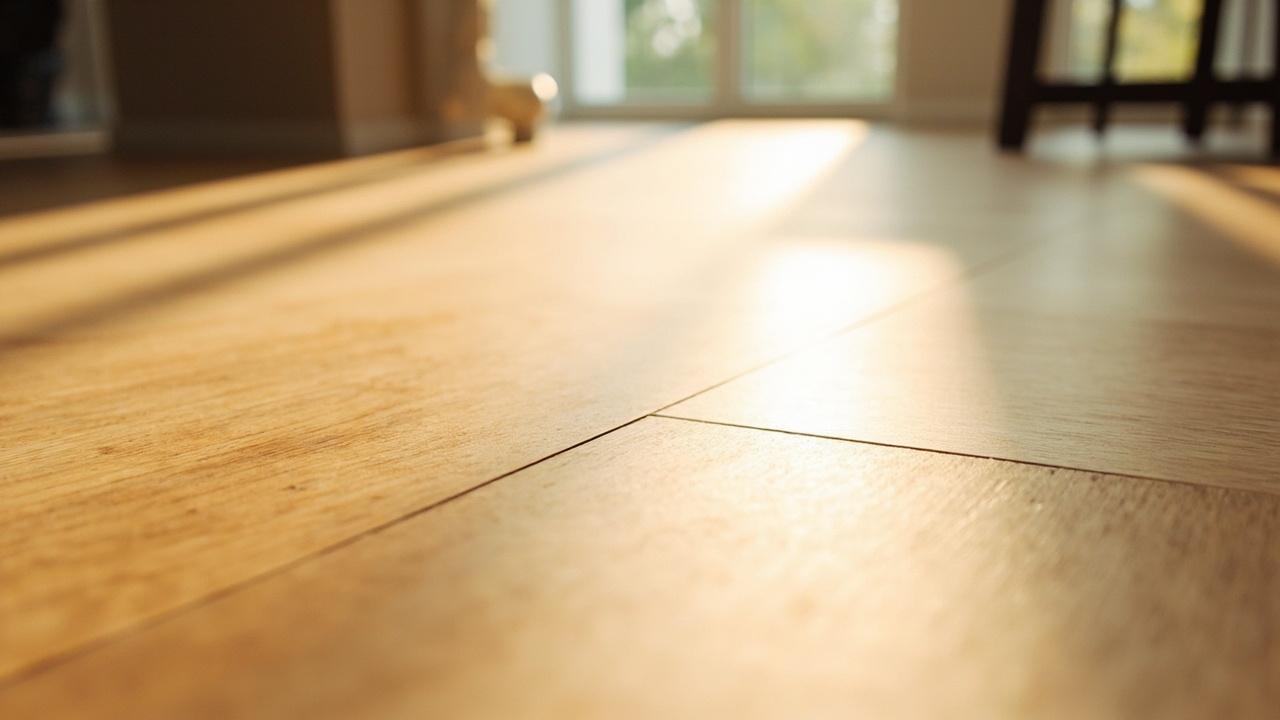

When a laminate floor fails, the symptom shows on top but the cause usually sits two layers down. A plank that peaks at the joints, chips at the edges, or drums hollow underfoot is telling you which layer was underspecified. This guide opens up the plank: four layers, what each one does, and how to read them on a spec sheet before you buy. For the big picture first, start with laminate flooring types, costs, and planning.
The Four Layers From Top to Bottom
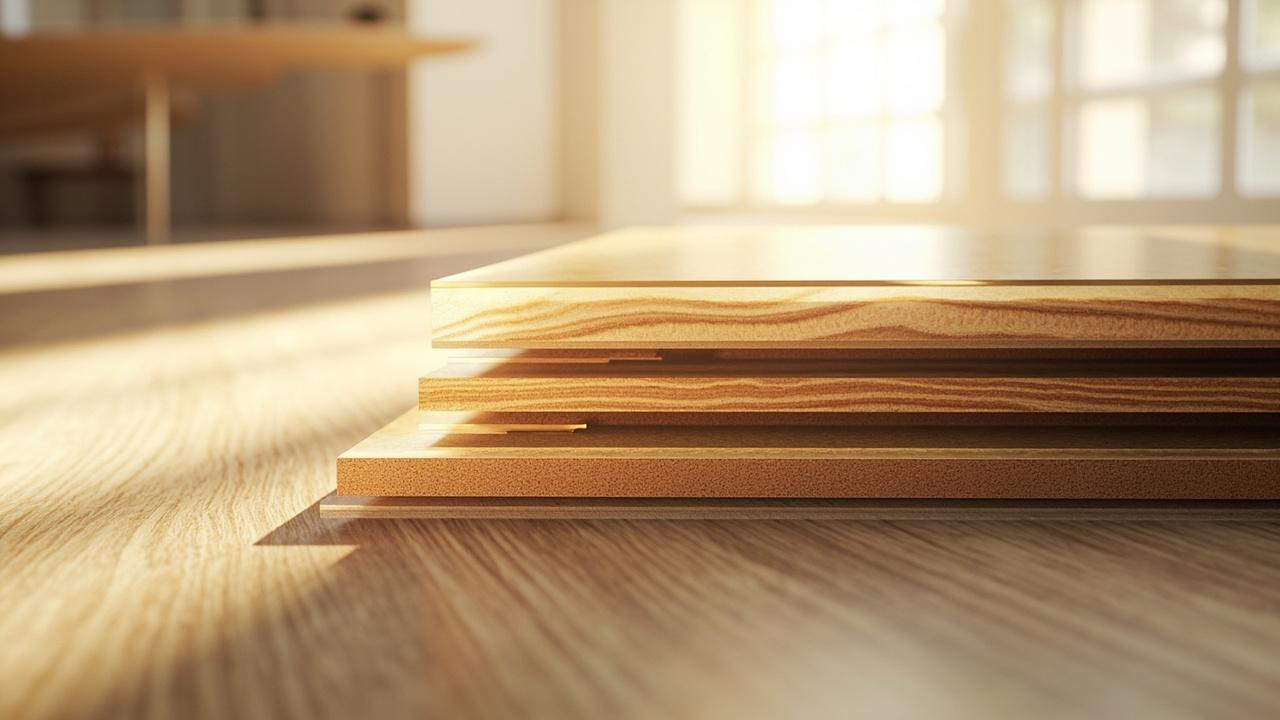
From the surface down, every laminate plank stacks a wear layer, a printed decor layer, a rigid core, and a balancing back. Total plank thickness usually lands between 7mm and 12mm, and nearly all of that is core. The top two layers decide how the floor looks and resists scratches; the bottom two decide whether it stays flat, quiet, and locked together for years.
Think of it as a division of labor: the surface handles abuse, the core handles structure. A premium wear layer over a soft, low-density core still fails early, because the joints flex and break the surface from below. Balance across layers beats a single superstar spec.
Wear Layer and Decor: What You See and Touch
The wear layer is a clear melamine resin coating, sometimes fortified with aluminum oxide particles for extra abrasion resistance. Its thickness and toughness are summarized by the AC rating, the grading from AC1 to AC5 that predicts how the surface survives foot traffic, grit, and chair casters. Which rating your rooms need is covered in laminate AC ratings and wear layer thickness.
Under the clear coat, the decor layer is a high-resolution print, not real wood. Embossed-in-register products align surface texture with the printed grain so the plank looks and feels like sawn oak or slate. Judge decor quality in large samples under daylight, since small chips flatter nearly everything.
HDF Core: The Structural Heart of the Plank
The HDF core 8-12mm is pressed wood fiber that gives laminate its rigidity and carries the milled click profile on all four edges. Core density, often listed in kg per cubic meter, is the spec that separates durable floors from spongy ones: denser fiber holds screws at transitions, resists edge crush from dropped objects, and keeps joints from opening under rolling loads.
| Core type | Handles | Does not handle |
|---|---|---|
| Standard HDF | Daily living, damp mopping with wrung mop | Standing water, wet mopping, below-grade damp |
| Water-resistant HDF | Spills wiped promptly, kitchens, entries | Flooding, full baths, outdoor exposure |
Two install conditions decide whether even a good core survives. First, subfloor flatness: most makers require roughly 3/16 inch of variation or less over 10 feet, because a floating floor bridges dips and then flexes at the joints with every step. Self-leveling compound or grinding fixes the dip once; replacing a failed floor costs far more. Second, radiant heating compatibility: many laminates work over hydronic or low-temperature electric systems within the maker’s surface-temperature limit, but confirm the exact product approval since overheating dries and gaps the joints.
Moisture behavior lives here too. Standard HDF swells when water reaches it through open joints or unsealed perimeter edges, and swollen edges never fully flatten again. Water-resistant cores add hydrophobic resins and wax-sealed joint edges that slow absorption, which handles spills and damp mopping but not flooding. Core treatment, not marketing labels, is what you are paying for in the water-resistant tier.
Backing, Click Joints, and Underlayment
The thin balancing layer on the plank bottom counteracts the tension of the top coatings so the plank stays flat through humidity swings. It is easy to ignore and expensive to miss: unbacked or thin-backed planks cup more readily in seasonal climates.
The click system milled into the core edges is what makes laminate a floating floor with no glue or nails. Tight-tolerance profiles (licensed systems are generally more precise) lock with an audible click and resist vertical movement that causes edge chipping. Below it all, a 2 to 3mm foam or felt underlayment dampens sound, absorbs minor subfloor texture, and, where a moisture barrier film is included, shields the core from concrete slab vapor. On grade-level concrete, never skip the vapor barrier.
How to Read the Layers When You Shop
Turn the sample over and interrogate four things. First, the AC rating and stated wear-layer thickness for your traffic level. Second, core density and whether edges are wax-sealed, which predicts joint survival in kitchens and entries. Third, click profile precision, which you test by assembling and disassembling a sample joint twice. Fourth, the underlayment and moisture-barrier requirement for your subfloor type.
Decision shortcut: if two products share an AC rating, pick the denser core with sealed edges. If they share a core, pick the higher AC rating for traffic. And if the room sees standing water regularly, no layer stack makes laminate the right answer, so step across to a waterproof option instead. Layers explain durability only when all four pull their weight.