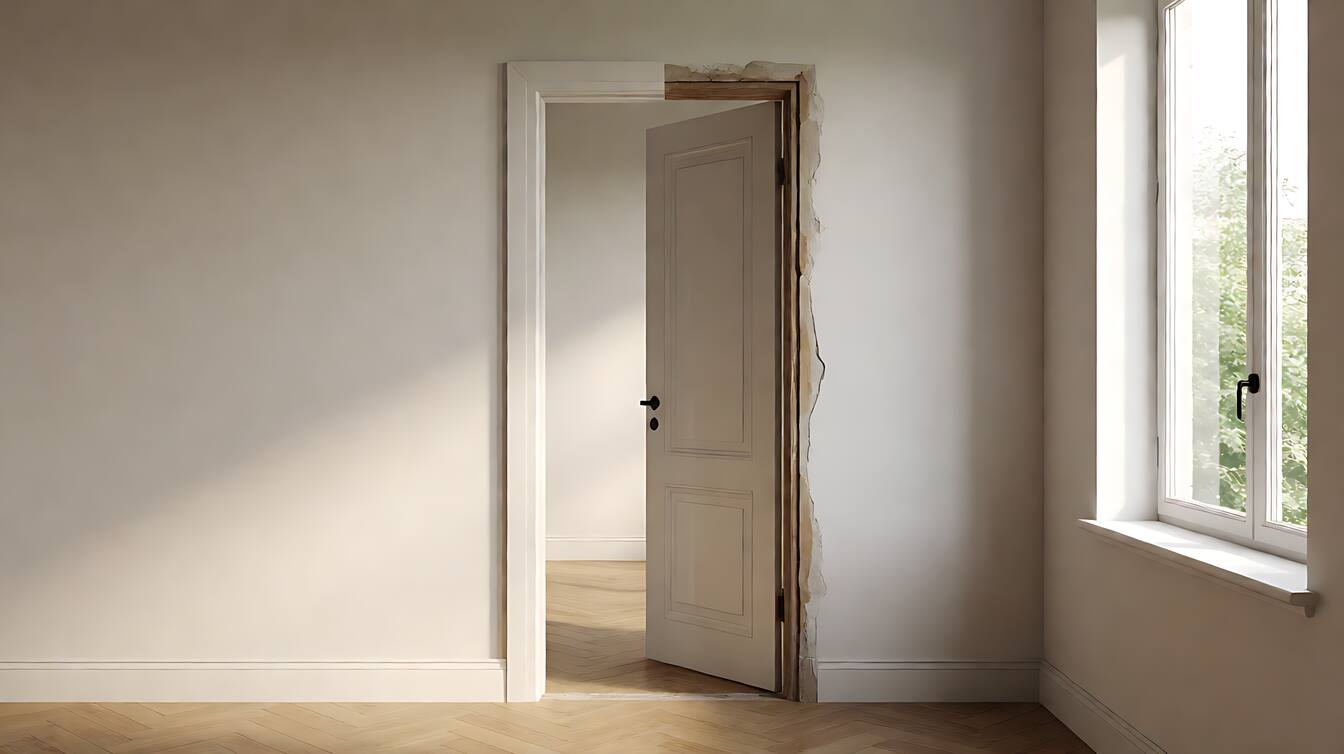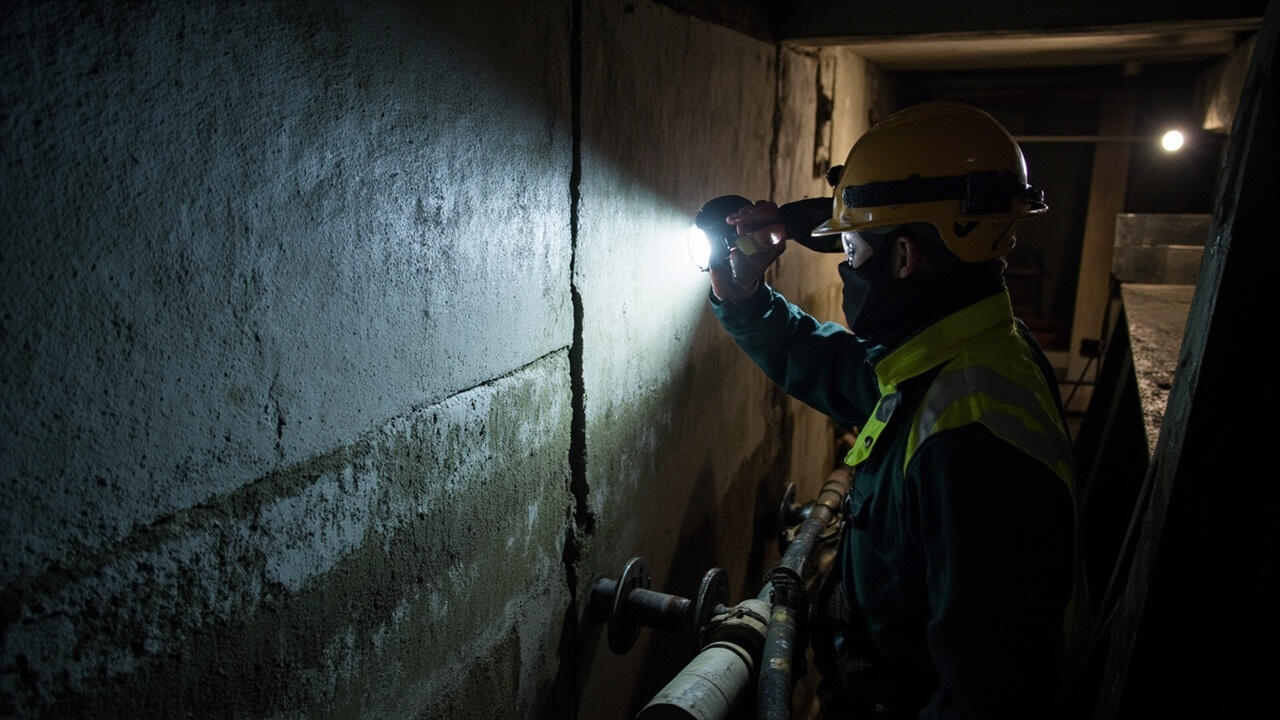

You notice it by accident. A door that used to swing freely now catches on the frame, or a crack runs along the basement wall in a stair-step pattern you try not to think about. You pull out your phone, search, and land on two very different numbers: a few thousand to fix it, or tens of thousands to rebuild it.
Foundation decisions are not like choosing between two similar appliances. One option preserves the house you have; the other essentially means building a new one underneath the one you already own. Getting it wrong is the most expensive mistake most homeowners will ever make.
Here is the reassuring part: a structural engineer can usually tell you which side of that line you are on within a single inspection. And the question that decides it is simpler than the price gap suggests.
Two Questions Decide Almost Every Foundation Case
You will find long lists of warning signs everywhere online: cracks, bowing walls, sloping floors, sticking doors. Those lists are useful for spotting a problem, but they make the decision feel like matching your house to a symptom chart. Underneath all of it, two questions do almost all the work.
First: can the existing concrete still hold a repair? Foundation repairs work by anchoring into sound material.
Carbon straps, wall anchors, and piering all need concrete that will grip a fastener and carry load. If the concrete crumbles when you scrape it, if the aggregate is separating from the cement paste across broad areas, or if the wall has lost real cross-section to spalling, there is nothing solid left to anchor into.
Second: is the movement active or has it stabilized? This is the single best predictor of whether a repair will hold, and it is the question most pages never ask you directly.
Most foundation settlement happens once, when the soil under a house compacts or dries out, and then stops. Those cracks are historical. Repair them and they stay fixed.
Things are different when the ground is still moving. Cracks that reappear after a repair, a shift that visibly accelerates rather than slowing, or several systems straining at once (sticky doors, new drywall cracks, plumbing that has started to leak) all point to that.
Repairing a symptom of active movement buys time, not a solution.
If your concrete is sound and your movement has stopped, repair is almost always the right answer. The rest of this guide is about the cases where it is not.
Repair Vs Replacement Cost: What Each Option Really Covers
Foundation replacement is the most disruptive and expensive project most homeowners will ever commission. It typically runs $20,000 to $100,000 or more, often landing above $50,000, because the house has to be temporarily lifted off its base while the foundation is built and the structure reconnected.
It also takes three to eight weeks, and in some cases you have to move out. That disruption is rarely factored into the price comparison, and it should be.
Put both numbers through the repair versus replacement cost calculator before you commit: it lists the line items that decide which quote is really cheaper.
Repair covers a wide range of work, and it is worth knowing the bands before anyone quotes you:
- Minor crack sealing or injection: $250 to $2,000
- Carbon fiber reinforcement: $3,000 to $8,000
- Wall stabilization using anchors or steel beams: $6,000 to $15,000
- Underpinning with push or helical piers: $1,000 to $3,000 per pier, with single-point settling typically $4,000 to $12,000
- Slab jacking: $3,000 to $7,000
The industry guidance is that when repair cost reaches roughly 60 to 70 percent of replacement, it is worth asking whether repair still makes sense as a lower-risk first step. The general framework for weighing these two, including the 50% rule and its hidden assumptions, is laid out in our home repair vs replacement decision guide.
But cost is the last question here, not the first. Run the numbers only after you know which repairs are even viable.
Crack Width and Deflection: The Numbers That Matter
When you are told a crack is fine or a crack is serious, the useful answer is a measurement. There are widely used thresholds, and knowing them turns a vague worry into something you can act on.

Hairline cracks under about 1/16 inch are usually cosmetic, driven by normal shrinkage in the concrete as it cured. Cracks wider than 1/4 inch warrant a professional evaluation, as do horizontal cracks anywhere on a basement wall and stair-step cracks that run through mortar joints in a block wall.
For walls that are bending inward, deflection over roughly 1 inch is the figure professionals treat as a genuine concern rather than normal give. Those are the measurements worth having in your hand when a contractor gives you an opinion.
One more trigger matters more than most people expect: movement of 4 to 6 inches or more. At that point the house has visibly shifted off its original bearing, and no patch is going to put it back.
When Replacement Becomes the Only Option
Full replacement is genuinely rare, and it should be. But it is the correct answer in a few recognizable situations, and knowing them saves you from a slow drift of expensive repairs that never hold.
The clearest trigger is concrete that has lost the ability to hold anything: crumbling when touched, severely corroded rebar exposed across multiple areas, aggregate separating from cement paste over broad sections, or walls that have lost significant cross-section. You cannot anchor a repair into material that will not hold a fastener.
The second is a design flaw no repair addresses: a foundation type that was wrong for the soil from the start, such as a shallow foundation sitting on deep expansive clay. Repair can stabilize this, but it never fixes the mismatch underneath, so the house keeps working against a foundation that was never right for where it sits.
Third, widespread active movement. Cracks returning after professional work, a shift that is accelerating, or several of the house’s systems straining at once all point to a foundation that is still losing the argument with the ground.
Fourth, when the concrete has been undermined over a large area by water intrusion, or when damage exceeds roughly half the structure. The basement floor and drain issues guide covers the water side, because solving drainage is often what keeps a repair from becoming a replacement.
The Middle Paths Most People Skip
Two options sit between repair and full replacement, and both come up regularly enough that ignoring them costs homeowners real money.
Partial replacement. If one wall of your foundation has failed while the other three are sound, you can often replace just that wall. It is a serious project, but it costs a fraction of a full rebuild and disrupts far less of the house. Which foundation you have matters for how feasible this is, and our concrete vs block foundation comparison breaks down the differences.
Monitoring first. Not every hairline crack needs money spent on it today. Minor cracks and slight settling can often be watched for six to twenty-four months with a simple log and a crack gauge, especially if the movement seems to have stopped. That buys you a trend line instead of a guess, and a trend is far more valuable than a single opinion.
What you should not do is wait on active movement. Widening cracks, floors that keep sloping, and ongoing water intrusion all worsen, and repair costs climb steeply when they are deferred. Waiting is a tool for stable cracks, not a strategy for moving ones.
How to Make the Decision in Four Steps
- Hire a structural engineer for an inspection, not a contractor sales visit. An engineer is independent and will tell you when you do not need work, which is exactly what you are paying for.
- Ask the two questions out loud: can this concrete accept a repair, and is the movement active or stabilized? If the answers are clear, the decision usually is too.
- If the cracks are minor and the movement looks stopped, take a monitoring log and a crack gauge before committing to work. Reassess in six months.
- If movement is active, get competing repair proposals written the same way, and make sure each one states what it fixes, what it will not, and what it costs. Be suspicious of any quote that does not answer the active-versus-stabilized question.
One last thing to weigh honestly: if repair costs are climbing toward half the value of the house itself, get the engineer’s opinion in writing before you spend another dollar. Repeated repairs that keep recurring are a signal in themselves.
Once the engineer has given you a verdict, the work itself is straightforward. If the answer is stabilization or underpinning, our deck repair vs replacement guide walks through the same frame-first logic applied to another structure, and if you have crawlspace access, the crawlspace insulation guide covers what to do while you are down there.