
Insulation does not last forever. Attic insulation settles, compresses, and loses R-value over time. Wall insulation can get wet, moldy, or displaced during renovations. The question is not whether your insulation needs attention. It is whether you should repair what you have, replace it entirely, or upgrade to a higher-performance material. The answer depends on the insulation type, its age, the condition of the cavity, and your budget. This guide gives you the decision framework for every common scenario.
When to Repair Insulation
Repair makes sense when the insulation is in good condition overall but has localized problems. Small areas of displaced, compressed, or moisture-damaged insulation can be removed and replaced without disturbing the rest of the cavity.
Attic Insulation Repair
Settled blown-in insulation loses R-value when it compresses. If your attic has 6 inches of settled cellulose that was originally 10 inches, you have lost about 40% of the R-value. The fix is not to remove and replace. It is to add more. A top-up layer of blown-in cellulose or fiberglass costs $1-2 per square foot and restores the original R-value. This is the cheapest and most effective attic insulation repair.
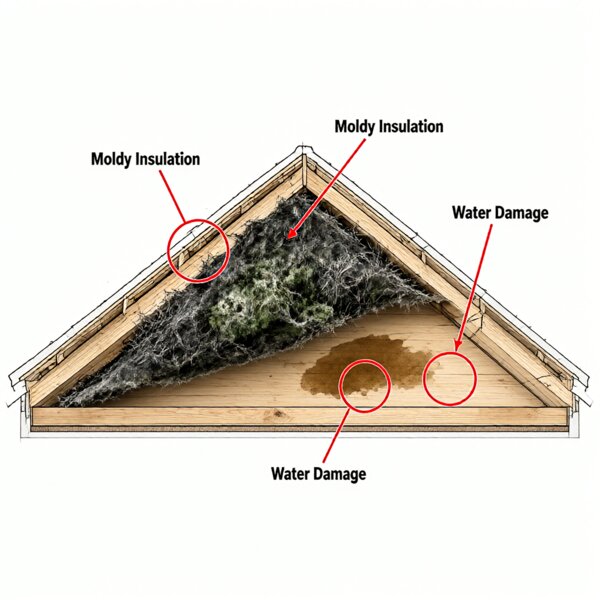
Wet insulation must be removed immediately. Wet fiberglass loses 50-70% of its R-value. Wet cellulose can grow mold within 48 hours. Remove the wet material, fix the leak source, dry the cavity, and install new insulation. Cost: $2-4 per square foot for removal and replacement.
Missing insulation in small areas (around attic hatches, behind knee walls, in soffit cavities) can be filled with batts or spray foam. Cost: $50-200 per area. This is a DIY-friendly repair that can improve comfort and reduce energy loss significantly.
Wall Insulation Repair
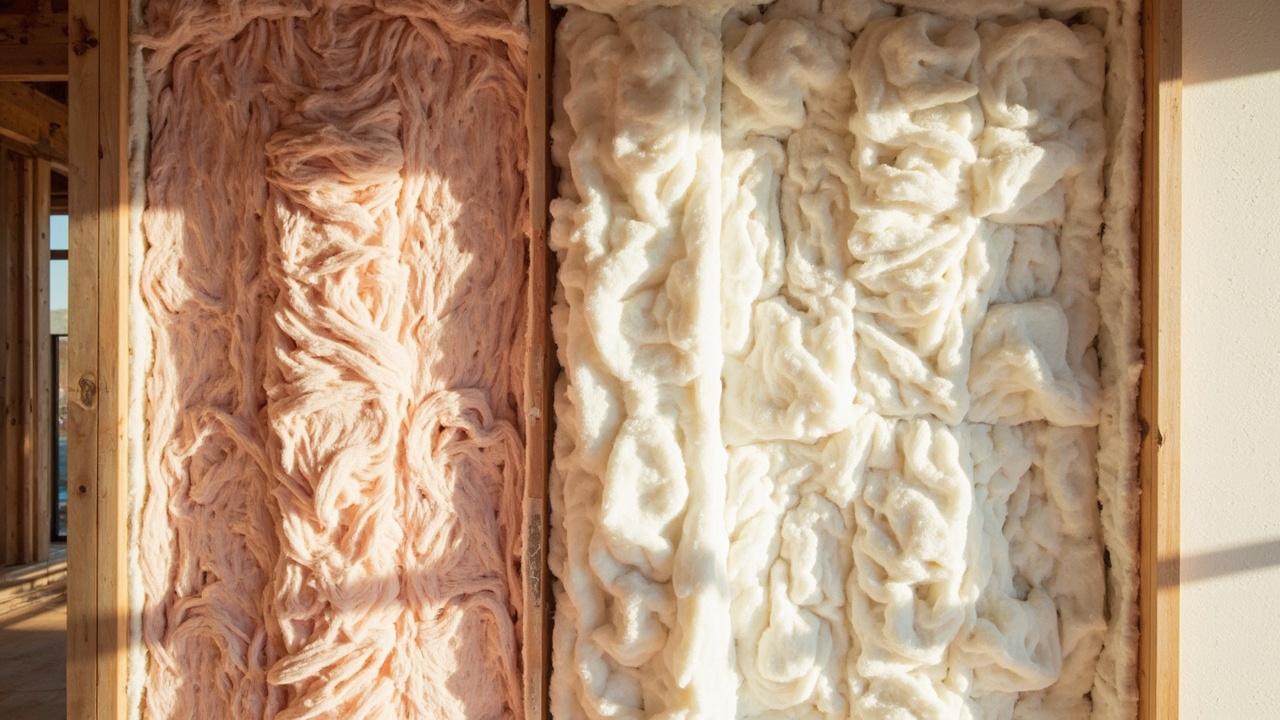
Compressed batts behind electrical boxes or pipes can be pulled out, re-fluffed, and reinstalled. If the batt is permanently compressed or torn, replace it with a new batt cut to fit. Cost: $5-15 per cavity.
Moisture-damaged batts must be removed. The cavity must be dried and the moisture source fixed before new insulation is installed. A single wet batt can cost $50-100 to replace including labor. If multiple batts are wet, the cost approaches the price of a full wall insulation upgrade.
When to Replace Insulation Entirely
Full replacement is warranted when the insulation is beyond repair, the cavity is compromised, or you are upgrading the entire building envelope.
Replace When the Insulation Is Contaminated
Mold-contaminated insulation cannot be cleaned. Mold spores penetrate porous materials and cannot be removed by surface cleaning. All moldy insulation must be removed, the cavity treated with antimicrobial solution, and new insulation installed. Cost: $3-6 per square foot for removal and replacement.
Asbestos-containing insulation (vermiculite, some old fiberglass) requires professional abatement. Cost: $5-15 per square foot. This is not a DIY project. Asbestos exposure causes mesothelioma and lung cancer. Always test before disturbing old insulation.
Rodent-damaged insulation must be removed. Rodents nest in insulation, compress it, and contaminate it with droppings and urine. The droppings carry hantavirus. Remove all contaminated material, seal entry points, and install new insulation. Cost: $3-6 per square foot.
Replace When the Cavity Is Compromised
Water-damaged cavities (from roof leaks, plumbing leaks, or flooding) may have rotted wood framing that cannot support new insulation. The framing must be repaired or replaced before insulation is installed. This is a structural repair, not an insulation project.
Renovation projects that open walls are the ideal time to upgrade insulation. If you are remodeling a kitchen, bathroom, or addition, the walls are already open. Upgrade from R-13 fiberglass to R-15 mineral wool or R-20 spray foam for $1-3 per square foot more than the original insulation cost.
When to Upgrade Insulation
Upgrading means replacing existing insulation with a higher-performance material. This is justified when the energy savings and comfort improvement exceed the cost over a reasonable payback period.
Attic Insulation Upgrade
From R-19 to R-49: If your attic has R-19 fiberglass batts and you upgrade to R-49 blown-in cellulose, you reduce heat loss through the attic by 60%. Cost: $1-2 per square foot. Payback: 3-5 years in cold climates, 5-8 years in mild climates.
From vented to unvented attic: Converting a vented attic to an unvented attic with spray foam on the roof deck improves air sealing and prevents ice dams. Cost: $2.50-4.50 per square foot. Payback: 5-10 years. Justified in cold climates with ice dam problems.
Wall Insulation Upgrade
From R-13 to R-15 mineral wool: Mineral wool has higher R-value per inch (R-4.2 vs R-3.7) and better fire and sound performance. Cost: $0.50-1.00 per square foot more than fiberglass. Justified for exterior walls in fire-prone areas and sound-sensitive rooms.
Adding continuous exterior insulation: Installing 1-2 inches of rigid foam on the exterior of the wall sheathing breaks thermal bridging and raises the effective R-value by 20-30%. Cost: $1-2 per square foot. Justified in cold climates (zones 5-8) where thermal bridging is a significant heat loss source.
From fiberglass to spray foam: Replacing fiberglass batts with spray foam in wall cavities improves air sealing by 80-90%. Cost: $1.50-3.00 per square foot. Justified in tight spaces, irregular cavities, and high-performance homes.
Cost Comparison: Repair vs Replace vs Upgrade
| Scenario | Cost per Sq Ft | R-Value Change | When to Choose |
|---|---|---|---|
| Top-up attic insulation | $1-2 | +R-20 to R-30 | Settled or thin attic insulation, good condition |
| Remove and replace wet insulation | $3-6 | Restores original | Moisture damage, mold, rodents |
| Upgrade attic R-19 to R-49 | $1-2 | +R-30 | Old attic insulation, cold climate |
| Upgrade walls R-13 to R-15 mineral wool | $0.50-1.00 | +R-2 | Fire-prone areas, sound-sensitive rooms |
| Add exterior rigid foam (R-5) | $1-2 | +R-5 continuous | Cold climates, thermal bridging issues |
| Replace with spray foam | $1.50-3.00 | +R-3 to R-6 | Irregular cavities, high-performance homes |
| Full attic spray foam (unvented) | $2.50-4.50 | +R-30 to R-40 | Ice dam problems, hot-humid climates |
Decision Checklist
Repair if: The insulation is in good condition overall, the damage is localized (less than 10% of the area), the cavity is dry and structurally sound, and the repair cost is less than 30% of a full replacement.
Replace if: The insulation is contaminated (mold, asbestos, rodents), the cavity is damaged, more than 30% of the insulation is compromised, or the insulation is older than 30 years.
Upgrade if: The existing insulation is functional but underperforming, you are already opening the walls for renovation, the energy savings justify the cost (payback under 10 years), or you are targeting a specific performance goal (net-zero, soundproofing, fire resistance).
Insulation Repair vs Replacement: The Final Decision
Start with an energy audit. A blower door test identifies air leaks, and an infrared camera reveals missing or degraded insulation. Fix the air leaks first. Then assess the insulation condition. If the insulation is dry, intact, and has reasonable R-value, a top-up or localized repair is the cheapest option. If the insulation is contaminated, damaged, or underperforming, replacement or upgrade is the better investment.
The most common mistake is replacing insulation that just needs air sealing. A house with R-19 insulation and no air sealing wastes more energy than a house with R-13 insulation and tight ducts. Seal first, insulate second, and upgrade only when the payback justifies the cost.