
Foundation problems are the most expensive home repair category. A cracked foundation wall can cost $3,000 to repair. A full foundation replacement can cost $50,000. The difference between a $3,000 repair and a $50,000 replacement is not the severity of the crack. It is whether the underlying cause is addressed. This guide helps you evaluate foundation problems, understand repair options, and decide when replacement is the only solution.
Understanding Foundation Damage Types
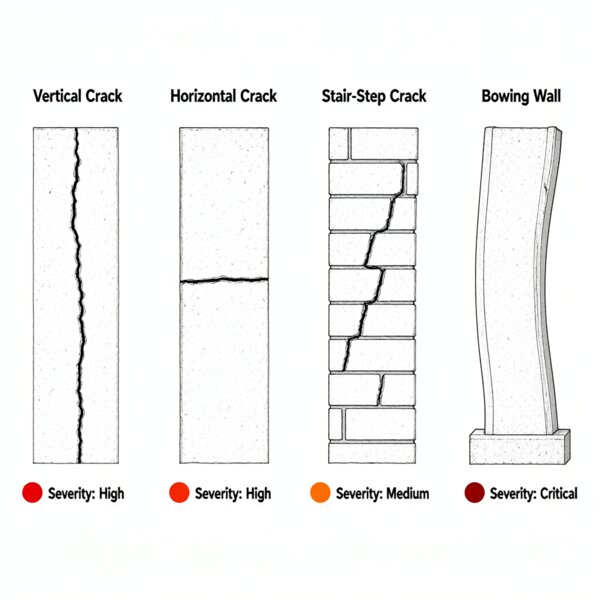
Not all foundation cracks are the same. The type, location, and pattern of the crack determine the cause and the appropriate repair.
Hairline Cracks (Less Than 1/8 Inch)
Hairline cracks in concrete are normal. They occur as concrete cures and shrinks. They do not indicate structural failure. Fill them with epoxy or polyurethane injection if water seeps through. Cost: $50-200 per crack. These are cosmetic, not structural.
Vertical Cracks
Vertical cracks run up and down the foundation wall. They are caused by foundation settling or soil movement. Small vertical cracks (less than 1/4 inch) are common and usually not serious. Wider vertical cracks (over 1/4 inch) indicate significant settlement and require professional assessment. Cost: $500-2,000 for epoxy injection and monitoring.
Horizontal Cracks
Horizontal cracks run along the foundation wall, parallel to the ground. They are caused by lateral soil pressure pushing the wall inward. This is the most serious crack type. Horizontal cracks indicate structural failure and require immediate professional attention. Cost: $3,000-10,000 for carbon fiber straps or steel beam reinforcement.
Stair-Step Cracks
Stair-step cracks follow the mortar joints in block foundations. They indicate differential settlement: one part of the foundation is sinking faster than another. These cracks require underpinning (helical piers or push piers) to stabilize the foundation. Cost: $5,000-20,000.
Bowing and Bulging Walls
A foundation wall that bows or bulges inward is failing under soil pressure. This is a structural emergency. The wall must be reinforced with carbon fiber straps or replaced. Cost: $5,000-15,000 for reinforcement, $15,000-30,000 for replacement.
Repair Options: What Works and What Does Not
Epoxy and Polyurethane Injection
Epoxy injection fills cracks and bonds the concrete back together. It is the standard repair for non-structural cracks that leak water. Cost: $500-2,000 per crack. Epoxy injection does not stop the crack from widening if the underlying cause (settlement, soil pressure) is not addressed.
Polyurethane injection is better for active leaks. It expands to fill the crack and remains flexible, accommodating minor movement. Cost: $500-1,500 per crack. Use polyurethane for cracks that leak water. Use epoxy for dry cracks that need structural bonding.
Carbon Fiber Straps
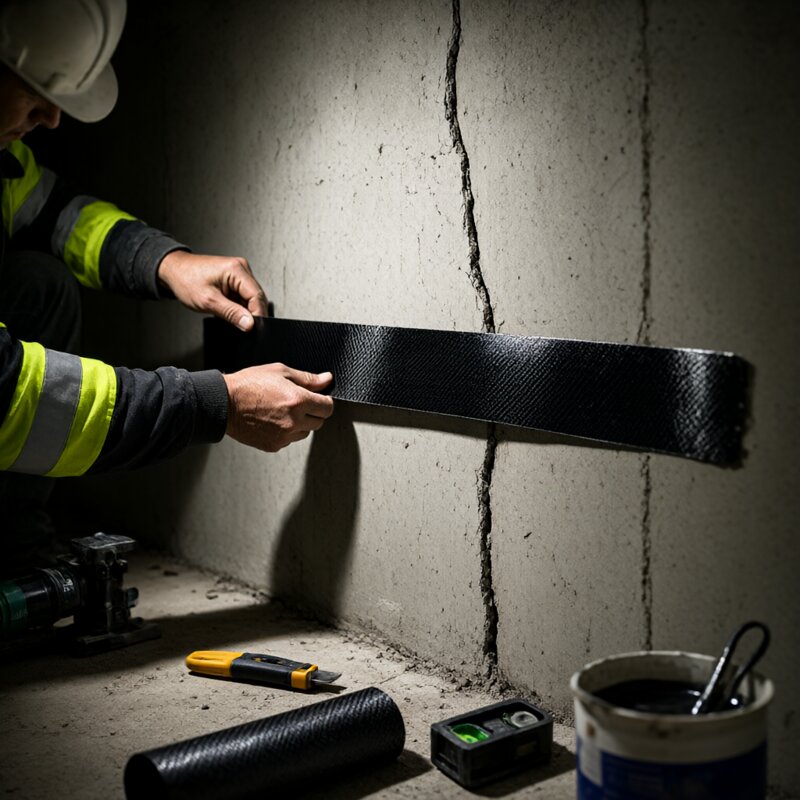
Carbon fiber straps are applied to the interior of a bowing foundation wall to prevent further movement. They are strong, thin, and do not reduce basement space. Cost: $3,000-8,000 for a typical basement. Carbon fiber straps work for walls that have bowed less than 2 inches. Beyond 2 inches, steel beams or wall replacement is required.
Steel I-Beams
Steel I-beams are installed vertically against a bowing wall to provide structural support. They are more effective than carbon fiber for severe bowing but take up more space and cost more. Cost: $5,000-15,000 for a typical basement. Steel beams are the standard repair for walls that have bowed more than 2 inches.
Underpinning (Helical Piers and Push Piers)
Underpinning extends the foundation to deeper, more stable soil. Helical piers are screwed into the ground and attached to the foundation footing. Push piers are driven into the ground using the weight of the house. Both methods stabilize settling foundations. Cost: $1,500-3,000 per pier. A typical house requires 6-12 piers, costing $10,000-36,000.
Waterproofing and Drainage
90% of basement water problems stem from poor exterior drainage, not foundation cracks. The fix is not waterproofing. It is drainage. Install or repair gutters, extend downspouts 6+ feet from the foundation, and grade the soil away from the house at 1/4 inch per foot. Cost: $500-3,000 for drainage improvements. This is cheaper and more effective than interior waterproofing systems.
If drainage improvements do not solve the problem, interior waterproofing (drain tile and sump pump) is the next step. Cost: $3,000-10,000. This manages water that enters the basement but does not fix the source.
When to Replace the Foundation
Foundation replacement is rare and expensive. It is warranted only when the foundation has failed structurally and cannot be repaired.
Replace when: The foundation has collapsed or is at risk of collapse. The wall has bowed more than 4 inches and is cracking. The foundation is made of crumbling concrete or deteriorated block. The cost of repairs exceeds 50% of a new foundation. The foundation is in a flood zone and has been repeatedly inundated.
Do NOT replace when: The foundation has cracks that can be injected. The wall has bowed less than 2 inches. The problem is water intrusion, not structural failure. The foundation is old but sound. The cost of repairs is less than 50% of replacement.
Foundation replacement costs $15,000-50,000 for a typical house. The process involves lifting the house, removing the old foundation, pouring a new one, and lowering the house back onto it. This is a 2-4 week project that requires a structural engineer, a foundation contractor, and a house lifting company.
Cost Comparison: Repair vs Replace
| Problem | Repair Cost | Replace Cost | Repair Makes Sense If | Replace Makes Sense If |
|---|---|---|---|---|
| Hairline cracks | $50-200 | N/A | Always (cosmetic) | Never |
| Vertical cracks (small) | $500-2,000 | N/A | Always | Never |
| Horizontal cracks | $3,000-10,000 | $15,000-50,000 | Bow <2 inches | Bow >4 inches, wall cracking |
| Stair-step cracks | $5,000-20,000 | $15,000-50,000 | Settlement stopped | Active settlement, multiple cracks |
| Bowing walls (<2 in) | $3,000-8,000 | $15,000-50,000 | Always (carbon fiber) | Never at this stage |
| Bowing walls (>2 in) | $5,000-15,000 | $15,000-50,000 | Cost <50% of replacement | Cost >50% of replacement |
| Water intrusion | $500-3,000 (drainage) | $3,000-10,000 (waterproofing) | Drainage fixes the problem | Drainage does not solve it |
| Crumbling foundation | N/A | $15,000-50,000 | Never | Always |
Prevention: How to Protect Your Foundation
Maintain gutters and downspouts. Clean gutters twice a year. Extend downspouts 6+ feet from the foundation. A $20 downspout extension prevents a $5,000 foundation repair.
Grade the soil away from the house. The ground should slope away from the foundation at 1/4 inch per foot for at least 6 feet. Add soil if needed. Do not let water pool against the foundation.
Control moisture around the foundation. Do not overwater landscaping near the foundation. Install a drip irrigation system that delivers water directly to plant roots, not the soil surface. In clay soils, maintain consistent moisture to prevent expansion and contraction.
Inspect annually. Walk around the foundation twice a year. Look for new cracks, settling, or water staining. Catch problems early when they are cheap to fix.
Concrete and Foundation: Repair, Replace, or Upgrade? The Final Decision
Most foundation problems are repairable. Horizontal cracks, bowing walls, and settling can all be fixed with the right technique. Replacement is reserved for foundations that have failed structurally or are made of deteriorated material.
The most common mistake is ignoring small cracks until they become big problems. A $500 epoxy injection on a vertical crack prevents a $5,000 underpinning job later. Inspect your foundation annually, fix cracks when they are small, and address drainage before it becomes a water problem.
If you are buying a home, hire a structural engineer to inspect the foundation. Foundation repairs are the most expensive home repair category, and early detection saves money. Look for cracks, settling, and water intrusion signs during the inspection. A $500 inspection prevents a $50,000 surprise.