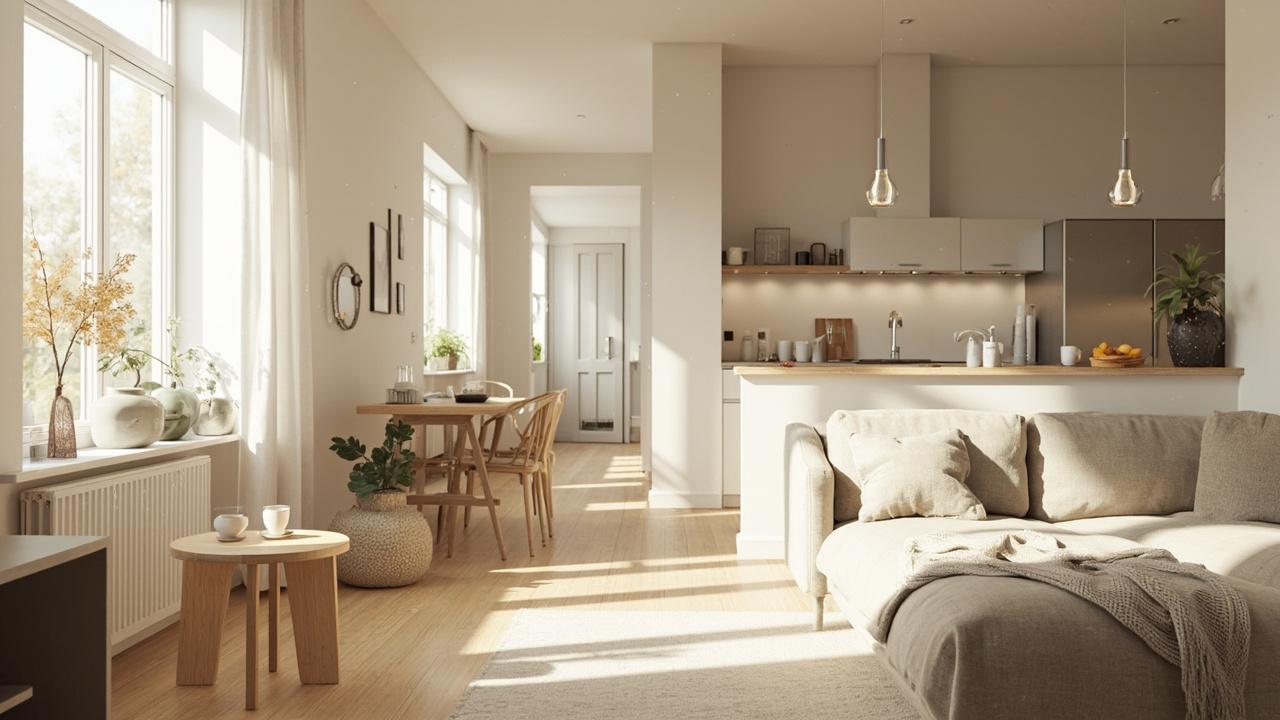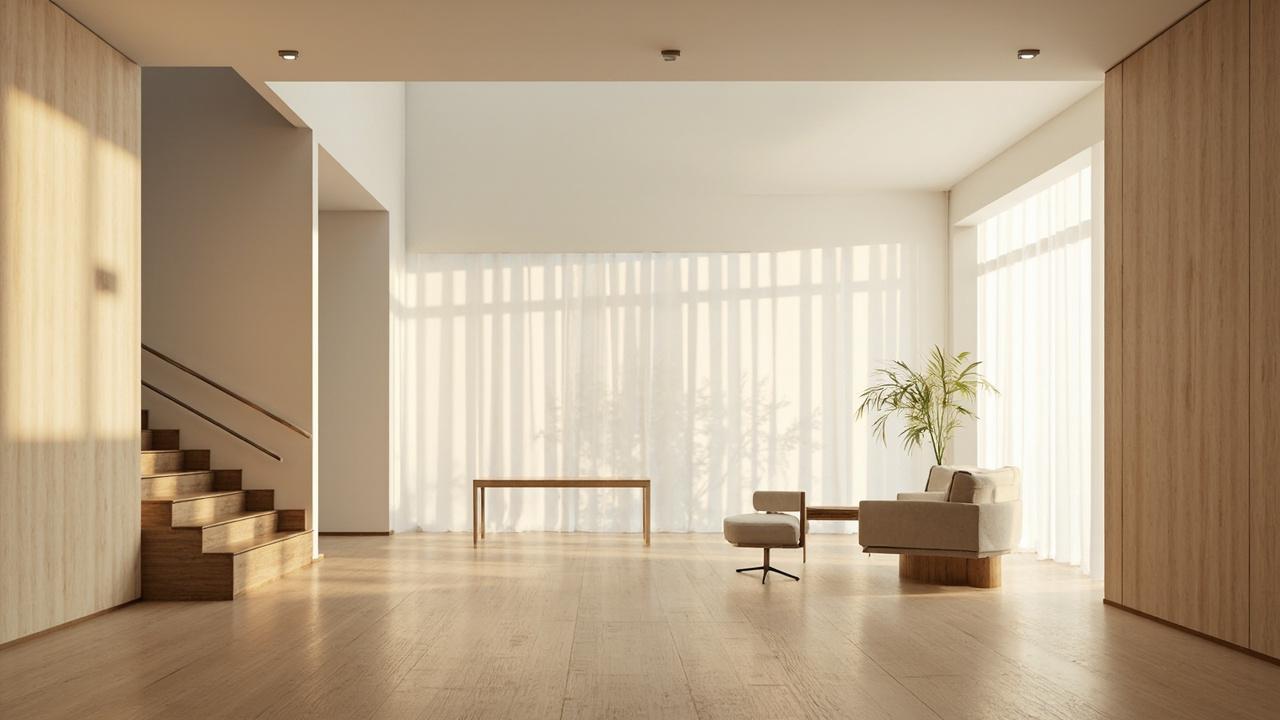

You sign a lease, get the keys, and stand in a beige box. Interior design for rental property starts with one quiet question: how do you make a place feel like home without handing your security deposit back to the landlord in a garbage bag?
Rental interior design is the practice of shaping a space you do not own, in a way that survives move-out day. Lease-friendly does not mean cheap-feeling. It means choosing finishes, fasteners, and furniture that you can reverse, repair, or carry out the door when the lease ends.
What rental interior design actually is
It is a constraint-driven design problem. You are working inside a lease, a deposit, and a reversibility budget, not a free creative canvas. The good news: the constraints are real, but they are also predictable. Once you understand the three forces shaping every decision, the options line up fast.
Think of it as a triangle. Lease terms sit at one corner, the security deposit at another, and your reversibility timeline at the third. A modification is “rental-safe” only when all three allow it. A removable wallpaper that takes six hours to strip on move-out? Fine for a two-year lease, painful for month-to-month.
Most US leases cap your security deposit at one to two months of rent. In an $1,800/month apartment, that is $1,800 to $3,600 you are gambling on every wall, floor, and ceiling. The math changes which “small” updates are actually worth it. For the broader context of how rooms come together, our interior design guide walks through the decision framework from the top.
How it works: lease categories, deposit exposure, reversibility
Every lease falls into one of three categories, and the category decides what you can do without picking up the phone.
Strict no-modification leases prohibit nails, screws, paint, and adhesive on most surfaces. They are common in large managed apartment buildings. Your move is furniture, textiles, and freestanding pieces.
Moderate modification leases allow small nail holes (often under 6 mm or 1/4 inch diameter) and sometimes paint with landlord pre-approval in writing. Single-family rentals and older buildings often fall here.
Permissive leases let you paint, drill, and remodel, sometimes with a move-out restoration clause. These are rarer and usually apply to longer-term rentals or rent-to-own arrangements.
Deposit exposure works like this. In most US states, landlords can legally deduct repair and cleaning costs from your deposit, while reasonable wear and tear is excluded. Carpet cleaning alone runs $100 to $300 per room, and that is before any wall patching.
A handful of nail holes filled with a $3 tube of spackle costs you ten minutes. The same holes, left unfilled, can mean a $50 to $150 deduction per wall.
Reversibility is your time budget on move-out. Plan for two to six hours to undo “renter-friendly” updates across a one-bedroom. Anything that takes longer should not go up in the first place. Furniture and decor you take with you cost zero minutes to reverse.
Choosing the right modification for your situation
Match the update to your lease, your stay length, and the room’s traffic. The table below lines up common modifications by reversibility, cost, lease category, and damage risk. Use it to pick the option that fits your actual situation, not the Pinterest version.
| Modification | Reversibility | Cost range | Allowed in | Damage risk |
|---|---|---|---|---|
| Removable wallpaper (peel-and-stick) | 30-90 min per wall | $1-$4/sq ft | Strict to moderate | Low if removed under 3 years; adhesive residue possible |
| Standard interior paint | Requires repaint to original | $2-$6/sq ft (DIY to pro) | Moderate with written approval | Medium; 30-day cure before wash |
| Peel-and-stick backsplash tile | 15-30 min per sq ft | $3-$8/sq ft | Strict to moderate | Low on sealed surfaces; medium on raw drywall |
| Command strips / adhesive hooks | 5-10 min per strip | $0.50-$2 per strip | Strict | Medium; pulls paint if left more than 12 months or in heat |
| Tension rods (curtains, dividers) | 5 min | $10-$40 | Strict | None on walls; ceiling marks possible |
| Freestanding shelving | 10-20 min | $50-$400 | Strict | None on walls; floor scuff risk |
| Modular / portable furniture | Carry out | Varies widely | All categories | None |
| LED strip lights with adhesive | 10-20 min | $15-$60 per run | Strict to moderate | Low; residue on textured walls |
| No-drill curtain rods (inside-mount) | 5 min | $20-$80 | Strict | None on walls; bracket marks on window frame |
| Area rugs with furniture pads | 5 min | $100-$600 | All categories | None on walls; can stain hardwood if no pad |
Some quick conditional calls. Use peel-and-stick wallpaper if you want a feature wall and your lease is strict. Skip it in a south-facing room where heat bakes adhesive into drywall.
Use tension rods if you need curtains in a strict-lease space and the window frame is solid. Use freestanding shelving if you want to display books or plants without holes, and your floor can handle the weight.
Plan for about 900 mm of circulation around the unit so the room still flows. Use no-drill curtain rods if you have deep window jambs and want a clean, mounted look without a single screw. Use modular furniture if your lease might not renew, because you can take the layout with you.

Steps to set up a rental space without losing your deposit
Walk the space before move-in with your phone camera. Photograph every wall, floor, carpet stain, scuff, and window in daylight. Date the photos. This is your pre-move-in condition record, and it is the single most useful document you will have at move-out. Most disputes are won or lost on this file.
Then layer your updates in this order, cheapest to most committed:
- Textiles first. Curtains, rugs, throw pillows, and bedding change the perceived space more per dollar than any other category. They also leave the property when you do.
- Furniture next. Modular sofas, nesting tables, and bookcases that double as room dividers give you layout flexibility as your needs change.
- Lighting. Layer floor lamps, table lamps, and LED strips at 200 to 300 lux for living areas. No hard-wiring, no electrician, no lease call.
- Adhesives last. Save command strips and peel-and-stick products for the pieces you know you will keep for 12 months or more. Heat and time weaken the bond.
Common mistakes cost real money. Filling nail holes with toothpaste instead of spackle shows up under fresh paint and gets flagged on inspection. Removing command strips by pulling straight out instead of stretching them slowly down the wall peels paint every time.
Painting over wallpaper, even removable, gives your landlord a $200+ wallpaper-stripping bill. And skipping the move-in photo walk means arguing your version of “pre-existing” against theirs.
Edge cases, limits, and when to negotiate with the landlord
Some situations change the whole calculus. If you have a month-to-month lease, your reversibility window is essentially zero, so skip anything that needs cure time or adhesive. If you share walls with noisy neighbors, prioritize rugs, soft furnishings, and acoustic panels over paint.
If you have pets, skip peel-and-stick on lower walls and choose scuff-resistant paint colors (if your lease allows paint) so the inevitable marks blend in.
High-traffic rooms like entryways and kitchens need finishes that survive cleaning. Low-traffic rooms like guest bedrooms and dining nooks can carry the softer, more decorative choices. North-light rooms can lean into warm whites and woods. South-light rooms should avoid high-gloss removable wallpaper, which shows every adhesive line in direct sun.
When the lease is unclear, ask. A short written request to your landlord, like “I would like to add peel-and-stick wallpaper to one wall, and I will remove it at move-out, returning the wall to its current condition,” often gets a yes in writing. That written approval is your receipt. Save it in email, not in your head.
Renters insurance is cheap (median premium $15 to $30 per month in the US) and covers your furniture and electronics against theft, fire, and certain water damage. It does not cover the landlord’s walls, so it is not a substitute for careful modifications, but it rounds out the picture.
One last fork in the road. If your real goal is a bold wall, the safer path is reversible wallpaper or a curated gallery of framed art, not paint. We lay out the no-paint options and the lease-friendly approach in our guide to how to create an accent wall.
If your pain point is light control and privacy, the rental-safe window treatment playbook lives in our interior window treatments guide. Pick the path that matches the room you are trying to fix, not the room you wish you had.