
A kitchen backsplash is the finished wall surface between your countertop and upper cabinets, and the right one changes how the whole room works. Ceramic and porcelain tile runs $5 to $15 per square foot for materials, natural stone and glass climbs to $15 to $50 or more, and peel-and-stick options land at $1 to $5 per square foot for renters and short-term updates. The honest answer is conditional: your cooking habits, budget, and how long you plan to stay in the home all shift the best choice. This guide walks through the major backsplash types, what they cost installed, where they win, and where they quietly lose so you can pick the right one for your kitchen without guessing.
What Is a Kitchen Backsplash and Why Does It Matter
A kitchen backsplash is a wall-mounted protective surface installed between the countertop and upper cabinets, typically 4 inches high, though full-height runs to the cabinet top or ceiling are increasingly common in modern kitchens. The average kitchen has 12 to 20 linear feet of splash zone; open layouts with islands can push past 30 linear feet when multiple runs meet at corners and peninsulas.
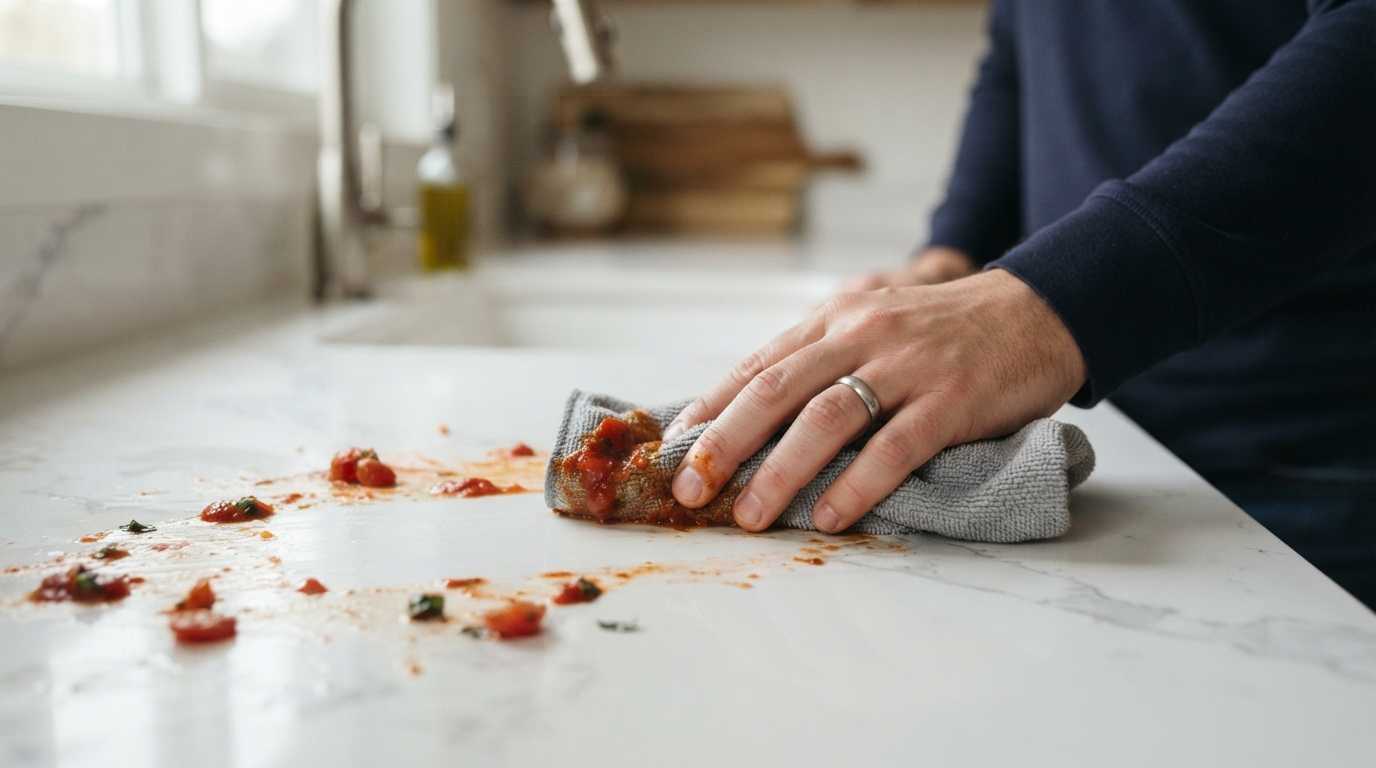
The job is twofold. A backsplash shields drywall from water, steam, oil, and food acids, preventing mold, staining, and wall deterioration behind the sink and range. It also gives you a wipe-clean surface that frames the countertop into a coherent design and anchors the room’s overall look.
When the splash zone gets the wrong material, failure shows up fast. Cracked grout near the range. Etched stone from citrus juice. Adhesive failure on a wall that sees steam daily. That dual role makes price alone a poor filter. A material at $3 per square foot that needs replacement in three years costs more over time than one at $25 per square foot that lasts two decades. Matching material to cooking intensity is what keeps a backsplash from becoming a recurring expense.
For readers mapping the broader project, the how to renovate a kitchen step by step guide covers how the splash fits into the full remodel sequence.
Tile Backsplash: The Most Popular Choice
Ceramic tile at $3 to $8 per square foot and porcelain tile at $5 to $15 per square foot are the workhorses of backsplash design, balancing cost, heat resistance, and design range for wet cooking zones behind sinks and ranges. Both are fired clay with a glazed surface, but porcelain is denser and less porous, which makes it the safer bet directly behind a range where grease and steam hit hardest.
The most recognized format is the 3 by 6 inch subway tile. At $4 to $10 per square foot for ceramic subway, it remains the most forgiving DIY option and pairs with almost every cabinet style. Larger formats like 4 by 8 inch or 6 by 12 inch reduce grout lines and read cleaner, but they demand flatter walls or lath work to avoid lippage and cost more per square foot.
Mosaic tiles sold on mesh-backed sheets in glass, stone, or mixed material sit at $7 to $25 per square foot. They excel on curved or uneven surfaces and add texture that flat tile cannot match. The high grout ratio means more maintenance in a kitchen that sees heavy use. Small glass mosaics near a window catch light beautifully and wipe clean easily, which is why they are a common choice for a secondary splash behind a prep sink or on a peninsula face.
Tile installation labor adds $8 to $15 per square foot for a pro. A typical 20 square foot splash runs $200 to $500 installed for ceramic subway; porcelain or mosaic with complex patterns pushes $300 to $700. Substrate preparation must be flat, clean, and primed. Cracked or out-of-plumb surfaces telegraph through thin tile within a year. Skipping preparation is the most common reason a tile splash fails before the adhesive even cures.
Stone and Glass Backsplash: Premium Options
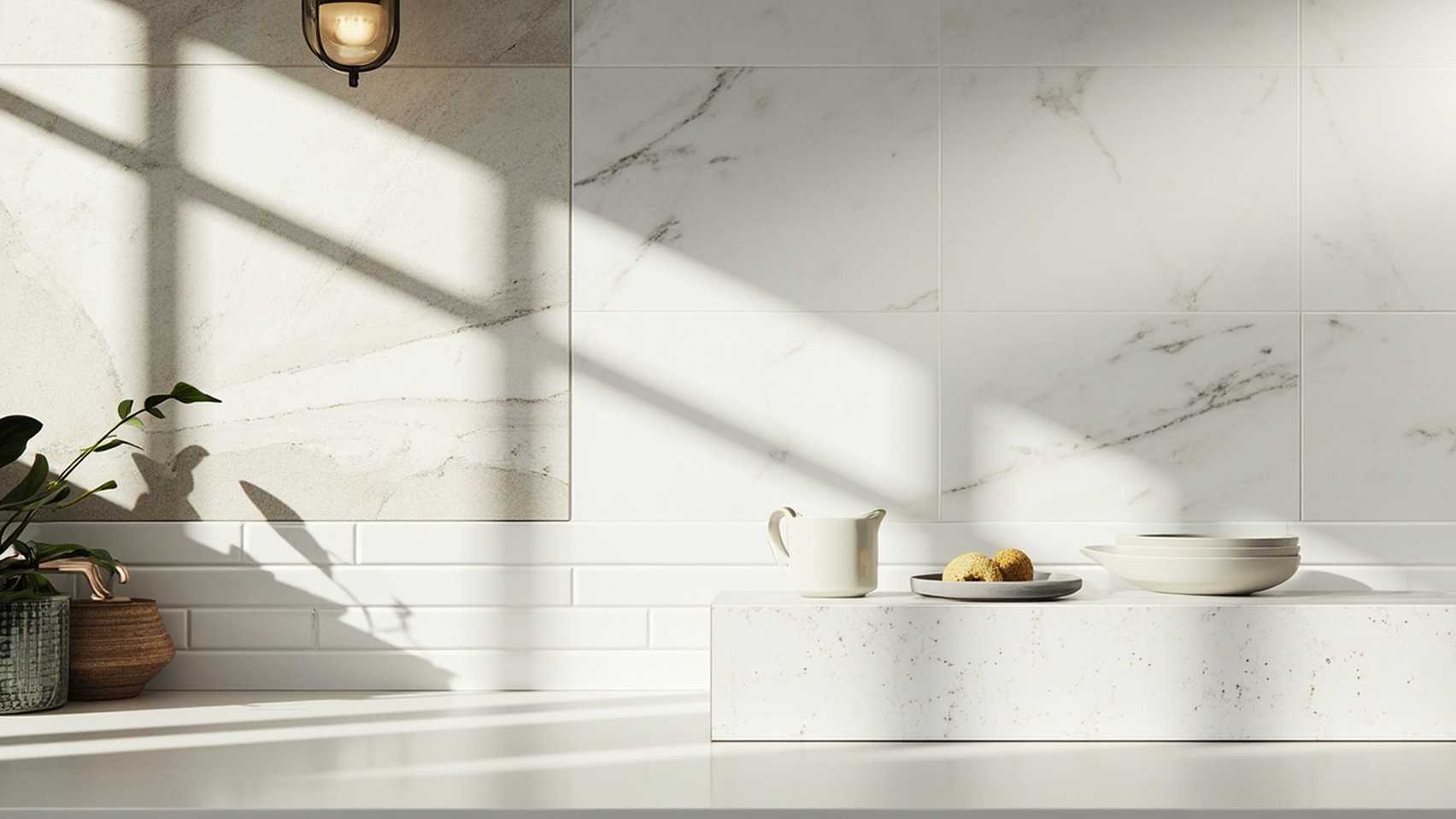
Natural stone backsplashes in marble, granite, or travertine run $15 to $50 or more per square foot for materials, bringing a veined, one-of-a-kind surface that tile cannot replicate in high-end kitchens. Marble at $25 to $60 per square foot offers the classic look but is porous and prone to etching from citrus and acidic cleaners. Granite at $20 to $45 per square foot is denser, more heat-tolerant, and needs annual sealing rather than constant caution.
A stone slab backsplash that matches the countertop costs $40 to $120 per square foot installed. The premium comes from matching the exact slab, fabricating the edge profile, and installing heavy material on a vertical surface. The payoff is a seamless stone wall with no grout lines that wipes clean faster than any tile arrangement and looks intentional rather than pieced together.
Tempered glass panels at $20 to $70 per square foot bring a reflective, modern surface that makes small kitchens feel larger and brighter. Custom-cut panels install with adhesive and minimal grout or none, and they resist stains completely. Glass tile and mosaic add color and light play, but the grout maintenance returns unless the tiles are large-format or installed without joints.
Stainless steel at $15 to $40 per square foot for sheets suits commercial-style kitchens because it is entirely non-porous, heat-proof, and wipe-clean in seconds. The trade-off is that it shows every fingerprint, water spot, and scratch. In a busy family kitchen where hygiene matters more than patina, stainless earns its price. In a showpiece kitchen where the goal is warmth and character, it rarely wins.
| Backsplash Material | Material Cost (per sq ft) | Installed Cost (per sq ft) | Best For |
|---|---|---|---|
| Ceramic / Subway Tile | $3 – $10 | $11 – $25 | DIY, broad appeal, moderate cooking |
| Porcelain Tile | $5 – $15 | $13 – $30 | Behind ranges, wet zones, heavy use |
| Natural Stone (Marble, Granite) | $15 – $60 | $30 – $90 | High-end looks, unique veining |
| Tempered Glass Panels | $20 – $70 | $35 – $100 | Small kitchens, modern style |
| Stainless Steel | $15 – $40 | $30 – $75 | Commercial-style, heavy cooking |
| Peel-and-Stick / Budget | $1 – $5 | $1 – $5 (DIY) | Rentals, short-term, secondary walls |

Labor for stone, glass, and metal runs higher than tile because substrates must be perfectly flat, materials are heavier, and the margin for error is thinner. Budget $15 to $35 per square foot installed for a standard 20 square foot splash. The splash goes on after countertops are set and before final electrical trim. The full ordering logic lives in the kitchen island planning guide walkthrough.
Peel-and-Stick and Budget Options
Peel-and-stick backsplashes at $1 to $5 per square foot are self-adhesive panels or tiles that install without mortar, grout, or professional labor, making them the renter-friendly choice for low-commitment updates. Most modern options use PVC, vinyl, or thin acrylic with a printed surface that mimics tile, stone, or metal convincingly from a few feet away.
The appeal is speed and reversibility. A 20 square foot splash can go up in an afternoon for $40 to $100 in materials, and the panels remove cleanly when it is time to move. The catch is durability. Peel-and-stick products soften with sustained heat, so they should sit at least 6 inches from a range burner. Their adhesive loses grip on textured, dusty, or unprepared walls.
They are a poor choice directly behind a cooktop and a smart choice on a secondary wall or in a rental where permanent changes are restricted. Other budget paths include beadboard paneling at $2 to $6 per square foot, which adds cottage character but needs sealing at edges; painted plywood at $1 to $4 per square foot with high-gloss enamel, which wipes clean but dents easily; and kitchen-grade wallpaper at $1 to $8 per square foot, which resists moisture but won’t survive direct splashing forever.
For a short-term fix or rental update, peel-and-stick at $40 to $150 total is hard to argue against. For a kitchen you plan to live in for a decade or more, the cost-per-year math shifts toward tile or stone. When the countertop choice is still open, the kitchen cabinet vs countertop comparison helps align the splash with the rest of the surfaces.
How to Choose the Right Backsplash for Your Kitchen
Start with the zone, not the look. The area directly behind the range needs heat resistance, non-porosity, and cleanability, which pushes the answer toward porcelain tile, stone slab, glass, or stainless steel. Walls behind a prep sink or on a peninsula face handle less abuse and can use ceramic tile, mosaic, or even peel-and-stick without worry. Matching material to actual exposure is what keeps the splash from becoming a maintenance burden.
Then check the budget honestly, including labor and substrate prep, not just the material price per square foot. A $5 per square foot tile that needs $12 per square foot in labor is more expensive than a $15 per square foot stone panel that installs on a clean, flat surface. Get the total installed number before choosing, and confirm the wall can support the weight and thickness of the material.
Finally, think about the life of the kitchen. If you are renovating to sell within a few years, a clean ceramic subway splash at $5 to $10 per square foot installed gives broad appeal without over-investing. If this is the kitchen you will cook in for the next 15 years, spend on a material that matches your tolerance for maintenance: zero for quartz or glass, low for porcelain, moderate for natural stone with annual sealing.
The right backsplash protects the wall, fits the way you actually live, and makes the whole kitchen feel finished without demanding more care than you are willing to give it.