
The cheapest way to charge an EV at home isn’t always to install anything. If you already have a 240V dryer outlet within reach of where the car parks, a portable Level 2 EVSE that plugs into that outlet will get you roughly 25 miles of range per hour of charge, with zero installation work. Total cost: $400 to $900 for the portable unit.
If that’s not your situation — if the panel is across the basement, or there’s no 240V outlet near the parking spot, or the outlet is the wrong type — then you’re in the install conversation. Most homeowners who pull the trigger on a Level 2 home charger spend $1,200 to $2,800 all in, but quotes run $800 to $6,000+ when the project involves a long wire run, a panel upgrade, or a detached garage.
Here’s what actually drives the number, and what you can do to make sure you’re not overpaying.
What You’re Paying For, Mechanically
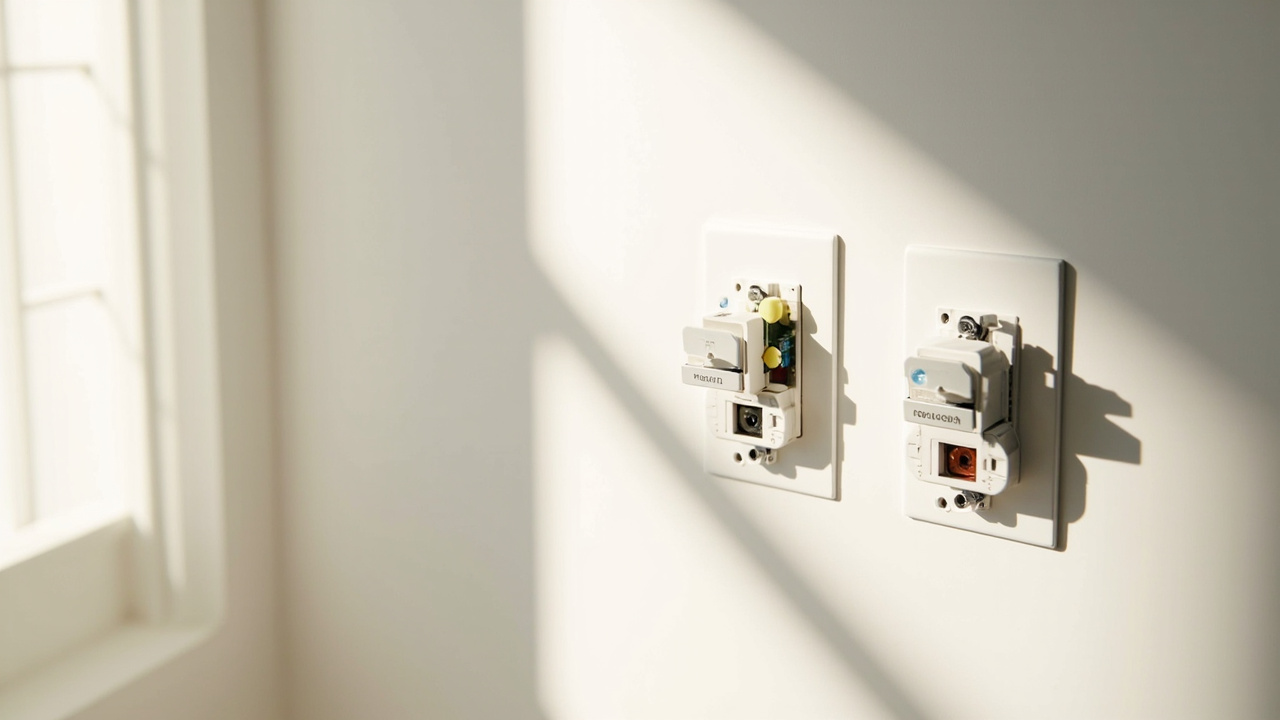
An EV charger installation is a dedicated branch circuit, not a magical box. Specifically, you’re paying for: a two-pole breaker in your electrical panel (typically 40 or 50 amps), a run of appropriately sized copper wire from the panel to wherever the charger will sit, a NEMA 14-50 outlet or a hardwired junction box on the wall, the EVSE hardware itself, and the permit and inspection your local authority requires.
The hardware is the smallest part of the bill. A 40-amp Level 2 EVSE — names you’ll recognize are Tesla Wall Connector, ChargePoint Home Flex, JuiceBox 40, Wallbox Pulsar Plus, Grizzl-E, Emporia — runs $400 to $1,200. The labor and wire are usually twice that on a typical install, and the permit plus inspection fee adds $50 to $300 on top.
Why Quotes Vary So Wildly
The reason three electricians give you three numbers is the same reason a kitchen remodel quote varies: scope. Every one of these adds real money, and a sloppy quote forgets some of them:
- Wire run length. Every 25 feet of 6 AWG copper wire adds about $100 to $200 in material, and far more if the path is inside a finished wall. A garage wall directly behind the panel is a $1,200 install. A detached garage across a long driveway is $3,500 to $6,000.
- Panel capacity. If your existing panel has two open breaker slots and the load calculation shows it can handle the EVSE without bumping the main service, you’re fine. If the panel is full or undersized, a panel upgrade gets added to the project, and the bill doubles or triples.
- Detached structures and trenching. Running power to a detached garage usually means a subpanel at the garage plus underground feeder cable in PVC conduit. Trenching across a lawn adds $20 to $50 per foot.
- Region and labor market. California, the Pacific Northwest, and the Northeast run 10% to 30% above Midwest and South averages for the same work.
- Permit and inspection fees. These vary from $50 in a small town to $300 in a major metro, and some jurisdictions add a flat “issue fee” of $30 to $100 on top of the per-circuit fee.
Cost Benchmarks (2025 US, Typical Single-Family Home)
These figures assume a 200-amp panel with at least two open breaker slots and a wire run under 50 feet on an unfinished garage or basement wall. If your house is different, the right column tells you what changes.
| Scenario | EVSE | Install + materials | Permit | Total |
|---|---|---|---|---|
| Plug-in Level 1 (120V, 12A) | $0–$200 | $0–$100 | $0 | $150–$400 |
| Level 2 plug-in (NEMA 14-50 outlet) | $400–$700 | $600–$1,200 | $50–$200 | $1,050–$2,100 |
| Level 2 hardwired (50A) | $500–$1,200 | $800–$1,800 | $50–$300 | $1,500–$3,200 |
| Same + new subpanel | as above | +$400–$1,200 | +$50–$200 | $1,950–$4,400 |
| Same + full 100A → 200A panel upgrade | as above | +$1,800–$4,500 | +$100–$400 | $3,650–$7,800 |
| Detached garage / trenching add-on | — | +$1,000–$4,000 | +$50–$300 | +$1,050–$4,300 |
If you live in the UK, Canada, or the EU, your local electrician will quote in £, $, or €, but the same scope categories apply. UK/EU installs typically run £800–£2,500 for a straightforward Level 2; Ontario ESAs typically run $1,500–$3,500 CAD.
The Three Real Decisions
Step back from the line items and there are really only three decisions you need to make:
Does your existing panel have room for this?
An electrician will run a load calculation — a standardized tally of every electrical load in your home — to find out. NEC 220 in the US, the Canadian Electrical Code in Canada, and BS 7671 in the UK all use similar methods. The result tells you one of three things: your panel is fine, you need a subpanel, or you need a full service upgrade. Each of those has its own cost band.
Most 200-amp panels have room for a 40-amp or 50-amp breaker with no capacity change. Most 100-amp panels in modern homes don’t, particularly if you have central air conditioning, an electric range, and an electric dryer all running.
Plug-in or hardwired?
Plug-in (NEMA 14-50 outlet) is cheaper and easier to swap out. Hardwired is required by some EVSE manufacturers and is also typical for outdoor installations. The cost difference is usually $200 to $400. If you can easily unplug and replace the EVSE in a few years, plug-in wins on flexibility.
How long does the wire run have to be?
This is the variable that moves total project cost the most. A charger location within 25 feet of the panel is the cheap case. A charger location 75 feet from the panel, or on the other side of finished walls, adds meaningful cost. If you’re pouring a new driveway or adding a wall to your garage, that’s the moment to think about where the charger will go.
What You Can Save (Without Cutting Corners)
A few ways to bring the number down without compromising safety:
Buy your own EVSE. Don’t let the electrician markup pass-through hardware by 30%. Order the unit yourself, have it on site, and ask for “labor-only installation.” Saves $100 to $300 on a typical job.
Clear the path. Move stored items out of the garage. Expose access panels to the basement or crawlspace. The labor line item on a typical install is $400 to $1,200; clearing the path typically reclaims 30 to 90 minutes of that.
Pre-wire at framing time. If you’re building new or doing a major remodel, roughing in a 50-amp circuit to the garage during construction costs $300 to $800. Adding that same circuit to a finished wall costs $1,500 to $3,000.
Avoid the peak installer season. Electricians are busiest in summer (AC season) and late fall (EV-buying season). Scheduling install work in late winter or early spring can save 10% to 15% on labor in some markets.
What You Should Never Cheap Out On
Permits and inspection. Unpermitted work voids many homeowner’s insurance policies for fire claims and creates real problems at resale. A $200 permit that closes out is cheap insurance.
Wire gauge. Undersized wire is a fire hazard. The cost difference between 6 AWG and 8 AWG copper is $50 to $100 per 100 feet. Don’t let anyone cut that corner.
A licensed, insured electrician. The cost difference between the cheapest quote and a mid-range licensed electrician is usually under $300. The difference in workmanship and accountability is meaningful. If a quote skips the permit or asks for full payment up front, find someone else.
How to Read a Quote
A legitimate quote spells out:
- Panel: make, model, amp rating, number of circuit spaces (especially if a panel upgrade is included).
- Wire run: gauge, length, location (attic, basement, finished wall, exterior conduit).
- Outlet or hardwired junction box and its location.
- Whether the EVSE hardware is included (and at what markup) or labor-only.
- Permit fee included.
- Inspection fee included.
- What triggers a change order (e.g., undersized service entrance cable that needs replacement).
- Warranty on labor and the panel/EVSE hardware.
A quote that says “install EV charger, $2,200” and leaves the rest unsaid is a guess, not a plan.
What’s Worth Knowing Beyond This Article
If your home doesn’t have a 240V outlet in reach and your panel is at 200 amps with room to spare, you’re in the cheapest install tier and a licensed electrician will quote you $1,200 to $2,500.
If your panel needs to come along for the ride, the project becomes much bigger than just an EV charger — it’s a panel upgrade with an EVSE branch circuit built in. That’s a different conversation about scope, cost, and whether it’s worth doing other electrical work at the same time.
If you’re still in the planning phase and don’t own the EV yet, get the panel load calculation done first. It tells you what you can and can’t do and what charger level to buy. For a deeper look at how your home electrical system works as a whole, the home electrical system guide is the right starting point. And if you’re curious what kind of outlet configuration makes sense for the install itself, that’s covered separately.
The other question that comes up — do I need a permit? — is the topic of its own page, and yes, in nearly every US jurisdiction and most others, you do. The electrical permit requirements guide walks through what that involves.