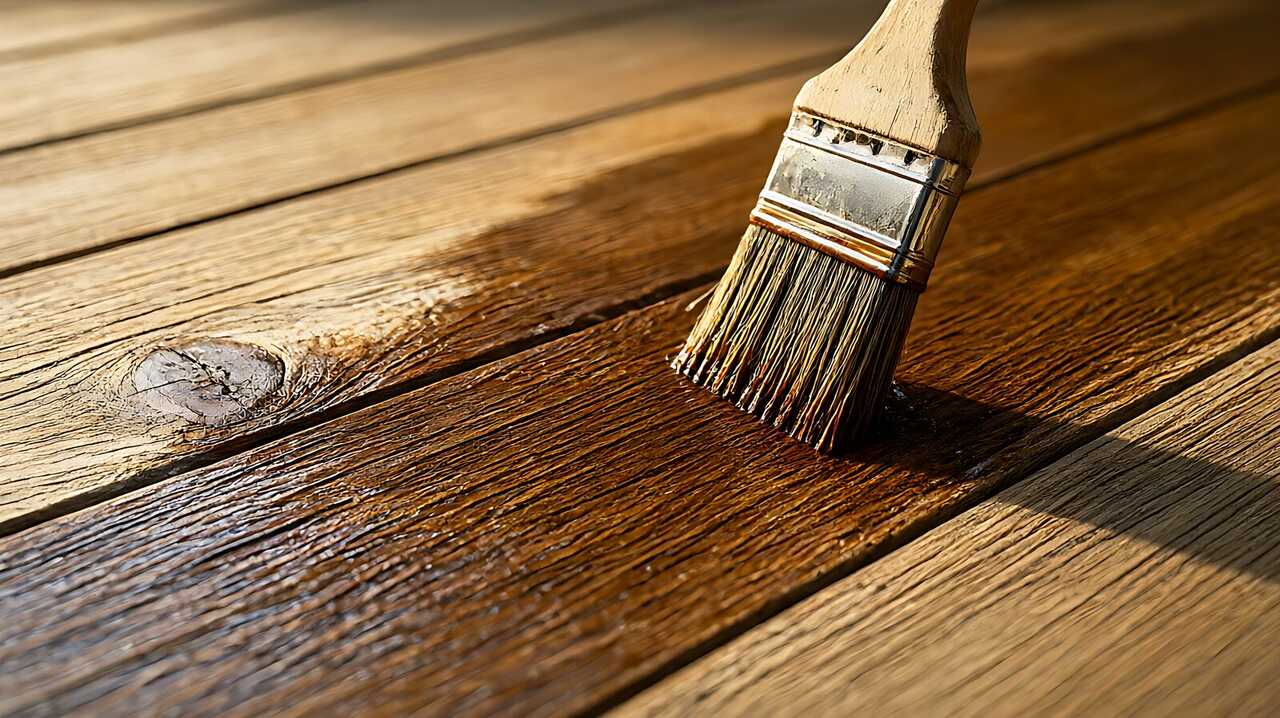

Most deck staining projects do not fail because of bad luck. They fail because the product choice was made twenty minutes before the can was opened, and the choice was the wrong one for the wood, the climate, and the condition of the deck in front of you.
There is no single best deck stain. There is a best stain for your deck. The three decisions that actually matter are the chemical base, the opacity level, and whether the wood is new or weathered. Get those three right and the color will hold for the full window. Get any of them wrong and you will be re-staining next summer.
The Three Decisions That Matter (Not the Brand)
The brand name is the easiest part of buying deck stain and the part that generates the most second-guessing. It is not the part that decides whether the finish lasts. The three variables that separate a stain that lasts from one that peels are the chemical base (oil vs water), the opacity level (transparent, semi-transparent, or solid), and the condition of the wood (new, weathered, or old-stained). Each of these pushes the choice in a different direction, and they interact with each other more than most guides explain.
A stain is a coating, not paint. It penetrates into the wood fibers rather than sitting on top. That means the product has to reach the wood, bond into it, and cure without a rain event or humidity spike interrupting the process. Everything else is convenience. A stain that does not penetrate will always eventually lift, no matter how expensive the can was.
Oil-Based vs Water-Based Stain: The Core Trade-Off
Oil-based stain penetrates deeper and bonds better to raw wood. It gives a richer, more even color and a slightly longer service life on a well-prepped surface. The cost is a longer cleanup, higher VOC content, and a longer drying window before the surface can take foot traffic. In a humid climate, that longer window is a real risk, because the stain is vulnerable to rain while it cures.
Water-based stain cleans up with water, dries faster, and is the safer default for most modern projects. The honest trade-off is that it does not penetrate as deeply, so on a raw, open-pored surface it can look thinner and fade a bit faster than the equivalent oil product. The advantage is that you can apply it and be off the deck within an hour, not a full day.
Use oil-based when the deck is raw, untreated wood that has never been finished and you want the deepest possible penetration. Use water-based when the deck is already weathered and you are re-staining over a clean, dry surface, or when you are working in a climate where a long drying window is risky. In a hot, dry summer with no rain forecast, oil-based is fine. In a humid spring where rain is a daily event, water-based is the safer call.
One more factor: penetrating stain and film-forming stain are two different sub-categories of both bases. Penetrating products soak in and let the wood breathe. Film-forming products sit on top and seal it. For most decks, a penetrating product is the right call, because a film-forming coat on wood that moves with moisture will crack and peel at the fastener points.
Transparent, Semi-Transparent, or Solid Coverage
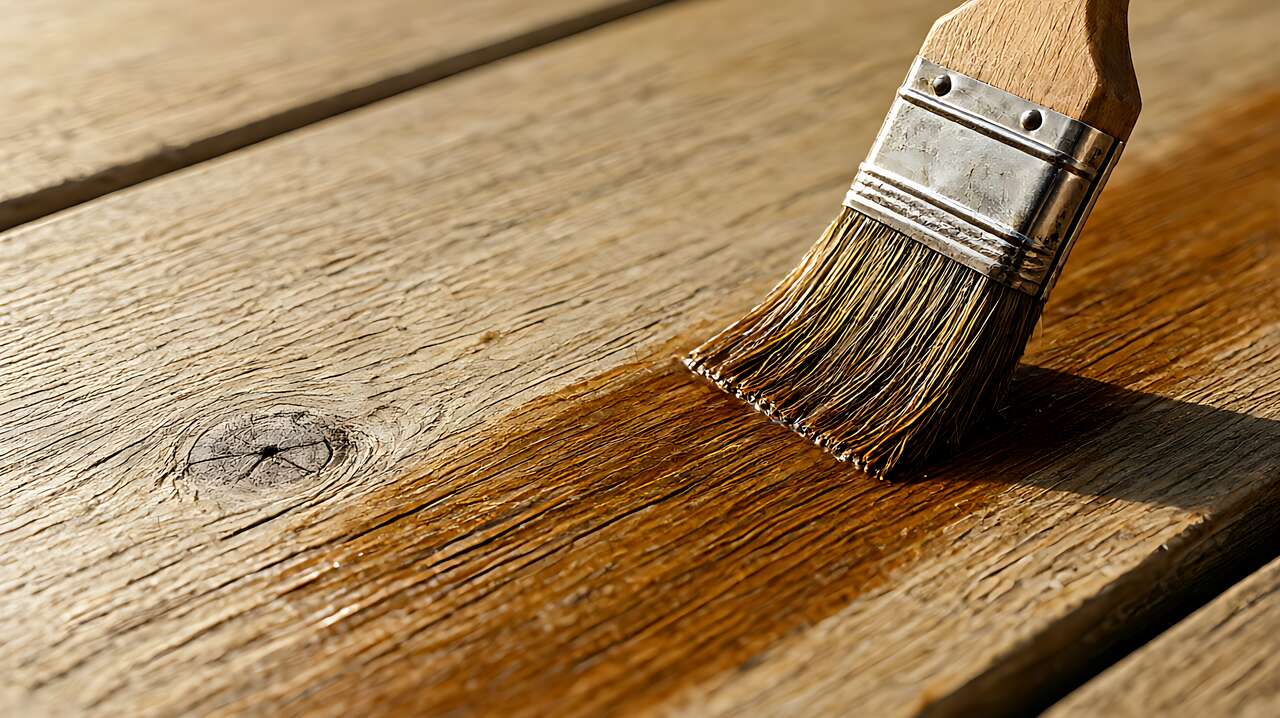
This is the decision most people get wrong, and it is the one that changes the whole look of the deck.
Transparent stain shows the wood grain almost fully and offers the least UV protection. It is the right choice when the grain is the whole point of the deck and you want to keep the natural look. It is also the fastest-fading option, because there is the least pigment in the way of the sun. A transparent stain on a south-facing deck in a hot climate will fade noticeably in one season.
Semi-transparent stain gives some color while still letting the grain show through. It is the correct default for most decks, because it balances protection and appearance. The slightly more pigment means a slightly longer window before you need to re-apply, which matters on a large deck where the re-coat interval is a real cost.
Solid coverage stain looks closest to a thin paint and offers the most UV protection. It is the right choice when the wood has too many knots, grey patches, or old stain marks to show off well, or when you want a uniform color and do not care about seeing the grain. The downside is that it looks like paint, and on a deck the visual change is immediate and hard to undo.
The rule of thumb is to match the opacity to how much of the wood you actually want to see. If the grain is the point, go transparent or semi-transparent. If the wood has too many flaws to show, go solid. There is no technical reason to go solid on a nice piece of cedar. There is a very practical reason to go solid on a beat-up pressure-treated deck with a lot of grey and old stain patches.
New Wood vs Weathered Deck Changes the Answer
A brand-new deck that has never been finished is a completely different project from a five-year-old deck that has been sun-bleached and rained on. New wood is dry, open, and ready to absorb stain deep into the fibers. Weathered wood has a grey, closed surface that may need stripping or at least brightening before it will take a second coat evenly.
On new wood, a penetrating oil stain soaks in and bonds well. On weathered wood, the surface may have already closed to the point where a stain just sits on top and lifts off later. This is where the prep sequence in the how to stain a wood deck guide becomes non-negotiable. If the surface is not prepped correctly, no stain choice will save the job. The difference between a stain that lasts three years and one that peels in a season is almost always the prep, not the product.
The wood species also changes the answer, because dense hardwoods and soft pine do not absorb stain at the same rate. A pressure-treated pine deck will drink up the first coat fast and need a second to even out the color. A cedar deck will absorb more slowly and a second coat is often unnecessary if the first was applied evenly. The difference matters when you are calculating how much product to buy.
The moisture content of the deck also matters. Stain applied to wet wood will trap the moisture, and the trapped water will push the finish off from underneath as the wood dries. A moisture meter that reads under 15 to 18 percent is the minimum threshold before you open a can. If you have no meter, wait a full day or two after a rain event and check that the surface feels dry to the touch before you start.
Matching Stain to Wood Type and Climate
Different woods accept stain differently, and the climate you live in pushes the base choice one way or the other.
Cedar and redwood are dense and slightly oily. They take semi-transparent products best and do not want a thick solid coat, which can trap moisture. Pressure-treated pine and southern yellow pine are soft and absorb more, so they want a more penetrating product. Ipe and teak are extremely dense and stain poorly. On those, solid coverage or no stain is usually the better call, because the dense grain will not absorb enough of any penetrating product to last.
In wet climates, water-based products with a shorter drying window are the safer default, because oil-based stains can trap moisture under a rain event before they cure. In dry, hot climates with heavy UV load, oil-based with deeper penetration wins, because the sun is the enemy, not the rain. A deck that gets full sun all day in the Southwest will want a more UV-resistant product than a deck in a shaded, rainy Pacific Northwest yard.
What to Actually Buy, by Wood Type
A practical decision table by wood type and re-stain interval, based on the most common scenarios.
For cedar and redwood: a semi-transparent oil stain, re-applied every two years. For pressure-treated pine: a penetrating transparent or semi-transparent stain, re-applied every one to two years. For ipe or teak: solid coverage or no stain, re-applied every two to three years. For composite decking, the question is whether you can stain it at all, which is covered in the can you stain composite decking guide.
Before you buy, check how much product you actually need for your deck. The how much deck stain do you need calculator walks through the coverage math by wood type and opacity. And if the deck is in bad shape, the deck maintenance and repair guide tells you which boards need replacing before you spend a weekend staining a surface that is already failing. The last thing you want is to buy the right stain and apply it to a deck that needs boards replaced first.