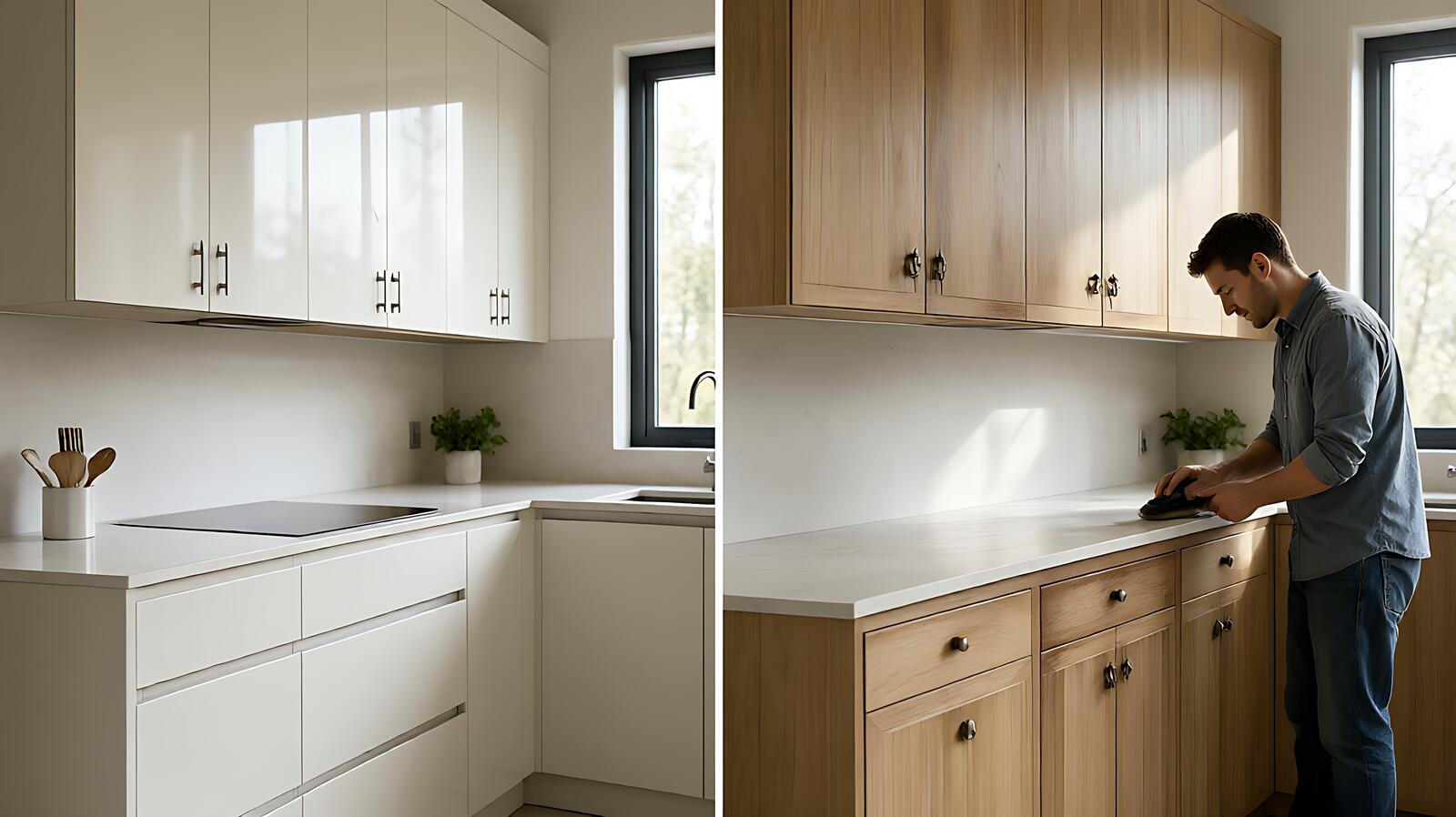

A home renovation rarely hands you a clean either-or decision. You open a wall and find the plumbing is corroded but not leaking. The floor is soft but not rotten. The window works but sweats in January. Replace it, or repair it and move on? The answer depends on four things: age, condition, hidden cost, and how long you plan to stay. This guide walks through each so you can make the call with confidence instead of guessing.
Home renovation is full of these moments. The pressure is always the same: spend more now and hope it lasts, or spend less and risk doing it again. Neither option is automatically right. The right one is the one that matches your specific situation.
When Repair Is the Smarter Call
Repair wins when the underlying structure is sound and the problem is surface-level. A cracked tile, a stuck drawer, a door that rubs in summer humidity: these are wear items, not system failures. Fixing them costs a fraction of replacement and buys years of continued use.
The key test is root cause. If the cause is age and friction, repair usually works. If the cause is a design flaw, a material defect, or hidden moisture, repair is a bandage. You will be back in six months wondering why you bothered.
Consider a fiberglass tub with a hairline crack. Patching it with an epoxy kit takes an afternoon and costs under $50. Replacing the tub means pulling tile, moving plumbing, and re-waterproofing. A crack caused by a dropped shampoo bottle is a surface problem: repair is smart. A crack caused by a subfloor that flexes every time you step in is a structural problem: repair just delays the inevitable.
The same logic applies to interior doors, baseboards, and trim. These are cosmetic or light-duty elements. Repairing a dent or re-nailing a loose board keeps the character of the home intact. Replacement only makes sense when the material is rotted, warped beyond shimming, or no longer matches anything around it.
One more thing to check before deciding: parts availability. A 1990s faucet with a worn cartridge is cheap to fix if the cartridge still exists. If the manufacturer discontinued it, you are paying a plumber to search for a part that may never arrive. In that case, replacement is not just smarter. It is the only realistic option.
When Replacement Pays Off
Replacement makes sense when repair costs approach replacement cost, or when the item is near the end of its useful life. A water heater at 12 years old is not worth repairing. A roof at 22 years with granule loss is not worth patching. The math is simple: if you spend $800 to repair something that will need replacing in two years anyway, you have wasted $800.
Energy efficiency is the other big driver. Old single-pane windows, an aging furnace, or a 1990s refrigerator all consume more energy than modern replacements. The savings on your utility bill can offset a portion of the upfront cost. The key word is portion. Do not expect the savings to pay for the full replacement. They rarely do.
There is also the cascade risk. A failing element that damages the things around it is a liability, not a repair candidate. A slow leak behind a shower valve does not just ruin the valve. It rots the subfloor, grows mold in the wall cavity, and turns a $200 repair into a $4,000 reconstruction. When damage spreads, replacement is the cheaper option even though the invoice is larger.
Finally, consider code compliance. If you are already pulling permits for a renovation, the inspector may require that certain elements meet current code. A 1970s electrical panel, old galvanized pipe, or a non-egress window in a bedroom may need to be replaced regardless of whether it still works. In those cases, the decision is made for you.
The Hidden Cost of Each Path

Both paths have costs that do not appear on the first estimate. Repair often hides labor time. A $30 part that takes three hours to install at $85 per hour is a $285 repair, not a $30 one. Replacement hides disruption. Tearing out a kitchen backsplash to replace a single broken tile means re-grouting the entire wall. The tile costs $4. The labor costs $400.
Contingency is the other hidden cost. Any time you open a wall or lift a floor, you risk finding something worse. A repair that was supposed to take half a day can turn into a week of work when you discover asbestos tile under the vinyl, or termite damage in the sill plate. Budget 10 to 15 percent above any estimate for this possibility.
There is also the opportunity cost of your own time. If you spend three weekends repairing a deck railing that should have been replaced, you have lost three weekends. That is not a line item on a contractor’s invoice, but it is real. Homeowners often forget to value their own labor when comparing repair to replacement.
One more cost people overlook: resale impact. A patched countertop or a repaired garage door may function fine, but a buyer sees it as a future expense. If you plan to sell within three to five years, replacement can pay for itself in perceived value. If you plan to stay for fifteen years, repair is usually the better investment.
A Decision Framework You Can Actually Use
Stop guessing. Run every replace-or-repair question through these five conditions. If three or more point toward replacement, replace. If three or more point toward repair, repair. If it is a tie, lean toward repair unless safety or code is involved.
Condition one: age. Is the item past 75 percent of its expected lifespan? A shingle roof rated for 25 years that is 20 years old is in the replacement zone. A toilet from 2010 that runs occasionally is not.
Condition two: condition. Is the damage structural or cosmetic? Structural damage (rot, corrosion, foundation movement) almost always favors replacement. Cosmetic damage (surface scratches, fading, minor cracks) favors repair.
Condition three: cost ratio. Does the repair cost more than 50 percent of replacement? If yes, replace. The remaining 50 percent buys you a new item with a full warranty instead of a patched old one.
Condition four: hidden risk. Could the failure cause damage to surrounding materials? A leaky supply line behind a wall is a hidden risk. A squeaky floorboard is not. Hidden risk pushes toward replacement.
Condition five: your timeline. Are you staying long enough to amortize the cost of replacement? If you are selling in two years, a $3,000 replacement may not return its value. If you are staying for ten, it almost certainly will.
Write these five conditions on a notepad before you call a contractor. The answers will tell you what to ask for, and they will keep you from being talked into either option by someone who has a financial interest in the outcome.
What to Do Next
Once you have made the call, get two or three quotes for the work. Ask each contractor to price both options if you are still uncertain. A good general contractor will tell you honestly when repair is the right answer, even though they would rather sell you a replacement. If every quote pushes replacement without explaining why, get another opinion.
For a broader look at how renovation costs break down by scope and scale, see the home renovation cost guide. If you are still building your vocabulary of terms contractors use, the what is home renovation overview can help you understand the full picture before signing a contract.
Keep a running list of what you repaired and what you replaced, with dates and costs. That record becomes invaluable when you sell, when you plan the next phase of work, or when you need to prove to an insurance adjuster that a failure was sudden and not gradual. The best renovation decisions are the ones you can explain a year later without second-guessing yourself.