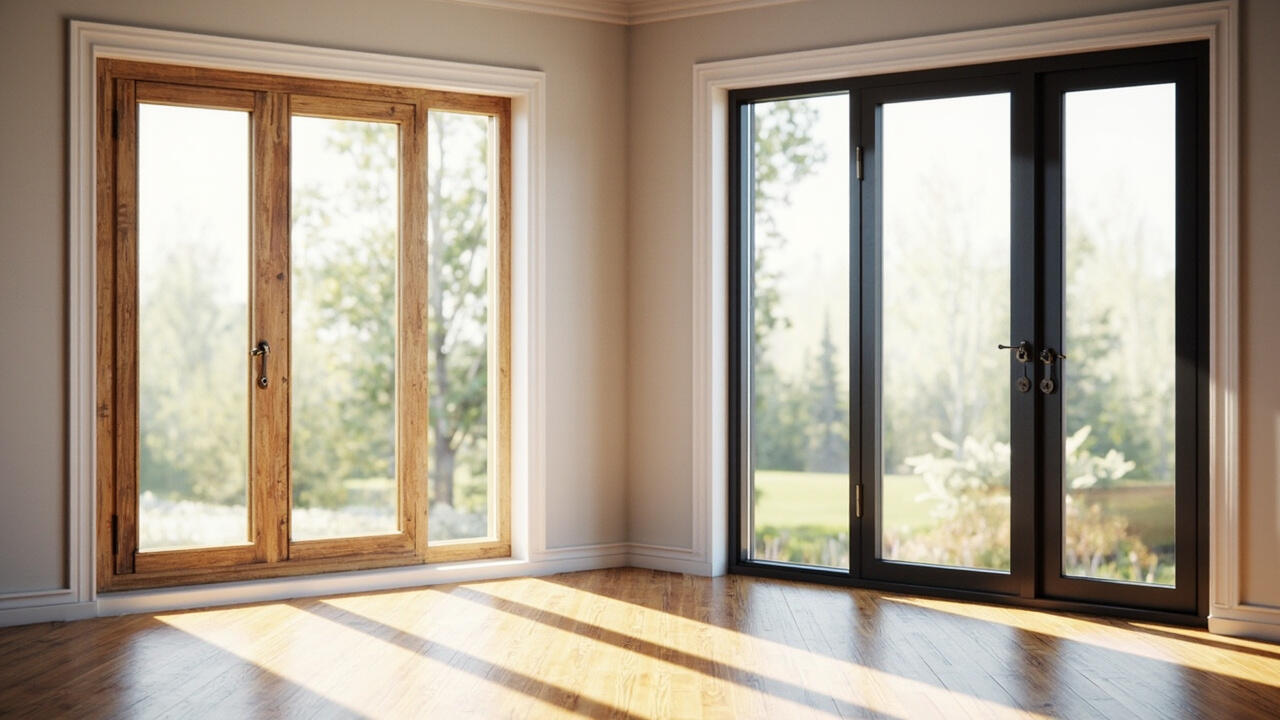

The bedroom window does not open anymore. The living room one has a milky film between the panes that will not wipe off. The kitchen one sweats so badly in winter you keep a towel on the sill. None of these is a true emergency, but together they form a question a lot of homeowners put off for years: should I keep repairing these, or is it finally time to replace?
Windows look like a cosmetic upgrade, but they are a mechanical, an insulation, and a structural decision at the same time. The same 50% rule from the general repair vs replacement decision guide applies here, but windows have three failure modes where repair simply does not exist, and three window types where replacement pays for itself faster than the math predicts. This guide walks both sets.
The Three Failure Modes That Always Mean Replacement
Windows have a small set of failure modes, and three of them have no real repair path. Recognizing them saves you from paying for a service call that was never going to fix the problem.
Failed seal between glass panes. The milky film or fog you cannot wipe off is a broken insulated glass unit (IGU), not dirt on the glass. The seal between the two panes has failed and moisture has crept in.
Some shops will tell you they can defog the unit; what they actually do is drill a hole, vent the moisture, then seal the hole. The fog returns within months. True repair means swapping the IGU for a new one, and at that point the labor rivals a full replacement quote, so most contractors skip the patch.
Frame rot, especially at the sill. Wood frames that have been wet long enough turn soft. You can sometimes spot-fill rotted wood with two-part epoxy, and a finisher can make it look right for a few years, but the underlying moisture pathway stays open.
Once rot reaches the structural members, replacement is the only durable answer. Catch it early with a screwdriver: press the tip into the sill, the frame, and the brick molding. Anything that gives is rot.
Broken glass in a multi-pane unit. A single cracked pane in a true divided-light window or in a low-E glass unit cannot be replaced in isolation without disturbing the rest of the unit.
The cost of disassembling, sourcing matching glass, and resealing exceeds the cost of a replacement sash in most cases.
When any of these three is the diagnosis, you are really choosing between two replacement options (full unit vs sash-only) rather than between repair and replacement. Skip the repair-shop call entirely and go straight to a window company quote.
Three Windows That Almost Always Pay for Replacement Quickly
Some windows are so inefficient that even without any obvious failure, replacement is justified by the energy savings alone. Three types fit this profile in most US/CA homes built before 2000.
Single-pane glass with aluminum or wood frames. A single pane of glass has roughly half the insulating value of a modern double-pane unit. The frame contributes another big share of the loss because aluminum conducts heat, and older wood frames shrink and crack at the joints.
Replacement windows in the same opening deliver a 20-30% reduction in heating and cooling load on the rooms they face. In climate zones 4 through 7, covering much of the northern US and Canada, the energy savings pay for the project within seven to twelve years on heating bills alone.
Original aluminum slider windows. These were cheap to install and look fine for years, but they sweat, they leak cold air at the meeting rails, and the rollers wear out faster than the frames. Replacement with a vinyl or fiberglass unit in the same opening typically costs $400-$700 per window installed and immediately improves comfort in the room.
Builder-grade vinyl windows in their second decade. These were spec-grade units installed for resale value, not longevity. They lose seal integrity, the welds at the corners yellow, and the locking mechanisms wear. Replacement with a mid-grade unit (Pella, Andersen, Marvin lines in the $500-$900 installed range) is a service-life problem even if no single pane has failed yet.
The test for whether your windows qualify is straightforward: what is the U-factor and age of the unit? If you cannot find a U-factor sticker, the unit is likely old enough that the modern baseline of 0.30 or better would be a meaningful upgrade. For rooms where the windows are not yet at the failure point, window film and tinting can buy a few extra years of efficiency before the replacement project makes sense.
Why Window Repairs Stay Cheap Until Frame Becomes Part of the Quote
One pattern shows up repeatedly in window repair invoices. The line items for sash repair, weatherstripping, balance replacement, and hardware run modest, in the $80 to $300 range per window. As soon as the technician has to touch the frame itself, scope creeps, and the numbers can double.
The drivers of frame scope creep are well known. The exterior trim has to come off to access the frame, which means paint touch-up or full repainting of the trim.
The interior casing may need to come off to refit the frame, which adds drywall repair or stain work. The flange-integrated units common in newer construction are not really repairable at the frame level at all; replacing the frame means pulling siding, replacing the flashing tape, and reinstalling the window as if it were a new install.
The realistic repair question on most windows, then, is not what the line item costs but how much of the frame is in scope. A sash-only repair on a sound frame is a $150 to $400 fix per window. A frame-touching repair on a 30-year-old window is a $600 to $1,200 line, and you have spent two thirds of the replacement budget without getting the new window.
This is the version of the 50% rule where replacement dominates by default. Once the frame is in the quote, replacement wins more often than not.
Comparing Glass-Only, Sash-Only, and Full-Unit Replacement Costs
When replacement becomes the answer, three intervention levels exist. Each one has a price band, a typical use case, and a lifespan expectation. Pick the smallest intervention that solves the actual problem.
- Glass-only (IGU swap). $150-$350 per window for the unit, plus $100-$200 labor per window. Used when the frame is in good shape and only the seal has failed. Lifespan 10-20 years depending on the IGU manufacturer.
- Sash-only replacement. $250-$600 per window installed. The operating portion of the window (the part that holds the glass, balances, and hardware) is replaced; the frame stays. Useful when frames are solid but the moving parts have worn out. Lifespan comparable to a full unit.
- Full-unit replacement. $400-$1,200 per window installed for vinyl, $700-$1,800 for fiberglass or clad-wood. Removes the entire window and frame, installs a new one with new flashing. Lifespan 20-30+ years.
For a single failed seal in a sound frame, glass-only is the right scope. For a window that does not open and is past 15 years old, sash-only or full-unit wins depending on the condition of the frame. For a whole-house upgrade targeting energy efficiency, full-unit is the only intervention that affects the air sealing at the frame.
Choosing When to Replace One Window at a Time Versus All Together
Homeowners usually face a scope question after one window fails. Two strategies work, and the right one depends on the age and type of the rest of the house.
Replace one at a time when the windows are mismatched ages (one fails at year 12, another at year 25), when budget is constrained, or when the windows are different sizes that would each need a custom quote.
This is also the right strategy when the rest of the windows are sound and energy-efficient. Budget for $500-$1,200 per single window and resist the urge to bundle for a discount that brings forward work you do not yet need.
Replace all together when the windows are all original to the house and similar in failure mode, when you are already repainting or residing the exterior, or when a phased approach would leave the labor subcontractors making three trips.
Whole-house replacement also unlocks bigger volume discounts: a 10-window project can drop per-window costs by 15-25% versus a one-window job, and you only pay for setup, dumpster, and permits once.
Whole-house replacement is a project though, not a service call. Budget $8,000-$25,000 for a typical US single-family home depending on window count and product tier. Use a phased approach for the budget; do not use it to delay a decision you have already made.
What to Ask the Glass Company Before Signing the Quote
Window quotes vary widely because contractors differ on what is included. Five questions cut through the variation and tell you whether the price is comparable.
- What is the U-factor and SHGC of the proposed unit? Modern residential windows should hit U-factor 0.30 or better, with solar heat gain coefficient (SHGC) tuned to your climate. If the quote does not list these, you are not getting a serious product.
- Is the installation full-frame or insert? Insert (frame-in-frame) is faster and cheaper but not always appropriate for older homes. Full-frame costs more but addresses the air sealing at the rough opening.
- What is the warranty on labor versus product? Most window products carry 10-20 year manufacturer warranties; labor warranties vary from 1 year to lifetime. Get the labor warranty in writing.
- Who handles interior trim and exterior trim touch-up? Many window contractors exclude this; painting and stain work can add 20-30% to the project. Get it in the quote or plan to hire it separately.
- What happens if rot is found after the window is removed? Most quotes have a “time and materials” clause for hidden rot. Establish a per-hour rate and an estimated cap before signing.
The repair-vs-replacement decision for windows narrows to a few specific signals once you know what to look for: failed seal, frame rot, the age and type of the original unit, and whether frame work is in the scope of the repair.
Work through those four, then choose the smallest intervention that addresses the actual problem. The 50% rule still applies at the line-item level, but on windows it is usually less of a coin flip than it feels like going in.