
Walk into a bath showroom and you will see a dozen nearly identical white porcelain bowls. They all flush, all drain, and all fit a standard 12 inch rough-in. They are not the same product, and the price spread is real.
Types of toilets for bathroom fall into a handful of families defined by flushing mechanism, bowl shape, and mounting. The right choice depends on the drain you have, the space you have, and how reliably you want it to work in ten years.
Three Numbers That Decide Which Toilet Fits
Before picking a brand, three rough-in and clearance numbers quietly decide which family of toilet fits a bathroom.
The rough-in, the distance from the finished wall to the center of the floor drain, runs 10, 12, or 14 inches in most US homes. Twelve inches is by far the most common. The clearance from the centerline of the toilet to any side wall or fixture should be at least 15 inches, with 21 inches as a more comfortable target in primary baths.
The water surface area inside the bowl needs to be at least 8 by 6 inches to keep solids submerged and reduce odor. Most modern designs meet this, but some compact units do not.
The Four Toilet Families Most Homes Choose From
Almost every residential toilet sold in North America fits one of four mechanical families. The right one is less about brand and more about how the mechanism matches your drain, water pressure, and noise tolerance.
Gravity-fed toilets are the everyday default. A tank releases water into the bowl, and the weight of that water pushes waste through the trapway. They are quiet, simple to repair, and the parts are interchangeable across most major brands. For homes with 40 to 80 psi of water pressure and no noise sensitivity, a gravity-fed unit is the lowest-friction option.
Pressure-assisted toilets use a sealed vessel inside the tank that compresses air and water for a more forceful flush. They clear the bowl with less water per flush, but the flush is loud, around 70 to 80 dB at the bowl. They are common in US multifamily buildings and commercial half-baths, less common in primary residences where noise matters.
Dual-flush toilets split the flush button into a half-flush for liquids and a full flush for solids. Most use about 1.28 gallons on the full setting and 0.8 to 1.0 gallons on the half. In homes with high daily use, the water saving is meaningful, and modern designs have largely closed the gap on clog resistance that older dual-flush models struggled with.
Composting and upflush toilets are special-purpose. Composting units need a separate under-floor or basement tank and a venting path for moisture, and they are not approved everywhere. Upflush or macerating toilets sit behind a wall-mounted grinder pump that pushes waste up to the main drain stack, useful when a below-grade or slab bath has no below-floor drain. Both have real costs, and both are worth their place only when the alternative is no bathroom at all.
Bowl Shape, Height, and Mounting Change How It Feels
Within any family, three style choices reshape the user experience more than the brand. They are the choices that determine whether a toilet is comfortable for the people who use it every day.
Bowl shape comes in two real options. Round-front bowls are about 16.5 inches from the mounting bolts to the front of the rim. They fit tight spaces where an elongated bowl would crowd the room. Elongated bowls run about 18.5 inches front-to-back, offer a larger water surface, and are noticeably more comfortable for most adults. The trade-off is purely footprint, not flush performance.
Toilet height, called rim height or chair height, has moved from the older 14 to 15 inch standard to a newer 17 to 19 inch range. Taller bowls meet ADA accessibility guidelines at 17 to 19 inches and are easier on knees and hips for adults over 60. Standard height still makes sense in a powder room used mostly by children or in a tight retrofit where the bowl needs to clear a windowsill.
Mounting is the third choice. Floor-mounted, two-piece toilets are the most common and the most repairable. Floor-mounted, one-piece toilets have a smaller gap between tank and bowl, are easier to clean, and cost more.
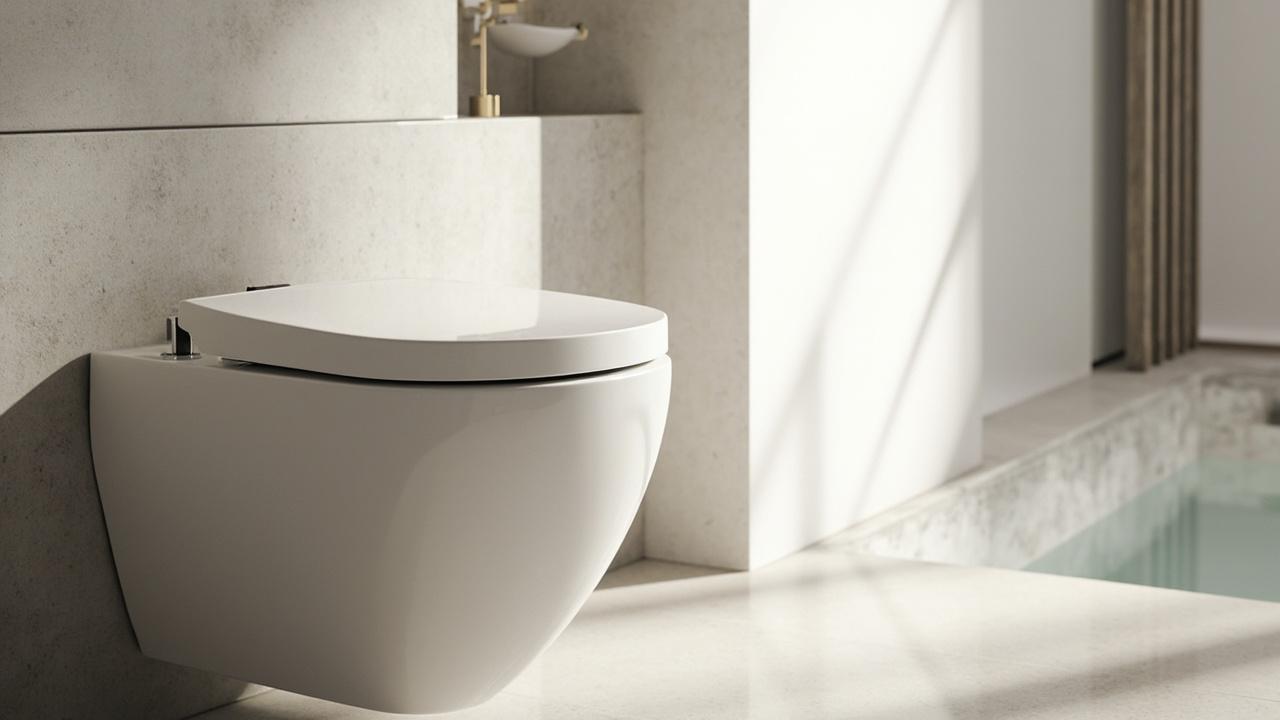
Wall-hung toilets mount the tank behind the wall and leave the bowl floating above the floor. They save about 10 inches of room depth, but the carrier frame inside the wall is the kind of component that must be done right the first time.
How Flush Performance Actually Compares
Performance is no longer a simple gallons-per-flush number. The federal 1.28 gpf standard is the legal cap for most US residential installations, and modern gravity-fed units hit that number while still clearing 1,000 grams of waste on the MaP test, a third-party solids-carrying test that has become the de facto industry benchmark.
Gravity-fed 1.28 gpf units with a fully glazed 2 to 2.5 inch trapway are the everyday workhorses. Pressure-assisted units drop to about 1.0 to 1.1 gpf while clearing even heavier loads, at the cost of noise. Dual-flush units match gravity performance on the full flush and use noticeably less water on the half flush.
Older 1.6 gpf units, common in homes built between 1994 and 2014, can still perform well if the trapway is clean and the fill valve is in good condition. Below 1.28 gpf, particularly 1.0 gpf and lower, flushing power drops sharply, and most plumbers recommend staying at or above the federal standard unless local code says otherwise.
Choosing a Toilet for a Specific Bathroom
Match the toilet to the room and the people who use it, then let the brand fall out. The five scenarios below cover most home installations.
Primary bath with normal pressure: gravity-fed, 1.28 gpf, elongated, 17 to 19 inch rim height, two-piece. This is the workhorse configuration, and almost every major US manufacturer has a model that fits.
Small powder room: gravity-fed, 1.28 gpf, round-front, standard height, two-piece. Round-front saves about 2 inches, which is often the difference between a comfortable clearance and a tight squeeze.
Aging-in-place or accessibility retrofit: gravity-fed, 1.28 gpf, elongated, 17 to 19 inch rim height, single-handle flushing lever. The taller bowl is the main reason to choose this configuration. Pair it with grab bars anchored into wall studs, never just into tile backer.
Basement or slab-on-grade with no below-floor drain: upflush or macerating system, with a backflow preventer and a vent tied into the bathroom exhaust. The grinder pump is the kind of component where hiring a licensed plumber for the install is not optional.
For broader bath planning, see bathroom ventilation and mold problems on the wet-zone rules that any toilet must coexist with, and bathroom renovation cost guide for how fixture choices move the total. If the room itself is the constraint, small bathroom renovation ideas shows how to make a tight footprint feel more open without sacrificing clearances.
Pick the family first, then the bowl shape and height, then the brand and color. Get those three in the right order and the rest of the bathroom, from the waterproof membrane 0.8 to 1.2 mm behind the walls to the overlap 100 mm at every substrate seam, has a much easier time holding up to daily use.