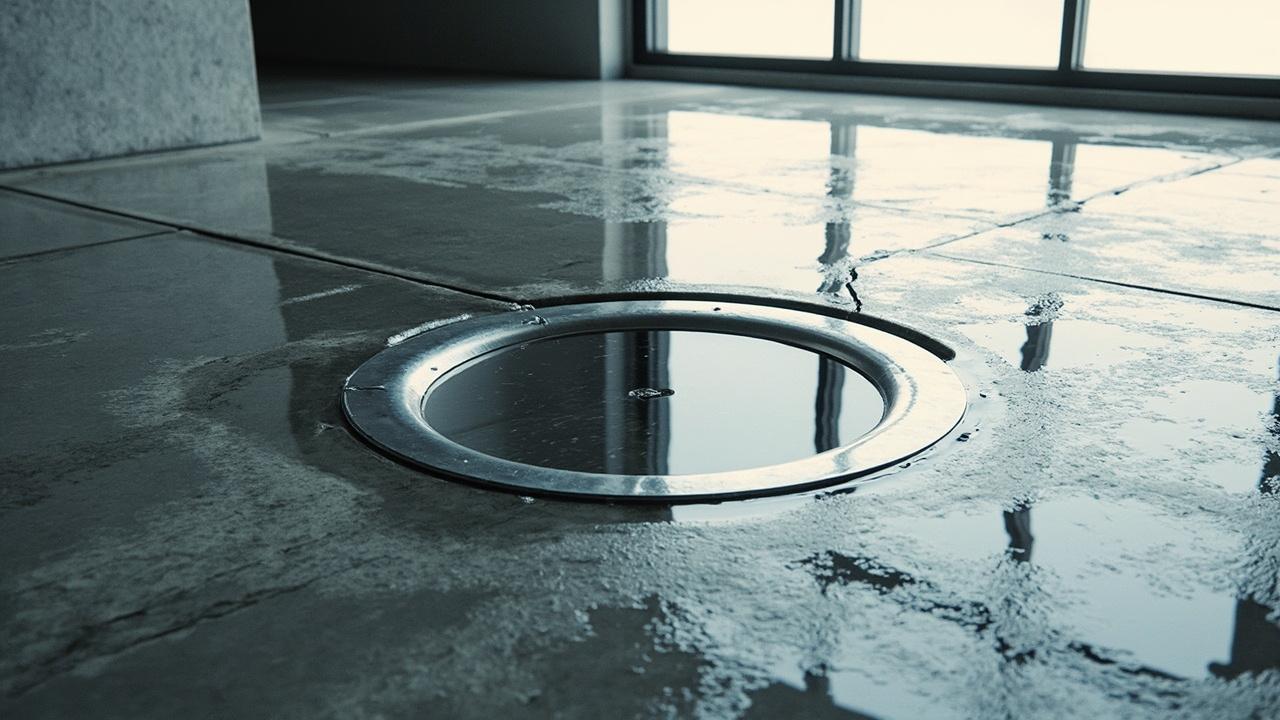

A basement floor drain that backs up, smells, or runs dry when nothing else is draining almost always has a clear root cause: a clogged trap, a broken perimeter line, a missing check valve, or a footing drain that has silted shut. About 70% of basement floor drain problems trace back to one of those four issues, and the right fix depends on which one you have. The wrong fix – pouring drain cleaner down a broken line, for instance – can make the problem worse and add a foundation repair on the bill.
This guide walks through the symptoms, the four most common root causes, the field tests that tell them apart, the fix for each, and the cases where the right answer is to stop and call a licensed plumber or waterproofing contractor.
What the Basement Floor Drain Is Supposed to Do
A basement floor drain is not a sewer connection. It is a backflow drain connected to the perimeter footing drain or, in older homes, to the sanitary sewer via a trap. Its job is to give rising groundwater, a leaking water heater, or a washing-machine overflow somewhere to go that is not your finished basement floor.
The classic residential setup looks like this: a 4-inch cast iron or PVC trap set into the concrete slab, leading to either the perimeter footing tile (drainage tile that runs around the foundation footing) or directly to the sanitary sewer. The trap holds water to block sewer gas. The trap also catches debris that falls into the drain, which is the most common failure point.
When it works, you never think about it. When it fails, the symptoms are loud: standing water, sewer gas smell, or gurgling from a drain that has not seen water in weeks. The trick is matching the symptom to the cause before paying for a fix that addresses the wrong one.
The Four Root Causes and How They Show Up
Almost every basement floor drain problem reduces to one of four causes. Knowing which one you have is the difference between a $50 fix and a $4,000 one.
Cause 1: The Trap Has Dried Out
The most common cause, especially in basements that get little use. The water in the trap evaporates over weeks of no water flowing through, the trap seal breaks, and sewer gas comes up through the drain. The symptom is unmistakable: a sulfur or rotten-egg smell concentrated around the drain, no standing water.
The fix is to pour about a quart of water down the drain to refill the trap, then add a few tablespoons of mineral oil to slow evaporation. If the smell comes back within a month, the underlying issue is low basement humidity or a missing trap primer (an automatic device that adds water to the trap periodically).
Cause 2: The Trap or Lateral Line Is Clogged
Hair, lint, pet hair, paint solids, and the slow buildup of biofilm catch in the trap or the lateral line (the pipe from the drain to the main stack). The drain backs up when the washing machine empties, the water heater releases, or a heavy rain pushes groundwater up through the footing tile. The water comes up dirty and smells like the source: soapy if it is the washing machine, rusty if it is the water heater relief, earthy if it is groundwater.
The fix depends on where the clog is. A plunger or a hand auger (5/16 inch cable for a 2-inch line, 3/8 inch for a 4-inch) clears most trap clogs. Beyond that, a powered drum machine or a hydro-jet (10-minute floor) is the pro-level tool. Do not pour drain cleaner into a basement floor drain: it sits in the trap, damages the line, and rarely clears the kind of buildup that lives in a perimeter or sanitary lateral.
Cause 3: The Footing Drain Has Failed
In homes built before the 1990s, the basement floor drain often ties into the perimeter footing tile, which is a perforated pipe around the foundation footing that carries groundwater to the storm sewer or a sump basin. Over 20 to 40 years, that pipe silts up, collapses, or gets root-intruded. When it does, groundwater that should be flowing out comes up through the floor drain.
The symptom is a drain that backs up only during heavy rain or spring snowmelt, never during dry weather. The fix is rarely inside the house: it usually requires excavating to the footing, replacing or jetting the perimeter tile, and adding a sump basin if one is not already there. Cost range: $3,000 to $10,000 for an exterior perimeter replacement on a typical residential foundation.
Cause 4: The Line Has a Belly or Break
The lateral line under the slab has settled (a belly, where it sags and holds water), cracked, or separated at a hub. The symptom is a drain that backs up repeatedly after clearing, often with discolored water or a sewage smell that does not respond to trap refills. A camera inspection through the drain confirms it.
The fix is excavation and replacement of the failed section: typically $2,000 to $8,000 depending on depth, length, and whether the slab needs to be broken out. Trenchless options (pipe-bursting or cured-in-place lining) are sometimes available but cost-prohibitive for short residential runs.
Diagnostic Tests That Tell Them Apart
You do not need a plumber on site to narrow down the cause. Three tests, run in order, sort the four causes cleanly.
Test 1: Pour one gallon of water down the drain.
- If it backs up immediately: the trap or lateral is clogged. The blockage is close.
- If it drains slowly: a partial clog downstream or a belly holding water.
- If it drains fast and the smell clears: the trap was dry. Cause 1 confirmed.
Test 2: Run the washing machine or fill a sink and release.
- If the floor drain backs up during the discharge: clog in the sanitary lateral beyond the trap.
- If it backs up only during rain: footing drain issue. Cause 3.
- If neither happens, the sanitary lateral is open. The problem is the trap or the perimeter system.
Test 3: Camera inspection (if Cause 3 or 4 is suspected). A plumber or drain specialist runs a push camera through the drain. This costs about $150 to $400 and shows the line condition directly: roots, breaks, bellies, and the connection to the perimeter or sanitary stack.
If the camera shows a clean line and the drain still misbehaves, the issue is upstream – most likely a failed perimeter system or a foundation drainage design that never worked in the first place.
What Each Fix Actually Costs, and When to Call a Pro
The fix ranges from a $0 bottle of mineral oil to a $10,000 perimeter excavation. Here is what each realistic repair path costs in 2025-2026 US dollars, and where the DIY line falls.
| Cause | DIY Fix | Pro Fix | Typical Cost |
|---|---|---|---|
| Dry trap | Water + mineral oil | Install trap primer | $0 to $200 |
| Clogged trap / lateral (close) | Plunger, hand auger | Drum machine, hydro-jet | $0 to $400 |
| Clogged lateral (deep) | – | Camera + snake or jet | $300 to $1,500 |
| Belly or break in lateral | – | Excavate and replace | $2,000 to $8,000 |
| Failed perimeter footing drain | – | Excavate + replace tile | $3,000 to $10,000 |
| Sump basin + pump install | – | Interior sump system | $1,500 to $4,000 |
Call a licensed plumber or waterproofing contractor when:
- Camera inspection is needed (Cost $2+).
- The fix requires breaking the slab or excavating the perimeter.
- The basement is finished and the failed drain has damaged drywall, flooring, or framing.
- You smell sewer gas and cannot clear the trap with water alone.
- The same drain has failed twice in 12 months. Patterns repeat because the cause was not fixed, not because the fix did not work.
Sewer gas is not a nuisance issue. Hydrogen sulfide at concentrations above 50 ppm is a health hazard, and at sustained exposure above 100 ppm it is dangerous. If you smell sewer gas and cannot isolate it to a dry trap in 10 minutes, ventilate the basement and call a pro.
Stopping the Cycle: Prevention and Next Steps
Most basement floor drain problems are avoidable with a few habits.
- Run water through the drain monthly. A quart of water keeps the trap from drying out. Cheap insurance.
- Avoid putting paint, drywall mud, or heavy debris down the drain. These coat the inside of the lateral and build up over years. Even “flushable” wipes do not break down in the lateral the way they do in the main stack.
- Install a trap primer if the drain rarely sees water. About $150 to $300 for the device, $200 to $400 installed. It pays for itself the first time it prevents a smell call.
- Check the exterior grade every fall. Soil settles, mulch accumulates, and a negative grade that used to drain away can start to drain toward the foundation. Re-grade to slope 1/4 inch per foot away from the foundation for at least 6 feet.
- Camera-inspect the lateral every 5 years if your home is older than 30. Older lines fail predictably. Catching a belly before it becomes a back-up is the cheapest fix.
If the diagnostic tests point to a perimeter or lateral failure, the next step is a camera inspection by a licensed drain specialist – not a foundation company that wants to sell you a $20,000 interior drain system. The right fix depends on what the camera shows. For related foundation work, see concrete slab tolerances for basement floors or concrete vs block foundation choices if the foundation itself is the source of the water.
For drainage standards, the IRC and IPC (International Plumbing Code) reference IAPMO installation guides for floor drains and trap primers. Local code may require a backwater valve (a one-way valve that stops sewage from flowing back into the basement) in flood-prone areas – check with your municipality before any work that involves the sanitary line.