
PEX usually wins on cost, freeze tolerance, and DIY friendly installation, while copper wins for UV exposed and outdoor runs, a proven 50 to 70 year track record, and better rodent resistance. For most indoor repipes on a budget, PEX is the practical pick, and for exposed, high heat, or heritage work, copper still earns its premium. In short, this comparison weighs two potable water supply piping materials, cross-linked polyethylene tubing versus rigid copper pipe, for residential repipes and remodels.
Direct answer: which pipe should you choose
Choose PEX for most concealed indoor repipes where budget, speed, and freeze resilience matter, and choose copper for outdoor runs, UV exposed areas, or where code, heritage rules, or resale expectations favor metal. Both carry potable water safely when correctly sized and installed to IPC and IRC standards, so context decides, not hype or habit alone.
Here is the simple logic I share with homeowners. If your pipes hide inside walls, crawlspaces, or attics, and you want fewer joints and lower labor, PEX is hard to beat. A flexible coil can snake through joists with long, continuous runs, which means fewer leak points and faster work. That matters in a whole home plumbing system where every hidden elbow adds risk.
Copper makes more sense when pipe stays visible or faces tough conditions. Think water heater connections, sunlit exterior walls, garage drops, or areas with rodent pressure. Copper holds neat, straight lines, resists UV, and handles higher surface temperatures near flues better than plastic.
Budget often settles the debate. A typical US whole-house repipe in PEX lands well below copper, freeing cash for valves and insulation. If you plan to stay for decades or value a metal system, copper can justify the extra spend.
Cost comparison: materials, labor, and whole house totals
PEX costs less than copper on both material and labor, with typical US material at $0.50 to $2 per foot and installed cost at $2 to $4 per foot, versus copper material at $2 to $8 per foot and installed cost at $4 to $10 per foot. For a typical 2 to 3 bath home, expect a PEX repipe at $4,000 to $8,000 and copper at $8,000 to $15,000, before drywall repair.
Material pricing tells only half the story. PEX tubing itself is inexpensive, at about $0.50 to $2 per linear foot (about $1.64 to $6.56 per meter) for 1/2 inch and 3/4 inch sizes, plus brass or polymer fittings and manifolds. Copper pipe runs about $2 to $8 per linear foot (about $6.56 to $26.25 per meter) depending on type M versus type L, diameter, and market copper prices, plus elbows, tees, flux, and solder. On a 1,500 sq ft home (about 139 sq m), that material gap alone can reach several thousand dollars.
Labor widens the gap further. PEX installs fast because one coil covers long spans and connections take seconds with hand tools. Expect $4,000 to $8,000 for a full PEX repipe in many US markets. Copper demands measuring, cutting, cleaning, fluxing, and soldering every joint, often with fire precautions. That pushes typical copper repipes to $8,000 to $15,000.
Do not forget the extras on real invoices. Permits, drywall patching, valves, regulators, expansion tanks, and insulation can add $800 to $2,500 either way. Copper often needs more patching because rigid sticks cannot thread through tight bays. Get itemized bids that list footage, fitting type, and wall repair separately.
Performance head to head: freeze, water chemistry, flow, and noise
PEX resists freeze bursts better and runs quieter, while copper holds pressure and shape better at high heat and resists gnawing pests, and water chemistry can punish either if ignored. Neither pipe fixes bad pressure design or corrosive water on its own, so test your water, size lines correctly, and insulate exposed runs in cold zones per IRC.
Freeze behavior is the clearest split. PEX can expand slightly when water freezes, then contract back, so a cold snap that splits rigid copper may leave PEX intact. That freeze tolerance helps in attics and crawlspaces, though it is not freeze proof. Fittings and valves can still burst, so insulation and drain down habits still matter. Copper loses warmth fast in cold bays and bursts when ice pressure spikes, which is one reason our guide to plumbing leak repair cost lists frozen splits among the messiest failures.
Water chemistry cuts the other way. Low pH or high chlorine water can pit copper over years and cause acidic or aggressive water failures and pinhole leaks, especially with high velocity or leftover flux. PEX ignores pitting, but high chlorine or UV can age plastic. Ask your utility for a water quality report, and if pH sits below 6.5, discuss treatment plus fitting choice with your plumber.
Flow and noise shape daily comfort. PEX has a slightly smaller inside diameter, so long 1/2 inch legs can add pressure drop, and good design upsizes trunks to 3/4 inch. Copper keeps full bore size, which helps multi fixture showers hold pressure. PEX wins with quieter operation because plastic damps water hammer, while copper can ring against tight straps.
| Criteria | PEX | Copper |
|---|---|---|
| Material cost per foot | $0.50 to $2 per ft, coils reduce joints | $2 to $8 per ft, type M costs less than type L |
| Installed cost per foot | $2 to $4 per ft, faster install | $4 to $10 per ft, soldering labor adds cost |
| Typical whole house repipe | $4,000 to $8,000 for 2 to 3 bath home | $8,000 to $15,000 for same scope |
| Expected lifespan | 40 to 50 years per makers, shorter with UV or chlorine abuse | 50 to 70 years proven, shorter with aggressive water |
| Freeze tolerance | Expands and often survives light freezes | Rigid, splits more readily when water freezes |
| Outdoor and UV use | Not for UV exposed or outdoor runs | Suitable for exposed and outdoor runs when insulated |
| Corrosion and water chemistry | Immune to pitting, sensitive to UV and some chemicals | Can pit and pinhole with low pH or high velocity |
| Flow and noise | Slightly smaller bore, quieter flow | Full bore, can transmit hammer and ticking |
| Installation skill | DIY friendly with rented tools, no torch | Needs soldering skill, torch safety, and experience |
| Pest resistance | Can be chewed by rodents in open bays | Resists gnawing and holds shape on surface |
Installation and code notes: fittings, torches, UV limits, and supports
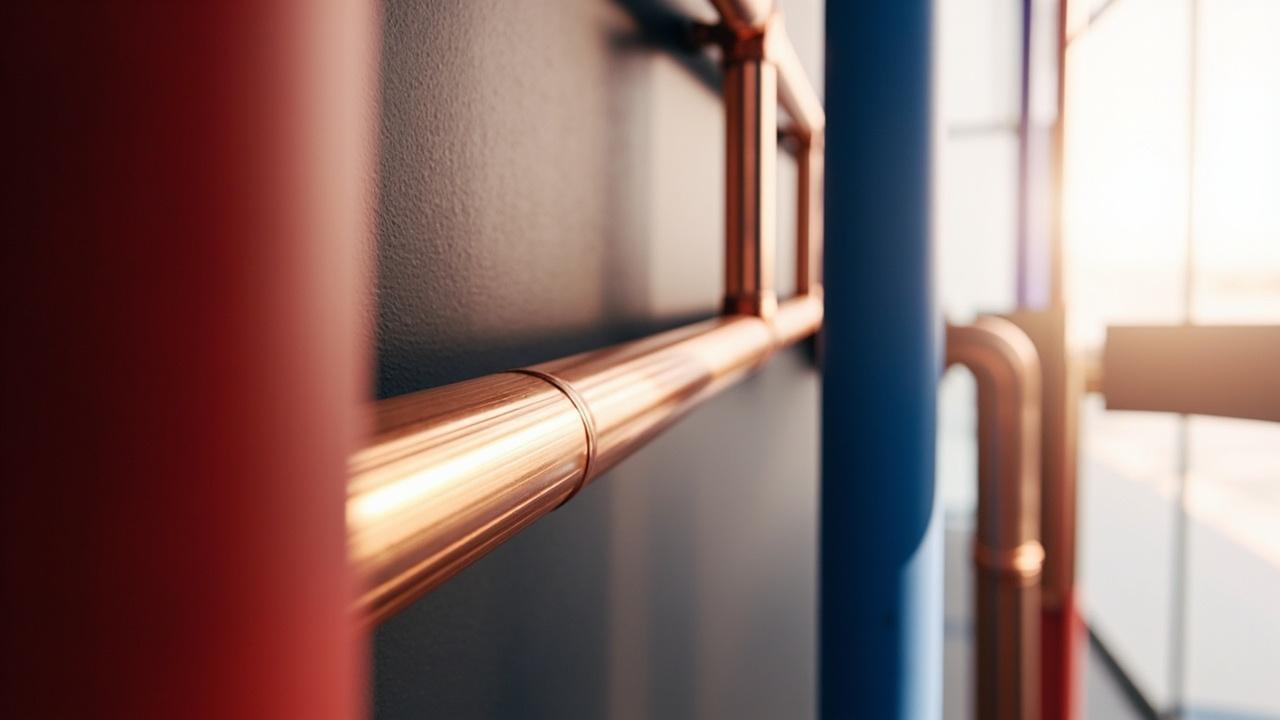
PEX uses mechanical fittings with no flame, while copper uses soldered or press joints, and code bans PEX where UV, high heat, or exposed outdoor conditions apply. Both need correct supports, pressure tests, and permits for repipes, and local amendments can tighten national IPC and IRC baselines, so check with your inspector.
PEX fitting choice shapes reliability. Expansion fittings keep a fuller opening but need matching tubing and tools. Crimp fittings cost less to start and work in tight spots, but each ring must be gauged. Do not mix systems without listed transitions, and pressure test before closing walls.
Copper rewards craft and punishes shortcuts. Joints need clean metal, proper flux, even heat, and lead free solder. That torch brings open flame and fire permits into play in many cities, plus fire watch and heat shields. Overhead work inside a finished wall is a different test than a bench joint, so hire that part out if soldering is new to you.
Placement rules matter as much as technique. PEX carries a strict UV exposure limit, usually no more than 30 to 60 days of sunlight, and it should not run exposed outdoors or within 18 inches of a water heater vent unless listed. Copper handles those spots better, though it still needs insulation outdoors. Spacing differs: PEX needs horizontal straps every 32 inches (about 81 cm), while rigid copper can span about 6 ft. Use nail plates at studs and follow the proven 50 to 70 year service life ratings in manufacturer listings.
Decision guide and mistakes to avoid
Pick copper for exposed, outdoor, high heat, or rodent prone runs and when longevity records or buyer expectations matter, and pick PEX for concealed budget repipes, fast remodels, and freeze prone bays. Call a licensed pro for whole house repipes, gas adjacent work, permits, or any sign of active leaks, low pressure, or discolored water.
Use these plain conditions. Choose copper if the pipe will see daylight, run outside, sit near a boiler or flue, or cross an area with rodent activity. Choose PEX if runs stay hidden, you want fewer joints and faster install, or the budget must also cover valves and finishes. For additions over wet rooms, pair the pipe choice with moisture smart surfaces, as in our guide to tile versus vinyl for wet areas, so a small drip never becomes a subfloor rebuild.
Common mistakes cost more than the pipe itself. Do not leave PEX in sun during a long remodel, do not solder without heat shields, do not mix PEX types and fitting systems, and do not undersize a distant shower to save $30 in tubing. Skipping the pressure test, forgetting an expansion tank, and leaving old galvanized sections all cause repeat callbacks. Label shutoffs and photograph manifolds before drywall.
Know when to bring in a licensed plumbing professional. Whole house repipes, moving a water heater, adding a bathroom, or seeing green stains, metallic taste, or recurring pinholes all deserve a pro diagnosis and a water test. A good plumber will size the system, pull permits, and warranty the work.