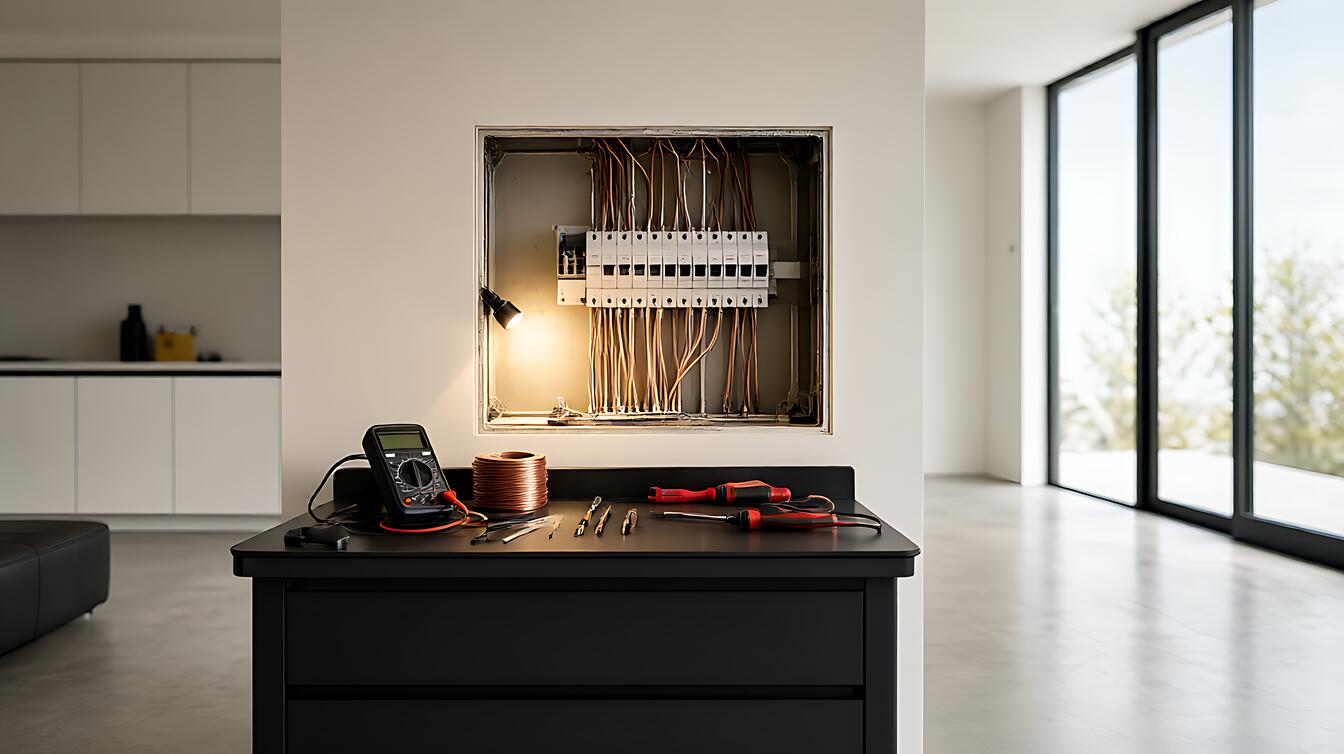

Most home electrical problems are not mysterious. They have a predictable set of causes, and the fix almost always starts with reading the symptoms correctly before touching a wire. Get the diagnosis right and the solution is usually a small, cheap fix. Get it wrong and you can end up replacing a panel that was never the problem, or worse, creating a hazard while trying to fix one.
This guide walks the diagnosis first, then maps each common symptom to the fix that actually lasts. Because electrical work can be lethal, it also marks clearly which steps a homeowner can safely do and which ones require a licensed electrician.
Before You Touch a Breaker: Safety First
Electrical work is the one home repair where a mistake can be fatal rather than merely costly. Three rules cover almost every situation and none of them are negotiable.
First, know where your main disconnect is and how to cut power to the panel or the specific breaker you are working on. Second, verify the circuit is actually dead with a non-contact voltage tester before touching any wire; a breaker you assume is off is not a breaker you have tested off.
Third, never work inside the panel on an energized service, and never re-tighten a panel connection that has not been de-energized properly. If a task requires opening the main panel, the service entrance, or pulling feeders, that is electrician work, not homeowner work. The line is not task size; it is the voltage and access you are touching.
For anything beyond replacing a receptacle on a confirmed dead circuit, a licensed electrician is the safe choice, and that is a feature, not a failure. The National Electrical Code and state licensing rules exist precisely because the margin between a working circuit and a fire or shock is thin.
Diagnosing the Problem From the Symptoms
Every electrical failure points to a small set of likely causes. Match the symptom before you buy parts.
A tripped or dead breaker means the circuit overloaded, a device shorted, or the breaker itself fatigued. Reset it once. If it trips again immediately, the cause is downstream, a loose connection, a failed appliance, or a damaged wire, and the fix is to find that fault, not to keep resetting. A breaker that will not hold closed on a known-good circuit is a broken breaker that needs replacing, which is panel work.
A dead outlet in one room but working in the next usually means a single circuit, a tripped GFCI up the line, or a loose or corroded connection at a box or the panel. GFCI receptacles reset often and silently protect a string of downstream outlets, so the first move is to press reset on every GFCI in the affected area, especially the one in the nearest bathroom or kitchen.
A buzzing outlet, flickering lights, or warm walls are the symptoms that mean stop and call. A buzz or flicker points to a loose connection or a failing ballast; warm walls around a receptacle point to a loose or corroded terminal that is arcing. These are fire precursors, and the correct fix is a licensed electrician who can trace the connection under load, not a homeowner tightening a screw on an energized circuit.
A panel with a burning smell, hot breakers, or discolored terminals is an emergency. A hot panel means a connection is failing and heating, and a discoloration of copper or the busbar means the fault has already run hot. Shut off the power at the disconnect and call an electrician before doing anything else. A failing panel often means the panel replacement or service upgrade conversation in home electrical system cost per unit is about to become your reality.
The Fix by Problem Type
Match the diagnosed symptom to the right repair, and use the safety rules above to decide who does it.
A tripped GFCI or AFCI that resets and holds is a nuisance trip. The fix is usually a different device, a newer dual-function breaker, or moving the offending load off the circuit that is misreading it. Do not remove the protection to stop the trips; the protection is what the code requires.
A loose receptacle or connection on a confirmed dead circuit is one of the few safe homeowner jobs; tighten it and confirm the device is not corroded. A failed breaker that will not hold is a panel swap by a licensed electrician.
A corroded or pitted connection anywhere is not something to re-tighten. It is a sign the connection has already failed, and the fix is to trace and replace it under code, which is electrician work.
Two problems look identical from the outlet but have opposite fixes. An outlet that died when a GFCI tripped gets reset. An outlet that died because a connection corroded gets replaced. The test that separates the two is whether pressing reset on the GFCI brings it back, and that one test is worth more than any part you would otherwise buy first.

When to Call a Licensed Electrician
Call a licensed electrician, not a handyman, for the main panel, the service, and anything that is already showing heat or a smell. The line is not about task size; it is about voltage and access.
Specific triggers: any work inside the main panel, any service upgrade or panel replacement, any fault that trips the breaker twice or more, any warm, buzzing, or discolored connection, and any GFCI or AFCI retrofit to bring an old home up to code. In a house built before the code added AFCI and expanded GFCI coverage, a sale inspection will often require that retrofit, and it is a licensed, permitted job because it touches code and insurance.
Bring the electrician a short list: the symptom, what trips, and what you have already tried. A good electrician will test the circuit under load, check the connections, and tell you whether the fix is a device, a wiring repair, or a panel.
If the diagnosis comes back as a panel replacement or a service upgrade, the budget conversation is the one in home electrical system cost per unit, and the vocabulary that keeps that quote honest is in home electrical system terms. For the repair-versus-replace decision, see home electrical system replace vs repair.
The one question that decides most of it: is the voltage at the work point something a homeowner should touch? At the receptacle on a confirmed dead circuit, often yes. At the panel, the service entrance, or a feeder, no. When in doubt, the electrician costs far less than the alternative.
Preventing the Next Electrical Problem
Most electrical problems are preventable, and the prevention is mostly about not letting small faults sit. Reset a tripped GFCI and AFCI when they trip, and replace a breaker that will not hold instead of living with it. Do not overload a circuit, which means spreading high-draw appliances across the dedicated circuits the kitchen and laundry already have instead of stacking them on one.
Load management is the cheapest prevention there is. Every home already has the dedicated circuit for the kitchen small appliances and the laundry, and the most common overload happens when a homeowner stacks a microwave, a kettle, and a toaster on one of those circuits at the same time.
The fix is not a bigger breaker; it is spreading the load across the circuits the code already provides. A circuit that trips only when you run two appliances together is telling you to split the load, not to upsize the breaker, because upsizing the breaker on a wire at its limit is how a fire starts.
Watch for the early signs that a connection is starting to fail: a scorch odor near a wall, a warm or discolored receptacle, and breakers that trip with no load on the circuit. Any of those is a sign to stop and call before it becomes a fire.
For a house approaching its service limit, plan the service upgrade before adding a load, because it is cheaper than upgrading a panel that is already at capacity. The goal is simple: catch the small fault, fix it under code, and keep the system from turning one repair into a panel replacement.
And when the fix you need is clearly a licensed job, the budget conversation is the one in home electrical system cost per unit. Reading that page before you call makes the quote you receive one you can actually judge instead of just pay.