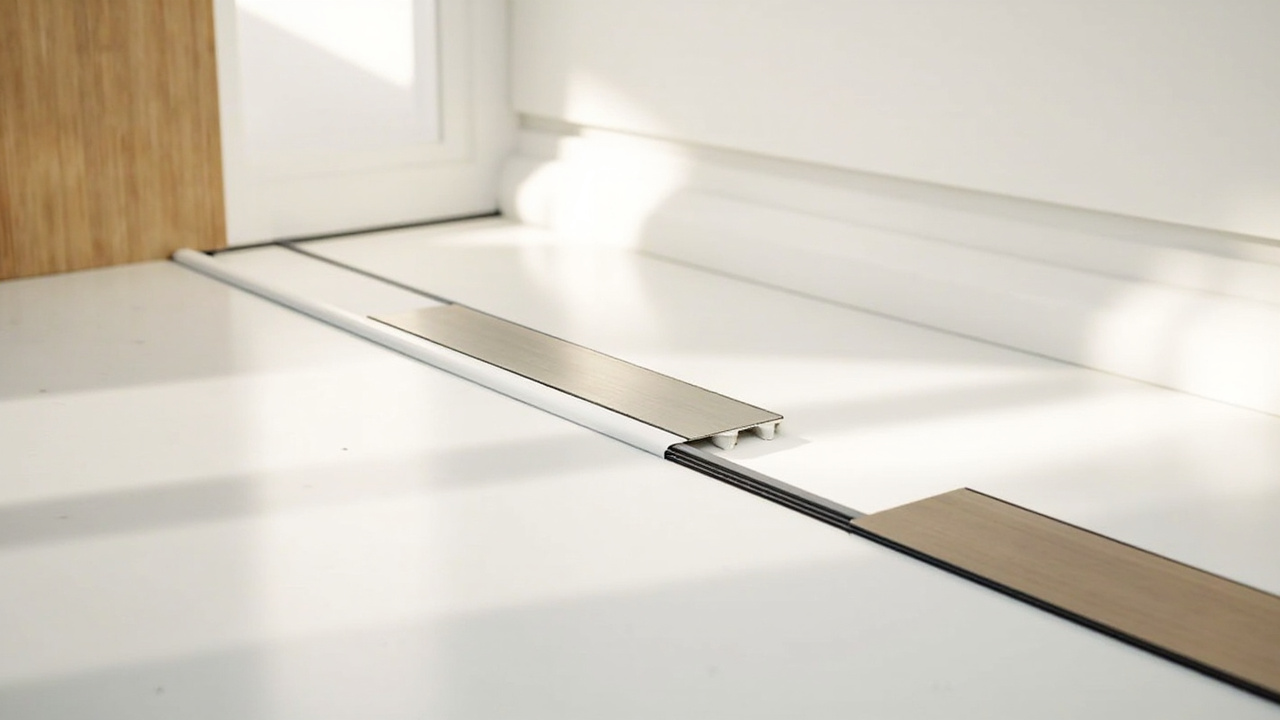

You just installed two different floors in adjoining rooms and the gap between them is staring back at you. Flooring transition strips are the narrow profiles that bridge that gap so feet, chairs, and vacuums cross it without catching. This guide explains the types of flooring transition strips, what each one does best, and how to pick the right profile for your floor heights and rooms.
A transition strip is a shaped piece of metal, wood, vinyl, or rubber that covers the joint where two flooring surfaces meet. The right type depends on height difference, traffic, and whether the two floors are the same material or different ones.
Types Of Flooring Transition Strips: What It Actually Takes
Start with the height difference between the two floors, because that single number decides which profile will work. Measure from subfloor to finished top of each floor, then compare. If both floors are the same height, you want a flat threshold or T-molding. If one floor sits higher, you need a reducer that ramps down to the lower surface.
Height difference is the first spec to lock in. Most profiles are made for a specific range, often 0 to 5 mm for flat pieces and up to 12 mm for reducers. Material matters next: aluminum and brass take heavy traffic, while vinyl and rubber suit light residential use and cost less.
For related flooring context, see types of flooring systems. For a deeper look at how rooms connect across levels, see flooring transitions between rooms and levels for practical examples.
How Types Of Flooring Transition Strips Works Step by Step
Installation is straightforward once the profile matches the gap. Cut the strip to length, dry-fit it, then fasten it with screws, adhesive, or a track system depending on the product. Always leave the expansion gap the flooring manufacturer requires, and never force a strip to bridge a height it was not designed for.
Track systems let you snap the visible profile into a base that is already screwed down, which makes replacement easy later. Adhesive-only installs look clean but are harder to remove. Choose based on whether you expect to change flooring again.
Keep the joint dry during install. Moisture under a metal profile can corrode fasteners and discolor wood.
Types Of Flooring Transition Strips Costs and Common Mistakes
Vinyl and rubber strips are the cheapest, usually a few dollars per linear foot, while solid brass and custom wood profiles cost more. The expensive mistake is buying a profile that does not match the height difference, then shimming it until it wobbles. Measure twice and check the product’s stated height range.
Another common error is skipping the expansion gap. Floors move with seasons; a strip screwed tight across the joint will buckle or pull loose. Leave the gap the flooring instructions specify, usually about 1/4 inch.

Where Types Of Flooring Transition Strips Goes Wrong
Problems show up as tripping hazards, cracked edges, or strips that lift. The root cause is almost always a mismatch between profile type and floor height. A reducer used where a T-molding belongs leaves a lip; a flat strip forced over a 6 mm drop creates a ramp that catches shoes.
Wear layer and finish also matter. In high-traffic doorways, thin vinyl wears through in months. Choose metal where carts, wheelchairs, or pets cross often. Subfloor flatness affects fit too; an uneven joint makes even the right profile rock.
What to Do Next After Types Of Flooring Transition Strips
Once you know the height difference and traffic level, order one sample strip and test-fit it before buying the full run. Compare the feel underfoot and the look against both floors. For broader flooring guidance, browse Meigan Flooring for related products and resources.
If your floors are in the same plane, a simple T-molding or seam binder is enough. If they differ, pick a reducer sized for the exact drop. Either way, measure first and match the profile to the gap.