

Laminate flooring buckling occurs when planks push upward against each other, creating visible ridges or waves across the floor surface. The most common cause is moisture absorption at the seams, which makes the HDF core swell. Without adequate expansion space around the perimeter, the expanding planks have nowhere to go and buckle upward.
Other causes include improper acclimation, installation over damp subfloors, and failure to leave the required 1/4-inch expansion gap along walls and fixed objects. Recognizing the root cause before tearing out flooring saves time and money.
What Buckling Looks Like and How to Confirm It
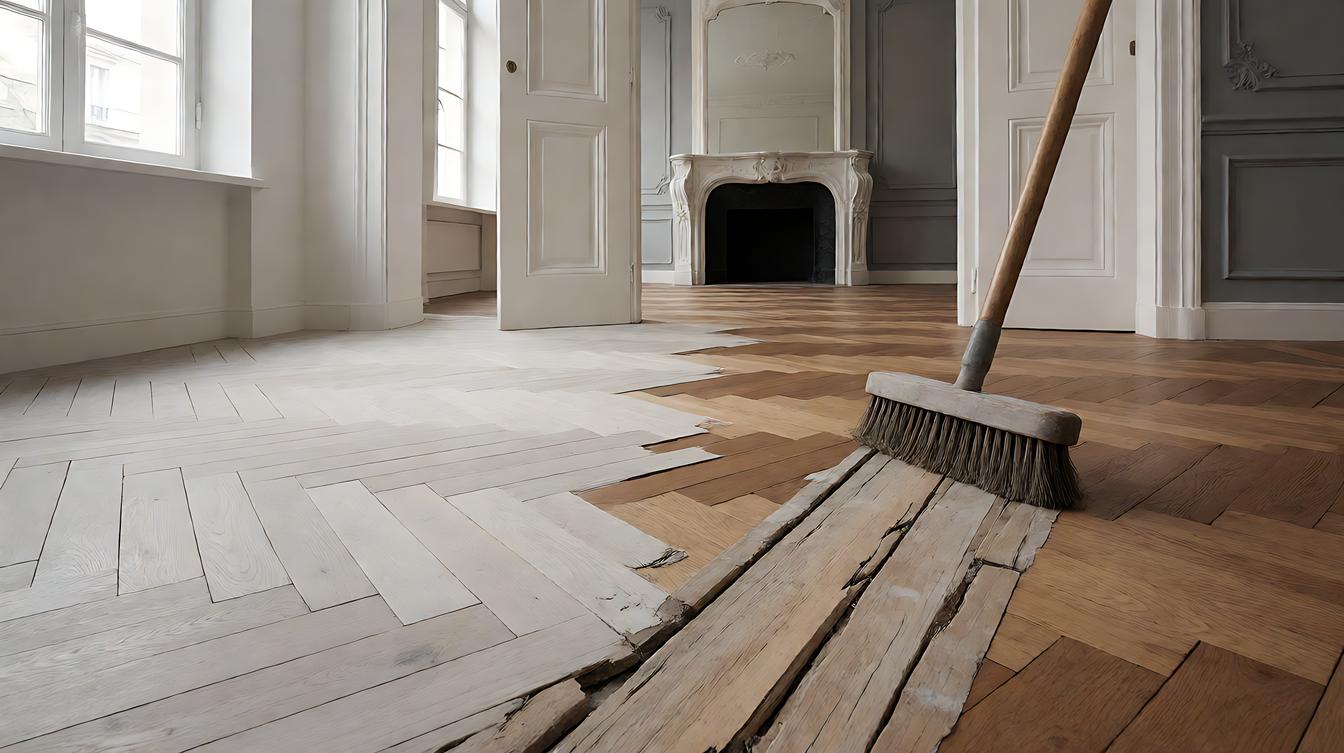
Buckling appears as raised ridges running perpendicular to the plank direction, often starting near the center of the room and spreading outward. Unlike peaking, where planks lift at the joints but remain flat, buckling involves the entire plank arching upward. Press down on a buckled area: if it springs back, the floor is trapped by perimeter pressure.
If it stays down, the HDF core has permanently swollen from moisture damage. Check for buckling after seasonal humidity changes, near exterior doorways, or following any water event. Measure the height of the ridge above the surrounding floor. A rise of 1/8 inch or more indicates active expansion pressure. Less than 1/8 inch may be a minor installation issue that resolves as humidity drops.
Multiple Causes and Their Mechanisms
Moisture is the primary driver of buckling. When laminate planks absorb moisture through unsealed seams, the HDF core expands by 2 to 5% in thickness. Over a 10-foot run, this adds up to 1/4 to 3/8 inch of cumulative expansion. Without perimeter gaps, the pressure forces planks upward at the weakest point, usually the center of the room.
Improper acclimation is the second most common cause. Laminate flooring must sit in the installation space for 48 to 72 hours at room temperature and humidity before installation. Planks installed while still cold from a garage or delivery truck will expand after installation, creating the same buckling pattern.
Environmental factors also contribute. Rooms with humidity consistently above 60% or below 30% stress the laminate. Heating and cooling systems that create large temperature swings, like forced-air HVAC without a humidifier, cause repeated expansion and contraction cycles that eventually overwhelm the click-lock joints. Typical repair costs range from $200 to $800 for professional diagnosis and localized plank replacement.
Diagnosis: Match the Cause to Your Situation
Buckling near exterior doorways or in a basement points to moisture intrusion. Buckling throughout the room within days of installation suggests acclimation failure. Buckling that appears and disappears with seasonal changes indicates humidity control issues. Buckling only under heavy furniture or in high-traffic paths suggests the underlayment has compressed and lost its cushioning support.
Check the perimeter gaps. If baseboards or quarter-round molding are nailed through the laminate, or if expansion gaps were filled with caulk or debris, the floor cannot expand laterally. Remove baseboards and inspect the gap with a flashlight. A properly installed gap should be 1/4 inch and clear of obstructions.
Measure indoor humidity with a hygrometer. Below 35% humidity, planks may shrink and create gaps. Above 60% humidity, planks absorb moisture and risk buckling. The target range for laminate flooring is 35 to 55% relative humidity year-round.
Fix Options: DIY vs Professional Help
For minor buckling under 1/8 inch, remove baseboards and trim the drywall or molding to create a proper 1/2-inch expansion gap. This often releases the pressure and allows the floor to flatten within 24 to 48 hours. For moderate buckling between 1/8 and 1/4 inch, remove the row nearest the wall, cut 1/4 inch off the last plank, and reinstall with proper spacers.
Severe buckling over 1/4 inch or buckling that does not resolve after creating expansion gaps requires plank replacement. The HDF core has permanently deformed and will not shrink back. In this case, remove and replace affected planks, working from the wall inward. If more than 30% of the floor is affected, consult a flooring professional. The cost of piecemeal replacement often approaches full reinstallation, which runs $2 to $6 per square foot for materials only.
Never sand or plane down buckled planks to make them fit. This destroys the wear layer and click-lock edges, creating gaps that collect moisture and accelerate further damage.
Prevention and Next Steps
Prevent future buckling by maintaining indoor humidity between 35% and 55% year-round. Use a hygrometer to monitor levels and add a humidifier or dehumidifier as needed. Always acclimate planks for 48 to 72 hours before installation. Leave a 1/4-inch expansion gap around all walls, doorways, columns, and transitions to other flooring types.
Ensure your underlayment includes a proper moisture barrier, especially over concrete subfloors. See our underlayment guide for help choosing the right barrier type for your subfloor conditions.
After addressing the immediate buckling, your next step is evaluating whether to repair or replace the affected area. See our laminate maintenance and repair guide for detailed techniques, and our cost guide to compare repair versus replacement pricing.