
Every style list online looks the same, a wall of names with photos, and somehow that makes the choice harder. There are really only about eight interior design style families, and once you see them that way you can match one to your house in an afternoon.
Most people lose hours to this. They scroll through a magazine, save six screenshots, and end up with a room that looks like three different houses had a committee meeting. The problem is not taste. It is that style names are treated as decoration when they are really a bundle of structural decisions.
Here is the short version, plus what each family actually commits you to.
What a Style Family Actually Commits You To
A style is a layered decision system. Underneath the mood board there are five layers, and each one narrows what you can do next. The first is architecture and millwork, meaning the built-in woodwork and the trim. The second is palette, the colors and their temperature. The third is furniture form and density. The fourth is lighting. The fifth is the accessories and textiles on top.
This layering is why mixing styles usually looks wrong. People treat the layers as interchangeable when they are not. A room with ornate millwork, a flat modern sofa, and a rustic rug has three vocabularies and no dominant one.
The fix is simple and it is the single most useful idea on this page. Change one layer at a time and keep a clear dominant layer. You can put a modern sofa in a farmhouse room all day. You cannot also swap the shiplap, the light fixtures, and the rug in the same weekend.
Each family also commits you to something physical, and that is where the real difference lives. Some styles are mostly paint, fabric and furniture swaps. Others pull in decorative millwork: board-and-batten, picture rail, corbels, window casings, ceiling coffers. That distinction matters more to your wallet than any style name does, and we will come back to it.
The Eight Style Families, and What Each One Looks Like
Here is the taxonomy. Eight families cover almost every home in North America and the UK, and the popular names you already know map onto them.
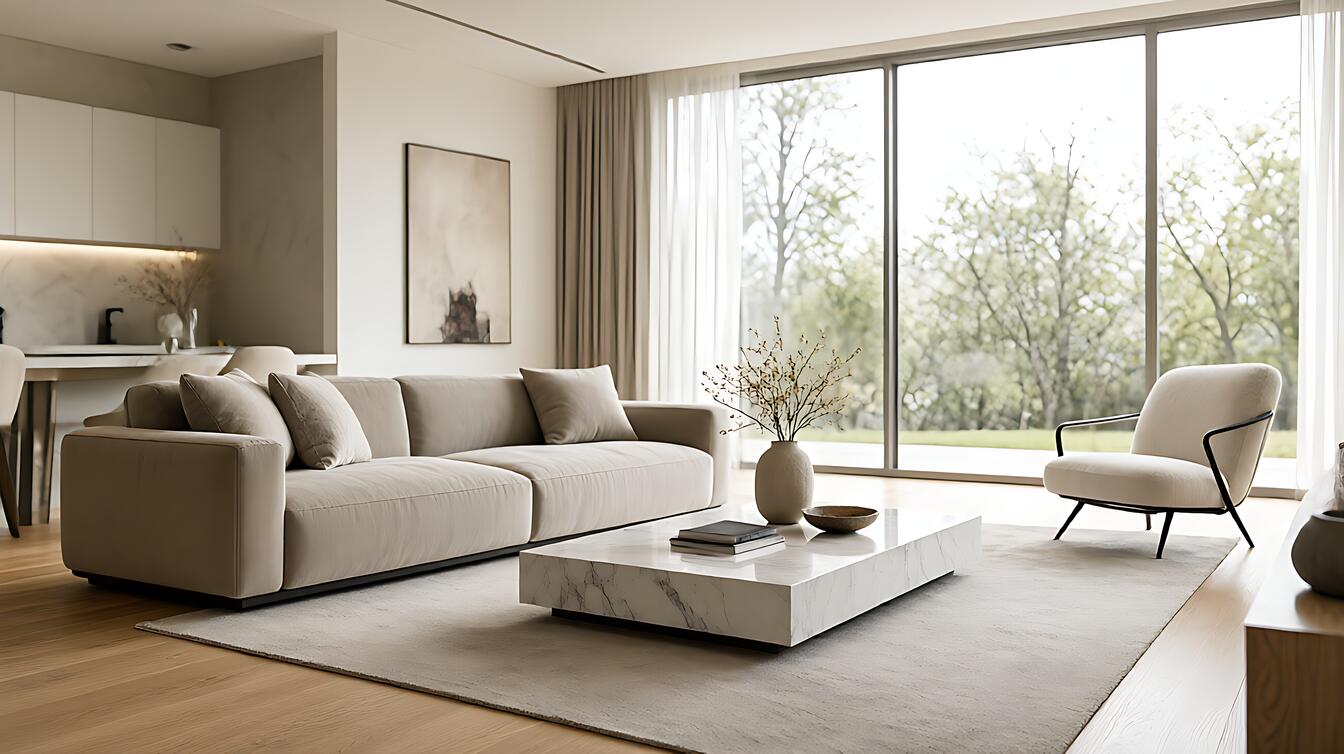
- Modern and contemporary – clean lines, geometric forms, a neutral or warm-neutral palette, minimal ornament. The difference between the two words matters: modern refers to a fixed early twentieth-century movement, while contemporary means whatever is current right now, which changes every decade.
- Minimalist – a degree rather than a style. Very few objects, a tightly limited palette, lots of open surface. A minimalist room can be traditional in material and still read as minimalist.
- Scandinavian and Japandi – pale wood, soft textiles, layered natural light for the first; Japanese restraint, lower furniture, paper and shadow for the second.
- Industrial – exposed structure, dark metal, brick or concrete, leather and utility lighting, deliberately unfinished surfaces.
- Farmhouse and modern farmhouse – aged and patina for the first, white shiplap and black metal for the second. Different materials, opposite moods.
- Coastal – a palette more than a construction method: sea, sand, sky, rattan, linen, light woods, relaxed slipcovered furniture.
- Traditional, transitional and classic – crown molding, symmetrical layouts and formal furniture easing toward cleaner lines and muted contrast in the transitional middle.
- Eclectic, bohemian and maximalist – deliberate layering of period and origin pieces, collected rather than matched, held together by a repeated color.
Two more names deserve a mention because they are the most commonly confused pair. Modern is about line and form. Minimalist is about quantity. A style can be one without the other, and choosing wrong here is what produces a room that feels cold but cluttered.
| Style family | Dominant material | Furniture density | Millwork |
|---|---|---|---|
| Modern / contemporary | Paint, veneer, glass, metal | Low to medium | Flat panels |
| Minimalist | Matte paint, pale wood | Very low | Usually none |
| Scandinavian / Japandi | Light oak, ash, wool, linen | Medium | Simple casing |
| Industrial | Brick, concrete, steel, leather | Medium | Raw or absent |
| Farmhouse / coastal | Shiplap, beadboard, rattan | Medium to high | Substantial |
| Traditional / transitional | Crown, casing, painted wood | High | Decorative |
| Eclectic / maximalist | Mixed, collected | High | Often absent |
Which Family Fits Your House, Your Light, and Your Budget
Style lists are ranked by popularity. Your house should be ranked by fit. Three conditions decide more than taste ever will, and the interior design guide covers the planning side of this in more detail.
The first condition is your shell. A 1910 bungalow with a front porch, a 1950s ranch with a low ceiling, and a new-build box with tall glass want different styles.
Old houses have tall windows, deep casing, and rooms built for furniture that no longer exists. New houses have open plans, fewer corners to hide a dining table, and windows that run floor to ceiling.
Fighting your shell era is a choice, but an expensive one. Working with it is usually the cheaper path.
The second is light. Dark, saturated palettes collapse in a north-facing room that never gets direct sun. Pale neutrals wash out in a south-facing room with heavy afternoon glare. Before you commit, note where the daylight and glare actually falls and at what hours.
The third is budget. Style families are not equally expensive to execute. Coastal and Scandinavian lean on textiles, paint and furniture, which you can change in stages. Traditional and modern farmhouse lean on millwork density, and millwork is labor you cannot phase easily.
Two more questions sharpen the choice. Which finishes are staying? If the floors are dark walnut and the doors are stained, your palette is already partly decided and should work with them. And are you optimizing for the next five years or the next twenty?
That last question changes how much you invest in something you might regret. A resale-focused decision follows whatever the local market reads as updated. A longevity-focused decision follows what you will still like after the novelty wears off.
Add modern versus minimalist to your reading list if those two names have been muddled in your head. It is a short read and it clears up a surprising number of wrong-direction choices.
What Each Style Costs to Execute, and Why Two Quotes Diverge
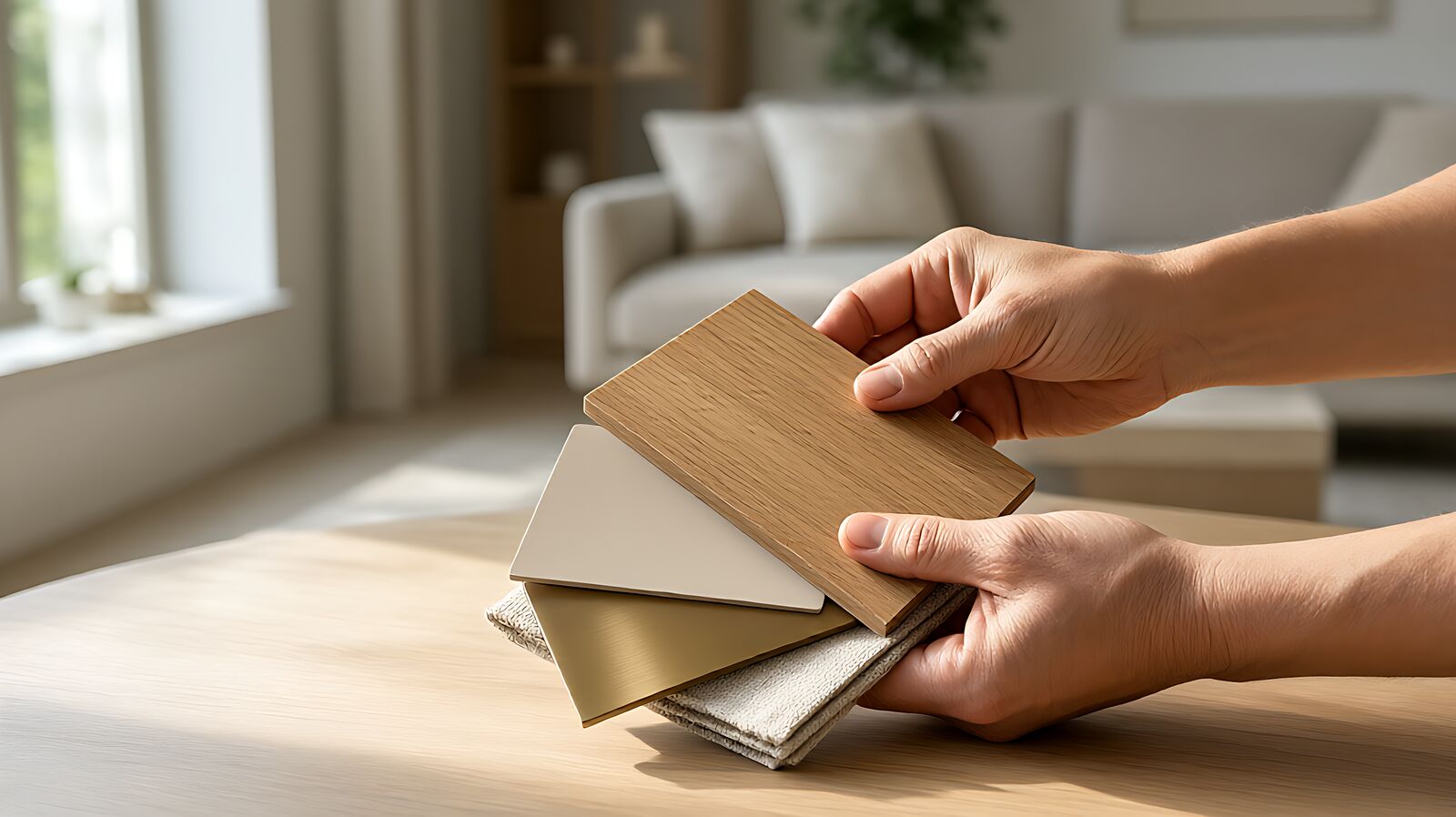
Here is the part most style content never tells you. Two quotes for the same style brief can differ by thousands, and the reason is almost never material grade. It is millwork density: how many linear feet of casing, board-and-batten, coffered ceiling, or built-in cabinetry the design includes.
Board-and-batten installed properly runs roughly 12 to 16 inches on center, which means a 12 foot wall generates dozens of separate pieces to fit, scribe, and nail.
Shiplap needs a consistent 1/8 inch reveal, which means a flat, true substrate, which often means new drywall. A flat-painted wall with flat-panel cabinetry is fast. The same room with picture rail, coffers, and window casings is a different trade on a different schedule.
Paint, by contrast, is the cheap part. A gallon covers roughly 350 to 400 square feet, primer needs two to four hours before the finish coats, and a rental in a northern climate needs two coats to cover a darker color over a lighter one.
Material alone runs about $0.10 per square foot of wall area once you divide a $30 to $60 gallon by its coverage. The multiplier is labor, and labor is what the millwork decides.
So when you compare quotes, read the millwork line items first, not the totals. Two contractors quoting the same style may be pricing different amounts of built-in woodwork. The interior design cost guide breaks this down further, and it is worth reading before the first estimate arrives, not after.
Choosing the Right Interior Design Style for Your Home
You now have three families to choose from, not thirty names. Narrow it with the shell, the light, and the budget. Then check the room against your finances rather than against a mood board.
- Name one family. Write it down. If you cannot name it, you do not have a brief yet, and a mood board is not a brief.
- Name the two you rejected and why. This is the test that separates a decision from a preference, and it makes the choice easy to defend later.
- Identify the dominant layer. Architecture, millwork, palette, furniture or accessories. That is your anchor, and everything else bends to it.
- Set the millwork budget before the furniture budget. The built-in woodwork is what a future buyer sees and what you cannot change without opening walls.
- Do one room as a pilot. The room you use most, seen from the door. Live with it for two months before committing the whole house.
One warning worth keeping. If a renovation is already on the calendar, the style decision gets cheaper to make early. Lighting and material choices carry the mood of a room more than any single piece of furniture does, and both are far easier to specify before the trades are booked.
Pick the family that fits the house you actually have, set the millwork line, and let the accessories be the easy part.
From there, the next two decisions are lighting and materials for the room, then a realistic budget from the cost guide. The full interior design guide lays out how those decisions sequence with the rest of a room. That is the whole call, and it takes one afternoon rather than a year of saving screenshots.