
Every leak, clog, or dripping faucet forces the same decision: fix the part in front of you, or pull the whole assembly and start fresh. Replacing beats repairing when the component is near end of life, the repair cost exceeds half the replacement cost, or the fix would hide a larger failure mode. Repairing wins when the unit is young, the fault is isolated, and parts are cheap and available.
Replace vs Repair: The Decision Framework
Home plumbing replace vs repair decisions rest on three checks: the component’s age against its expected lifespan, the repair cost against half the replacement cost, and whether the failure is isolated or systemic. Run all three before calling a plumber or buying parts, because the cheapest first fix often costs more over a five-year window.
Start with age. A faucet cartridge rated for 15 to 20 years that fails at year three usually has a warranty path or a single worn seal. The same failure at year sixteen means the body, finish, and valves are all aging together, and a new faucet resets the clock for roughly the same labor cost. Water heaters follow the same logic: a tank at year two with a bad element gets a $40 element; a tank at year ten with a rust-stained pan gets a new tank.
Next, price the repair against replacement. The half-cost rule is a useful screen: if the repair estimate exceeds 50 percent of a new unit installed, replace. A $280 repair on a $450 toilet is a replace. A $60 repair on a $450 toilet is a repair. Always ask the plumber to quote both options in the same visit so you are not comparing a repair bid today against a memory of replacement prices from last year.
Finally, ask whether the failure is isolated. A leaking supply hose is isolated. A recurring leak at the same shutoff, a slow drain that returns after snaking, or a pressure drop that worsens over weeks is systemic, and systemic faults reward replacement or at least a larger investigation. For broader context on how whole systems age, see this guide to how a home plumbing system works.
When Repair Is the Right Call
Repair is the right call when the fixture is under half its expected lifespan, the fault is a single worn part, parts are available, and the repair restores full function without disturbing surrounding finishes. Most minor leaks, clogs, and valve faults fall in this bucket and cost under $150.
Cartridge and washer replacement fixes most dripping faucets. A compression faucet with a worn washer takes 20 minutes and a $3 part. A ceramic-disk faucet with a cracked cartridge takes 30 minutes and a $25 to $60 cartridge. Neither job requires removing the faucet or touching the finish.
Toilet flapper and fill-valve swaps resolve running toilets. A flapper warps after five to eight years and costs $8 to $15. A fill valve fails after seven to ten years and costs $15 to $35. Both are DIY-friendly with basic tools and a towel.
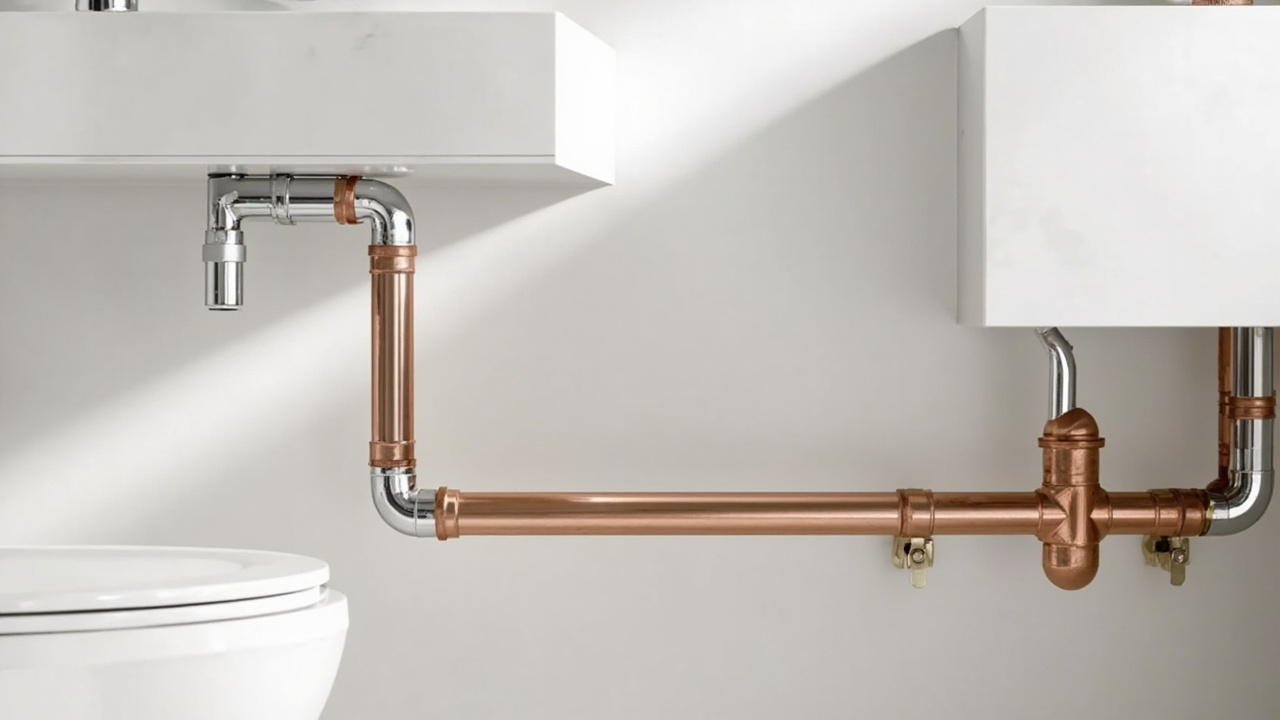
P-trap and tailpiece repairs handle most under-sink leaks. A corroded slip nut or cracked plastic tailpiece is a $10 part and a 15-minute job. Replace the whole trap assembly if the metal is pitted, since patching a corroded trap buys months, not years.
Minor clogs respond to a plunger, a hand auger, or enzyme treatment. A toilet auger clears most blockages in five minutes. A sink drain snake reaches the trap arm. Avoid chemical drain cleaners on older pipes, since they can accelerate corrosion.
Repair also makes sense when the fixture is a matched set you want to keep. A matched fixture set with a standard faucet hole pattern with a standard faucet hole pattern can take a new cartridge without changing the look. For cost context on leak repairs specifically, this plumbing leak repair cost guide breaks down typical ranges.
When Replacement Is the Right Call
Replacement is the right call when the component is past two-thirds of its lifespan, the repair cost exceeds half of replacement, the part is obsolete, or the failure risks water damage. Replacing also wins when you are already opening walls or floors for another project.
Water heaters past year eight with rust, sediment buildup, or repeated element failure should be replaced, not repaired. A tank that leaks from the body cannot be patched; it must be swapped. Tankless units at year twelve to fifteen with heat-exchanger scaling may be descaled once, then replaced if efficiency drops.
Galvanized steel supply lines should be replaced on sight. Interior corrosion chokes flow, tints water, and fails at threads. A partial repair at one fitting leaves the rest of the line to fail next month.
Toilets that rock, crack, or clog repeatedly despite a clear trapway usually need replacement. A cracked porcelain bowl cannot be repaired reliably. A toilet that clogs weekly may have a worn glaze or a design with a narrow trapway; a modern high-efficiency model solves both.
Faucets with corroded bodies or obsolete cartridges are replace candidates. If the manufacturer no longer sells the cartridge, you are buying a new faucet anyway. Chrome finishes that pit and flake will not improve with cleaning.
Any fixture involved in a slab leak or hidden-wall leak usually warrants replacement of the affected section rather than a patch, because the access cost dominates and you want the longest possible service life before reopening. For pipe material tradeoffs that shape replacement scope, review this overview of home plumbing pipe types.
Cost Comparison: Repair vs Replacement
Typical US repair and replacement costs in 2025 to 2026 vary by region, but the relative gaps are stable: repairs run $50 to $300 for most single-part faults, while replacements run $150 to $1,200 for faucets and toilets and $1,200 to $5,500 for water heaters. Labor dominates both, so bundling jobs saves money.
Here is a practical comparison for common items:
- Faucet drip: repair $40 to $120; replacement $150 to $400 installed.
- Running toilet: repair $40 to $100; replacement $200 to $500 installed.
- Water heater (tank): element repair $150 to $300; replacement $1,200 to $2,800 installed.
- Garbage disposal: repair $80 to $200; replacement $200 to $450 installed.
- Supply hose leak: repair $30 to $80; replacement of all hoses $60 to $150.
Notice that the repair is cheaper in every row, which is why the half-cost rule matters. A $100 faucet repair on a $250 faucet fails the rule; a $40 repair on the same faucet passes. The hidden cost is recurrence: a repair that holds for six months and fails again costs twice the labor. Ask the plumber for a warranty on the repair, typically 30 to 90 days, and factor that into the comparison.
Bundling changes the math. If you are already paying a service call and the plumber is under the sink, replacing a second aging faucet adds mostly parts cost. Group small replacements into one visit and you cut the per-item labor share. For rough-in and new-install cost context, see this bathroom plumbing rough-in guide.
How to Decide: A Step-by-Step Method
Decide between repair and replacement by gathering four facts in order: the component’s install date, the symptom’s history, a written repair quote, and a written replacement quote. Then apply the half-cost rule and the isolation test. The whole process takes one service visit.
- Find the age. Check the manufacturer label, the permit, or your records. If unknown, estimate from the home’s age and the fixture’s style.
- Describe the symptom history. First failure or recurring? Same spot or new spot? Sudden or gradual?
- Get both quotes. Ask for a repair quote and a replacement quote with parts and labor separated.
- Apply the half-cost rule. Repair over half of replacement leans replace.
- Run the isolation test. Isolated fault favors repair; systemic or recurring favors replace.
- Factor access and finish risk. If replacement requires opening tile or drywall, lean replace while access is open.
After the decision, set a maintenance interval. Repairs need a 30-day recheck; replacements need a yearly exercise of shutoffs and a five-year inspection of hoses and valves. Keep receipts and model numbers in one folder so the next decision is faster.
If you are unsure, get a second opinion from a licensed plumber who does not sell fixtures, since some contractors default to replacement for margin. A good diagnostician will tell you when a $40 part fixes a $400 problem.