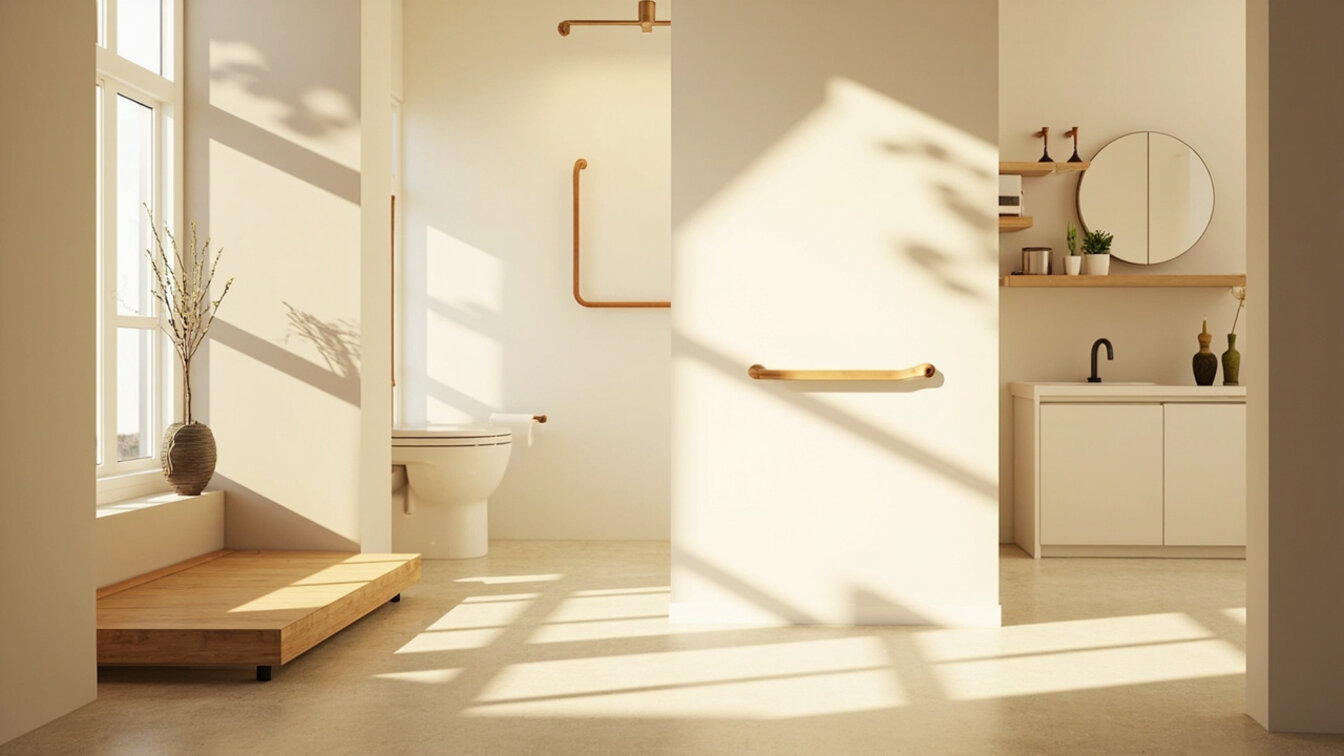

Aging in place modifications for family caregivers work when designed around the caregiver’s daily routine, not just the care recipient’s diagnosis. The right modification removes a task the caregiver currently does manually. The wrong one adds a new task nobody anticipated. Most families discover this after the first project.
This page is about the caregiver’s problem, not the patient’s. It covers which modifications reduce caregiver burden, which ones shift it to a different task, and how to coordinate a project when more than one person is involved in the care.
If you want the wider picture first, our aging in place home modifications guide covers the body changes and the reference standards, and our comparison of modification types weighs the options side by side.
Why Family Caregivers Miss the Modifications That Matter Most
The most common caregiver mistake is modifying for the diagnosis instead of the daily routine. A diagnosis of arthritis suggests grab bars. A daily routine of helping someone stand from a low toilet suggests a comfort-height toilet and a transfer space. The two are not the same, and the first one is cheaper to install while the second one actually removes the lifting.
Caregivers also miss modifications because they are not in the room when the fall happens. The fall happens at 2 a.m. on the way to the bathroom, or during a transfer the caregiver was not asked to help with.
The modification that prevents that fall is usually lighting on the route and a transfer space beside the toilet, not a grab bar at the shower.
Three modifications are consistently under-installed in homes with a family caregiver. Transfer space beside the toilet and shower, which requires 30 by 48 inches minimum, is the first. Blocking in the walls, which costs $100 to $200 per location while the walls are open, is the second.
Lighting on the route to the bathroom, which costs $100 to $300, is the third. All three remove a task the caregiver currently does by hand.
The reason they are under-installed is that none of them are visible. A grab bar is visible and feels like progress. A transfer space is empty floor and feels like nothing. The caregiver’s experience of safety is different from the patient’s.
Which Modifications Help the Caregiver, Not Just the Patient
A modification helps the caregiver when it removes a physical task or a decision. A modification helps only the patient when it improves comfort but leaves the caregiver’s workload unchanged. The distinction matters because the budget is usually split between the two.
Caregiver-focused modifications, in order of impact:
- A comfort-height toilet. $300 to $600 installed. It removes the lifting task at the highest-frequency transfer point in the house.
- Blocking in the walls. $100 to $200 per location. It makes every future grab bar installation a five-minute job instead of a wall repair.
- Lighting on the route to the bathroom. $100 to $300. It removes the decision about whether to turn on a light at 2 a.m.
- A transfer space of 30 by 48 inches. Often free if the room is large enough. It removes the repositioning task during transfers.
- Non-slip flooring or treatment. $3 to $15 per square foot. It removes the spot-checking task the caregiver does before every transfer.
Patient-focused modifications, which improve comfort but leave the caregiver’s workload unchanged, include heated towel racks, grab bars at the shower (when the transfer is already safe), and handheld showerheads. These are worth funding after the caregiver-focused list is complete, not before.
The trap is funding patient-focused items first because they are visible and feel like progress. A family that installs a heated towel rack before blocking in the walls has spent money on comfort while the structure needed for future safety is still missing.
The Real Cost of Getting Caregiver Modifications Wrong
The cost of a wrong modification is not the price of the fixture. It is the price of the rework plus the price of the caregiver’s time during the gap. A grab bar installed in the wrong location has to be removed, the tile patched, and a new bar installed in the right location.
That is $200 to $350 twice, plus two trips from the contractor.
The more expensive failure is the modification that works for the patient but creates a new task for the caregiver. A walk-in tub with a watertight door removes the step-over but adds a seated transfer that takes longer than the step-over did. The caregiver spends five minutes more per bath, every bath, for the life of the tub.
That is not a fixture cost. It is a labor cost that never appears on the invoice.
The cheapest failure is the modification that is never installed because the caregiver did not know it existed. Blocking in the walls costs $100 to $200 per location while the walls are open. The cost of not knowing is the cost of reopening the wall.
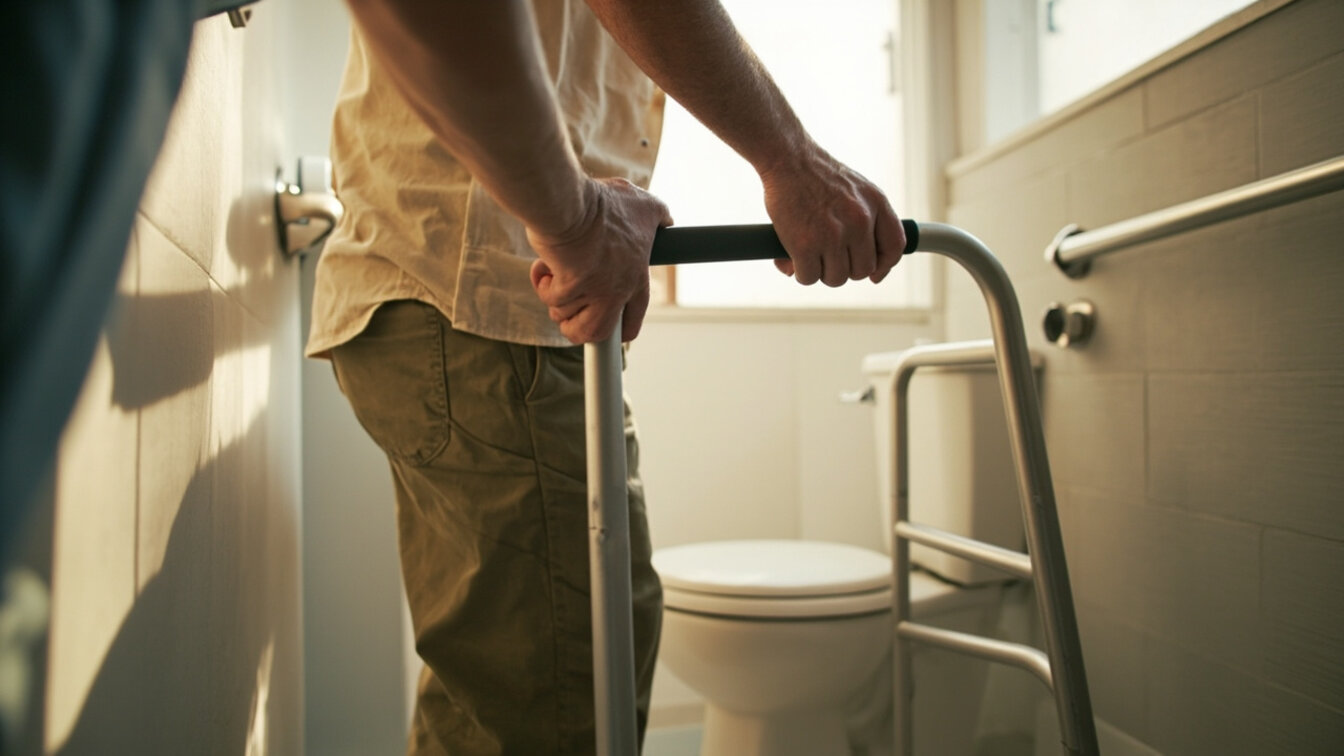
The honest way to think about the budget is to price the caregiver’s time. If a modification saves the caregiver ten minutes per day, that is sixty hours per year. At any reasonable hourly rate, a $300 modification that saves sixty hours pays for itself in the first year.
What to Do When the Parent Refuses the Modification
Refusal is the most common caregiver problem and the least discussed. A parent who refuses a grab bar is not refusing safety. They are refusing the implication that they need help, and the modification has to be framed as convenience rather than necessity.
The framing that works is not “you need this.” It is “this makes the bathroom easier to use.” A grab bar becomes a towel bar that happens to hold 250 pounds. A comfort-height toilet becomes a toilet that is easier to stand from. A non-slip floor becomes a floor that is easier to clean. The function is the same; the framing is different.
The second approach is to make the modification temporary and reversible. A suction-cup grab bar can be removed in thirty seconds and leaves no mark. A non-slip mat can be rolled up and stored. A portable ramp can be folded and put away.
The third approach is to involve the parent in the choice. A parent who picks the color of the grab bar, the style of the toilet, or the location of the light switch is more likely to use it.
None of these approaches work every time, and some parents will refuse regardless of framing. In that case the caregiver’s job is to install what can be installed without consent, such as blocking in the walls.
How to Coordinate Modifications Across Multiple Caregivers
When more than one person is involved in the care, the modification project has to be coordinated or it will be done twice. The most common failure is two caregivers each installing a grab bar in a different location because neither knew the other was planning to.
The coordination that works is a single written list, agreed before any work starts, with one person responsible for each item. The list should include the modification, the location, the cost, and the person responsible. It should be shared with every caregiver and updated when something changes.
The assessment that informs the list should come from an occupational therapist who has watched the care recipient use the existing bathroom. That assessment costs little or nothing through the local Area Agency on Aging.
The contractor should be a CAPS-certified professional, credentialed through the NAHB, who understands the dimensions and the sequencing. A general contractor understands the structure.
The sequence that works is straightforward. Decide the bathing fixture first, because it sets the floor and the drain. Decide the toilet height next, because it sets the clearances. Then the grab bar blocking, then the floor and the lighting, and only then the finishes.
Our aging in place home modifications guide covers the body changes and the reference standards, and our comparison of modification types weighs the options side by side.
One last thing. Get an assessment before the first quote, not after the third. An occupational therapist who has watched someone use the existing bathroom will tell you in one visit whether the problem is the ledge, the toilet height, the lighting or the floor.
That answer is what turns a guess into a plan, and it costs little or nothing through the local Area Agency on Aging. Start with the assessment, not the quote, and the rest of the plan writes itself.