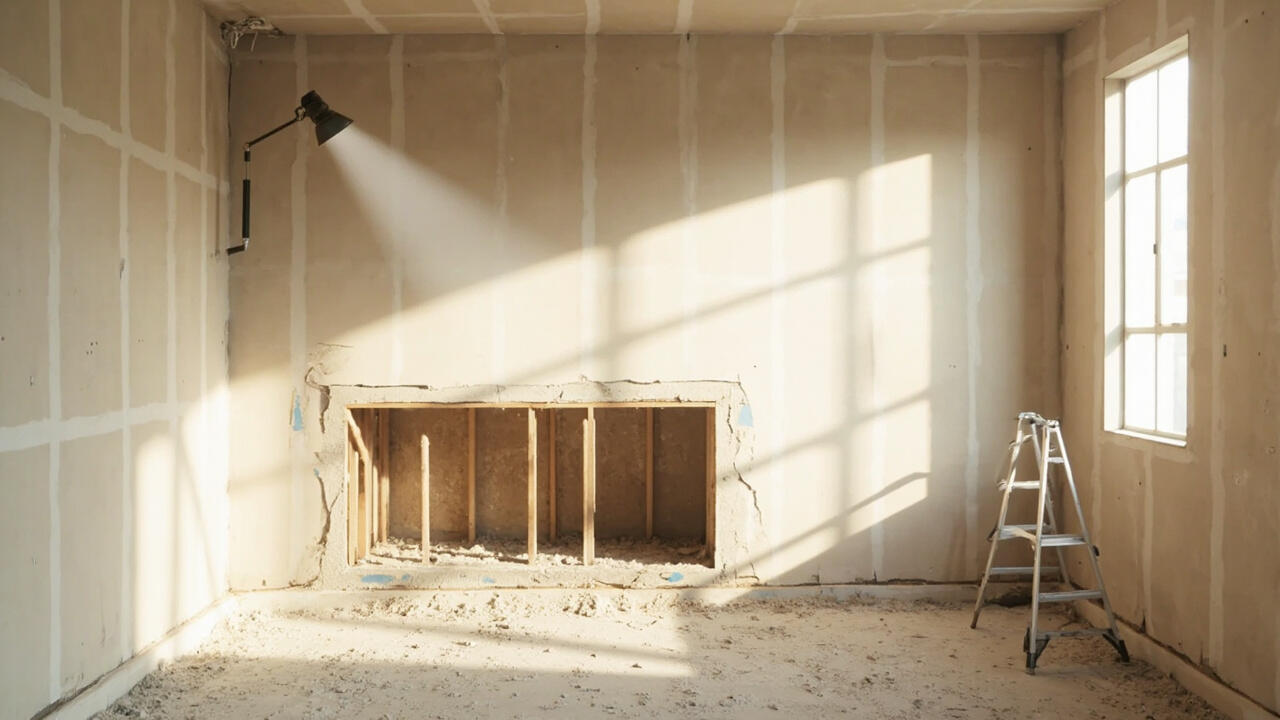

A doorknob left an elbow-shaped dent in the hallway wall. You could patch it in an afternoon. But the water stain on the ceiling has come back twice now, and the board underneath feels soft when you press it. Patch the dent, leave the ceiling, and you will be back next season with the same problem and money already spent.
Drywall is the easiest surface in the house to repair and the easiest to get wrong twice. The decision itself is simpler than the cost quotes suggest, because there is one question that settles most cases.
Put both numbers through the repair versus replacement cost calculator before you commit: it lists the line items that decide which quote is really cheaper.
That question is not how big the hole is. It is what is happening inside the board.
The Gypsum Core Is What You Are Really Deciding On
Drywall is a gypsum core sandwiched between two layers of paper facing. That construction explains everything about when patching works and when it cannot.
Surface damage is cosmetic. A dent, a scraped gouge, a nail pop, a settling crack in the paint: these are failures of the facing, and joint compound exists precisely to rebuild a facing. Tape, mud, sand, prime.
The intact core underneath does the real work and is perfectly happy.
Once the gypsum core itself is compromised, no amount of compound fixes it. And there are four ways it gets compromised: water saturation, which swells and softens it; mold, which roots in the paper facing and uses it as food; crumbling or chalky gypsum in chronically damp areas; and sagging, where a ceiling board bowing between joists has taken on moisture and will not flatten back out.
This is the whole decision in one line. If the core is intact, repair works and is cheap. If the core is gone, you are taping over a material that no longer holds.
When Repair Is Clearly the Answer
Localized damage on sound board is the easy case, and it is also the most common one. If the core around the damage is dry, firm, and free of mold, patch it.
- Dents, dings, and furniture scrapes: $10 to $60
- Nail pops and screw dimples: $50 to $75
- Hairline settling cracks at corners and above doors: $100 to $350
- Small to medium holes, under about 12 inches: $100 to $300
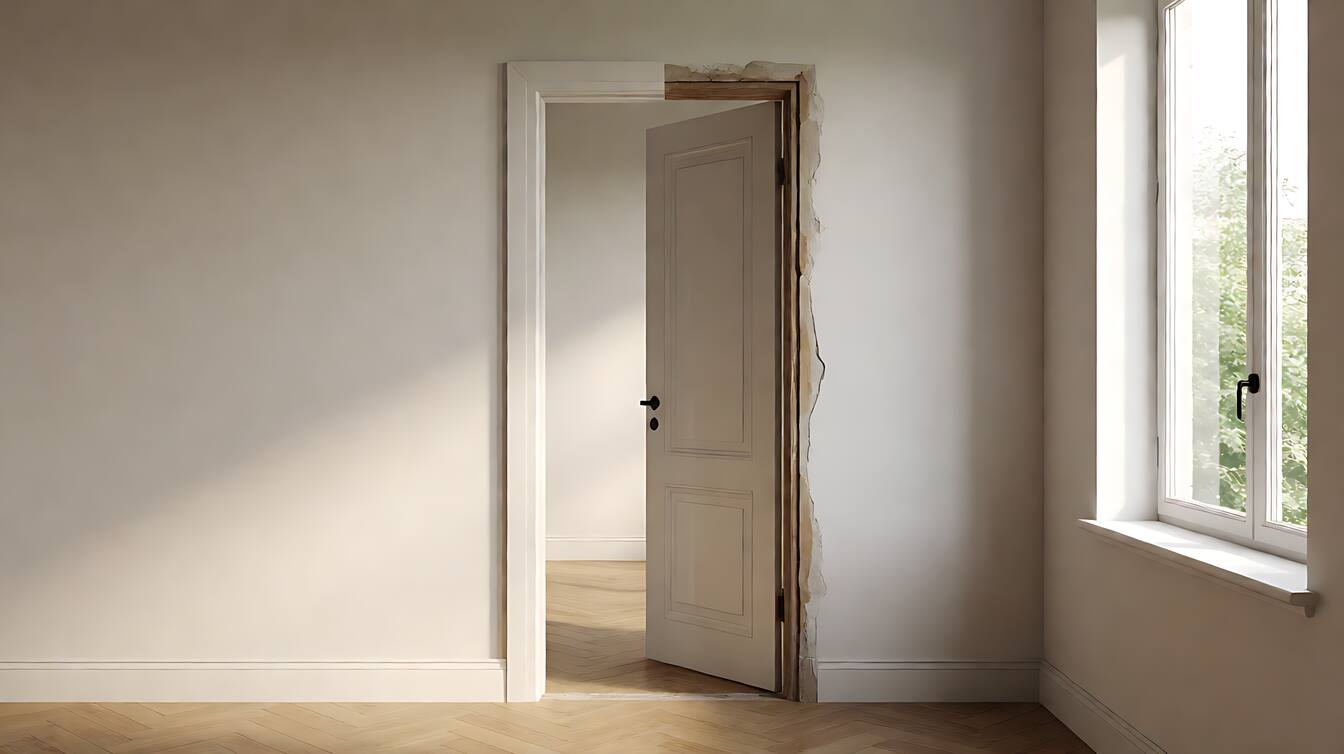
Door openings cut by a plumber or electrician fall here too. They look like a hole, but the surrounding board is fine, so a patch backed for rigidity and feathered wide is permanent and invisible.
A properly done patch is not a compromise. Backed, feathered, texture-matched, primed: most people never find it again.
The Size Rule Everyone Uses, and Why It Is Second
Once the core is fine, size becomes the deciding factor, and this is the arithmetic most people know.
Every patch adds taping, mudding, sanding, and texture blending. A wall with six or eight separate patches needs so much finishing that hanging one fresh sheet costs about the same and produces a flatter, cleaner result. The math flips as damage spreads.
The working thresholds are these. Damage under about four square feet: patch it. Damage over roughly one third of a wall: replace the sheet. Holes six inches or larger: cut in a new section rather than patch. And when repair cost approaches 40 to 50 percent of replacement, replace.
Removal and reinstallation runs $2 to $6 per square foot, which includes taking down the old board, hauling it away, and hanging, taping, and finishing the new. A whole wall or section runs $500 to $1,600. A single 4×8 sheet runs about $200 to $400.
Two real costs push people in opposite directions here, and both are worth knowing.
Ceiling work costs more, because overhead labor adds roughly $50 to $100. And matching an existing finish, popcorn or orange peel or hand-troweled texture, is genuinely hard. That is why owners so often over-repair a tiny dent into a whole wall, and why some small repairs end up looking worse than the damage did.
When Replacement Is the Only Option
These are the cases where patching is not cheaper, only slower. If any of these are true, cut it out.
Water saturation. Board that has soaked has lost its integrity. Even dried, it stays weak and can harbor mold inside where you cannot see it.
Mold rooted in the paper. Surface mildew can sometimes be cleaned. Mold in the facing means the board comes out, because the paper is what the mold eats.
A sagging ceiling. A board bowing between the joists absorbed moisture or was hung too thin. It will not flatten. Patching a sag is patching a board that is already failing.
Crumbling or chalky gypsum, usually in older chronically damp areas.
Damage across most of a wall. Past roughly a third, a fresh sheet is both cheaper and better looking than a quilt of patches.
Stop If You Have Patched the Same Spot Twice
This one is not on the cost charts, and it is the rule that saves the most money over time: if you have repaired the same location twice, stop and find the cause.
A patch that fails again is not a drywall problem. Something behind it is moving. A plumbing leak that seeps, a roof or plumbing joint still dripping, a truss lifting and pushing the top of the wall, a beam sagging, seasonal movement that cycles every year. Patch it a third time and it fails a third time, because you keep treating a symptom.
The same applies to stains. If a ceiling stain is back after being repaired, the water is still arriving. The cost of a drywall repair never includes fixing the leak, and that is not an accident. It is why the repair quote and the plumbing or roofing quote are two separate conversations, and the second one is the one that matters.
How to Make the Decision
- Feel and look at the board, not just the mark. Press it. Soft means saturated core. Staining or chalky texture means compromised core. If it is dry and firm, the core is fine and repair is available to you.
- Find the cause before you spend. If the damage came from water, impact, or recurring movement, fix that first. Repairing before the cause is fixed is how people end up patching twice.
- Measure the damage once you know the core is sound. Under four square feet, patch. Over a third of the wall, replace the sheet. In between, patch, but price it honestly because each patch compounds the finishing.
- Check the texture before committing to a small repair. If the wall is popcorn or hand-troweled, a perfectly executed small patch may still not blend. In that case a section replacement finishes more cleanly.
One thing to ask any contractor quoting a patch: will it match the existing texture? A good drywall hand will tell you honestly whether a spot can blend or whether you are better off replacing the sheet. That answer alone is worth the visit.
Once you know the board is sound and the size is manageable, the actual patching method is a different article. And if your damage is structural rather than cosmetic, the same reasoning applies one floor down: our home repair vs replacement decision guide lays out the framework, and the deck and foundation decisions apply the same repair-or-replace logic when the underlying structure is what moved.